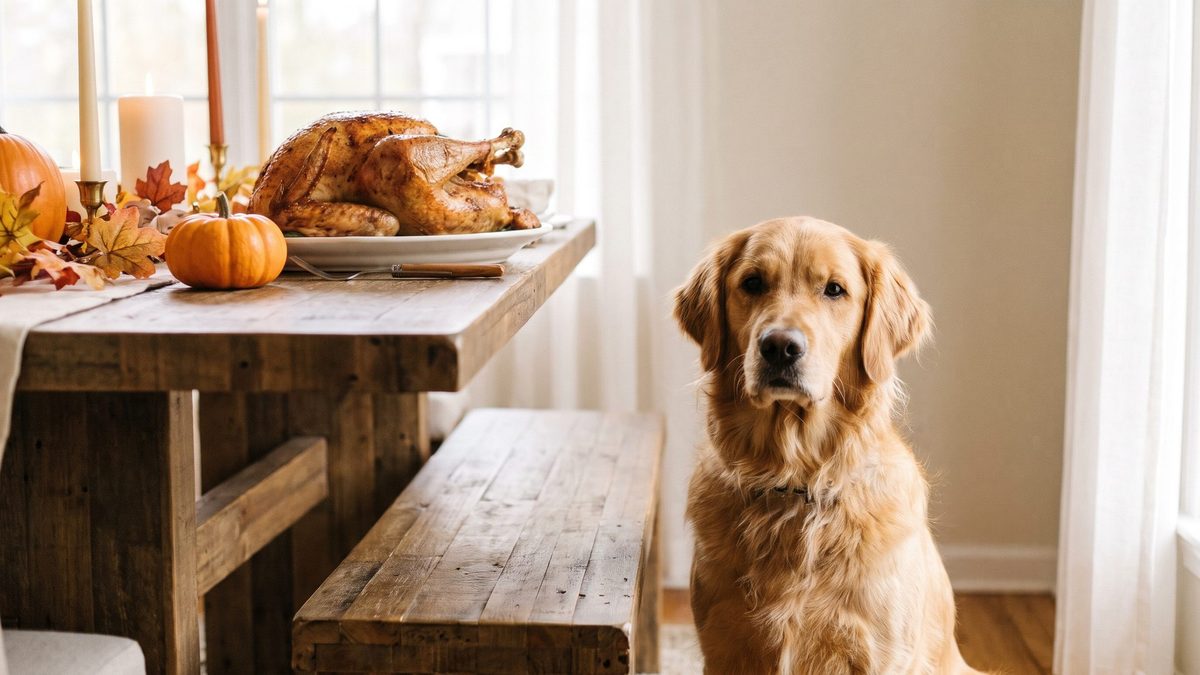
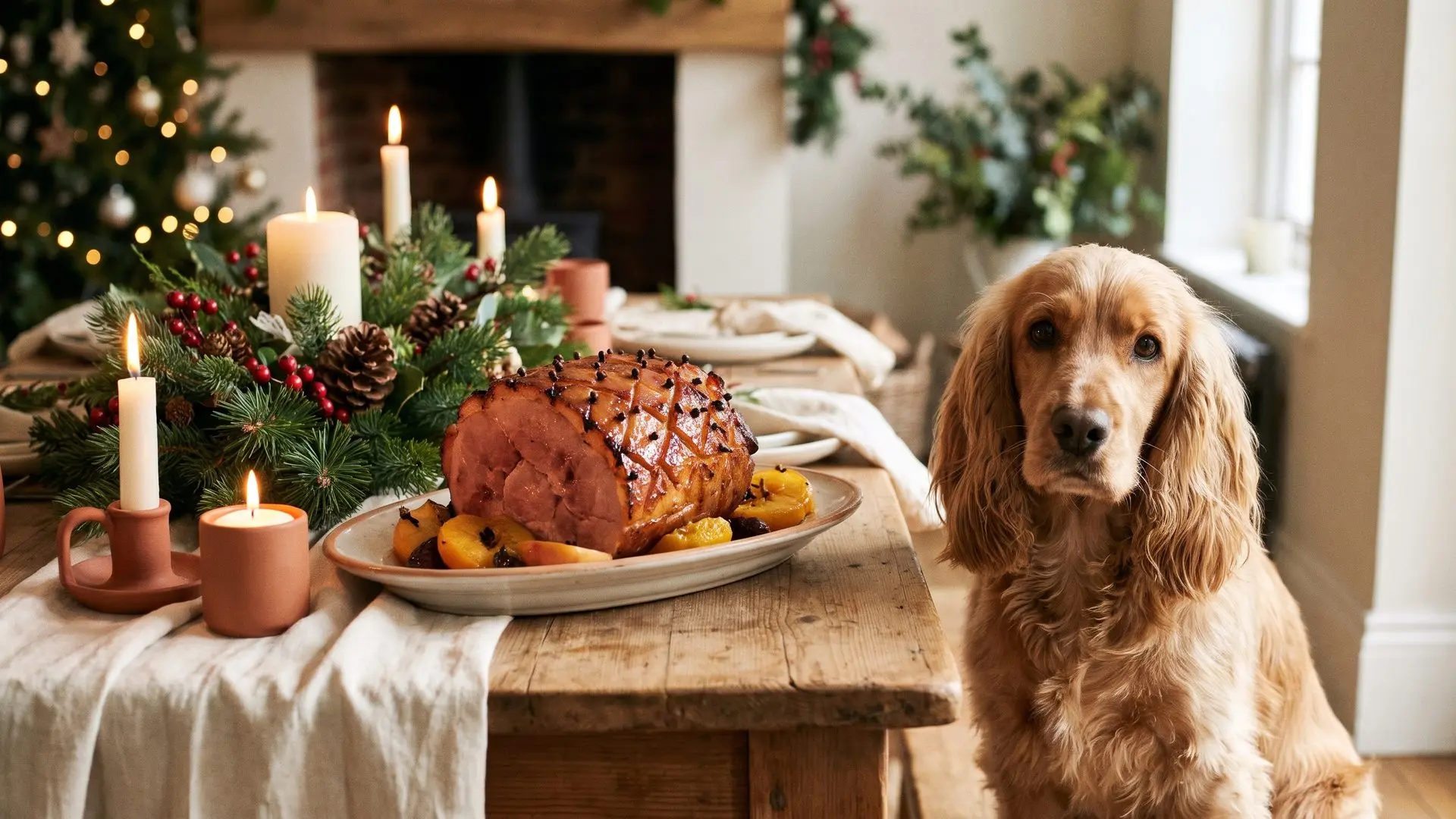
Plain, cooked turkey breast with no skin, bones or seasoning is fine for most healthy dogs in small amounts. The real Thanksgiving risks sit around the turkey: skin and drippings, cooked bones, stuffing and gravy made with onion and garlic, raisin desserts, corn cobs and anything sweetened with xylitol. Use the list below, keep your dog's share to a few plain bites, and you can include them in the day without a trip to the emergency clinic.
The Thanksgiving plate at a glance
| Food | Verdict for dogs | Why |
|---|
| Turkey breast, plain, no skin | A few small bites | Lean protein, but it still counts toward daily calories |
| Turkey skin, drippings, fatty dark meat | Skip | Fat load can trigger pancreatitis |
| Cooked turkey bones | Never | Can splinter, choke or lodge in the gut |
| Stuffing | Skip | Often made with onion, garlic, butter and salt |
| Gravy | Skip | Salt, fat and often onion or garlic powder |
| Mashed potatoes | Plain spoonful only | Butter, cream and garlic make it a poor choice |
| Sweet potato, plain | Small portion | Fine without butter, sugar or marshmallow |
| Green beans, plain | Safe | Low calorie, good filler for a dog plate |
| Pumpkin puree (not pie filling) | A spoonful | Pie filling adds sugar and spice |
| Cranberries, plain | A few | Cranberry sauce is mostly sugar |
| Corn on the cob | Never | The cob is a classic cause of intestinal blockage |
| Raisin or grape desserts | Never | Grapes and raisins can cause kidney injury in dogs |
| Chocolate desserts, sugar-free sweets | Never | Chocolate and xylitol are both dangerous |
| Raw bread dough, alcohol | Never | Dough keeps rising in the stomach and ferments |
Can dogs eat turkey?
Yes, in small, plain portions. Turkey meat itself is not toxic to dogs, and many commercial dog foods use it as a protein. What changes the answer is how it was cooked and what part of the bird it came from.
- Breast meat, skinless and unseasoned: the safest cut. Shred or dice it so your dog cannot gulp a big piece.
- Dark meat: not toxic, but it is fattier. A small piece is fine for a healthy dog; skip it for dogs with a history of pancreatitis.
- Skin and drippings: very high in fat. This is the single most common reason dogs end up at the vet after Thanksgiving.
- Bones: cooked bones are brittle. Veterinary groups such as the AVMA and the ASPCA advise keeping them away from pets entirely.
Cats can have the same plain turkey in tiny amounts, with the same rules about skin, bones and seasoning.
Why stuffing and gravy are the real problem
Most stuffing and gravy recipes start with onion, and many add garlic, leeks or chives. These ingredients belong to the allium family, which can damage a dog's red blood cells. A lick of gravy is unlikely to cause trouble, but a plate of stuffing is a different matter, especially for a small dog. Our onion and garlic toxicity calculator helps you see how much matters for your dog's weight.
Stuffing also tends to carry a lot of butter and salt, and some versions include raisins, nuts or sausage. If you cannot say exactly what is in it, it does not go in the bowl.
Bones, corn cobs and other things that block
Cooked turkey bones, corn cobs and the string used to truss the bird do not break down in a dog's stomach. They can cause choking or an obstruction that needs surgery. Signs include repeated vomiting, a tight painful belly, refusing food and lethargy. Take the carcass straight to a lidded outdoor bin, not a kitchen trash can your dog can reach.
Desserts: the hidden toxins
- Pumpkin pie: plain canned pumpkin is a dog-friendly ingredient. The pie is not, because of the sugar, crust and spices. Offer a spoonful of plain puree instead.
- Pecan and walnut pies: nuts are high in fat and can go mouldy. Macadamia nuts are known to be toxic to dogs.
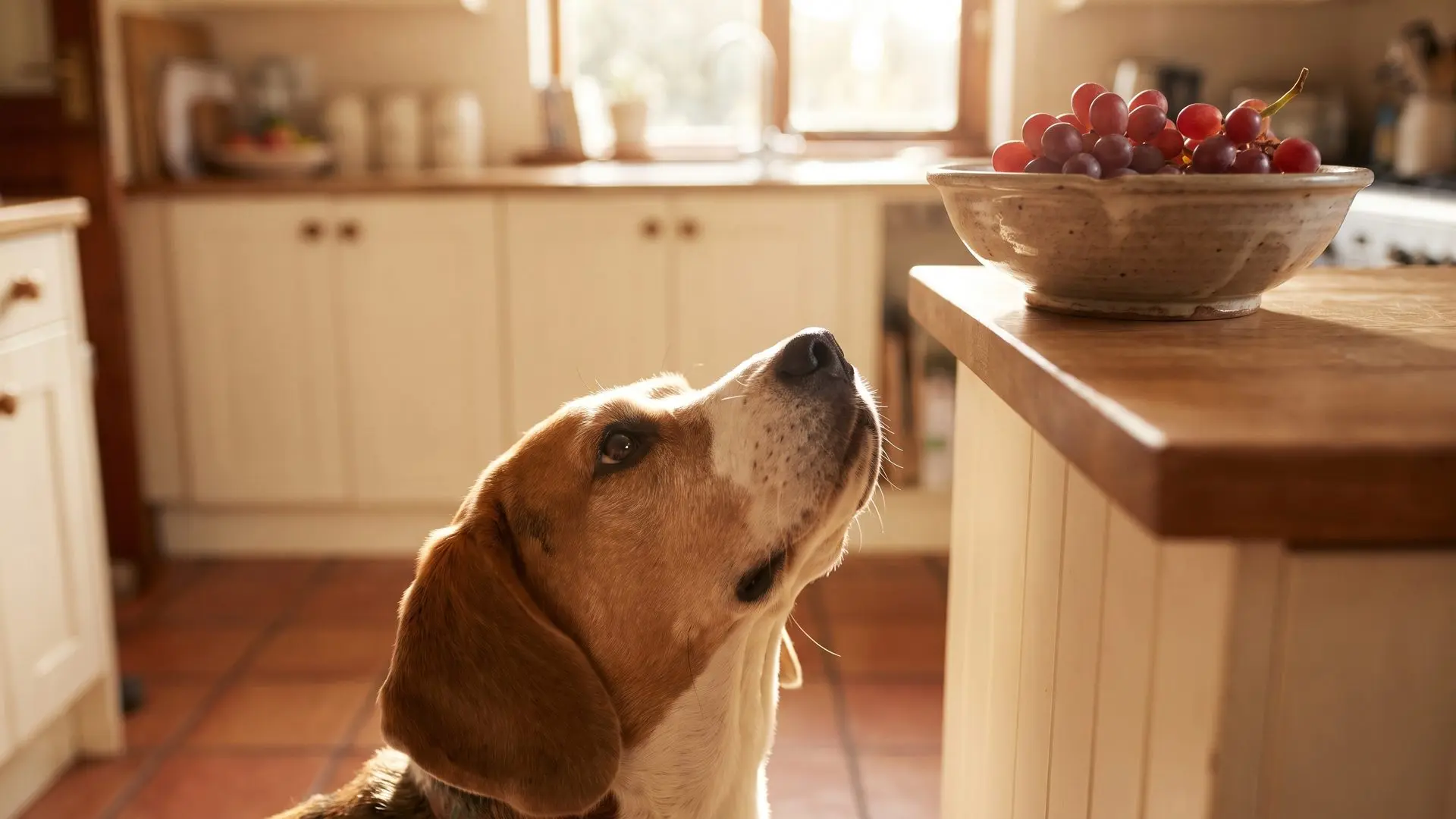
- Raisin and mince pies: treat any grape or raisin exposure as worth a call. See our guide to why even one grape is risky for dogs.
- Anything chocolate or "sugar-free": chocolate and the sweetener xylitol are both dangerous. Use the chocolate toxicity calculator or the xylitol calculator if something has already been eaten.
How to build a safe plate for your dog
A common veterinary rule of thumb is to keep treats and extras to about 10 percent of daily calories. For a neutered adult dog of about 20 lb (9 kg), that is roughly 55 to 60 kcal out of about 585 kcal a day, which is only a few bites. Use the dog calorie calculator to get a number for your own dog.
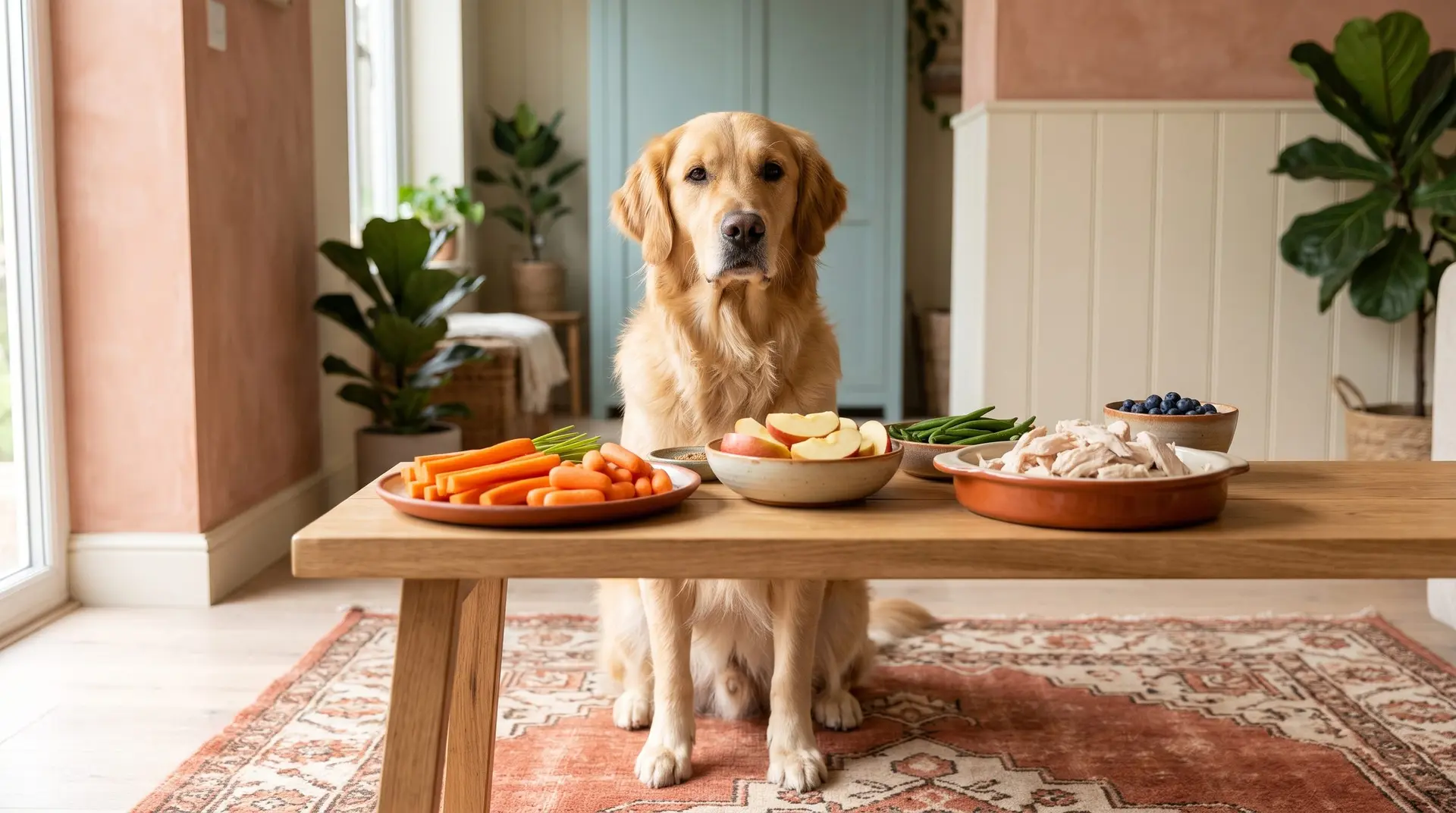
A simple dog plate:
- A few cubes of plain, skinless turkey breast.
- A spoonful of plain green beans or carrots.
- A teaspoon or two of plain pumpkin puree.
- Fresh water, and the regular dog food they would normally eat.
Serve it in your dog's own bowl so guests can see it is the dog's share. That small signal stops most well-meaning table feeding.
Keeping the day calm
- Brief guests early. Ask everyone not to share food and to keep bags, coats and medications off the floor.
- Give your dog a quiet room with water, a bed and a chew toy during the busiest hours.
- Clear plates promptly and use a bin with a locking lid.
- Save an emergency clinic number before the holiday. Your regular vet may be closed.
- Watch leftovers. The calories from a "small" plate add up quickly. Our guide to holiday hazards for dogs and cats covers the rest of the season.
If your dog already ate something
Call your veterinarian, an emergency clinic or a poison helpline right away, before symptoms start. Do not induce vomiting unless a professional tells you to. Have your dog's weight, what they ate, how much and when ready.
- ASPCA Animal Poison Control: (888) 426-4435
- Pet Poison Helpline: (855) 764-7661
Both are staffed by veterinary professionals, and a consultation fee may apply. You can also check a specific food in our food safety checker, and swap holiday tips with other owners on the PawTalk nutrition forum.
Related guides
*This guide is general education from the PawCalculator team, not veterinary advice. Sources: ASPCA Animal Poison Control and AVMA guidance on holiday foods, and the Merck Veterinary Manual on pancreatitis and allium toxicity. For anything your pet has eaten, contact a veterinarian or poison helpline.