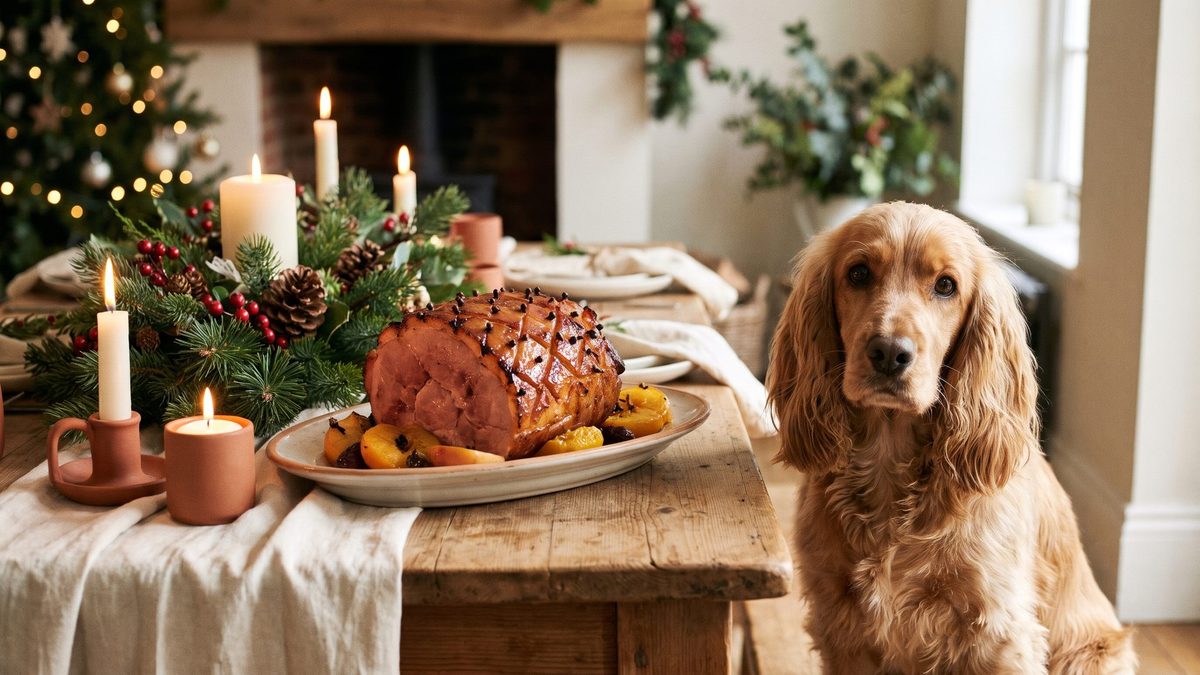
A very small piece of plain, lean ham is not poisonous to most healthy dogs, but it is a poor treat. Ham is high in salt and fat, which can cause stomach upset, pancreatitis and, in larger amounts, salt poisoning. Holiday ham is riskier still: sweet glazes, cloves, pineapple and raisin sauces, string, and cooked bones. If you want to include your dog, offer a plain alternative and keep the ham off the floor.
Why ham is a problem for dogs
Three things make ham a bad fit for a dog's bowl.
- Salt. Cured ham is preserved with a lot of sodium. A large amount of salty food can cause excessive thirst and urination, vomiting, and in severe cases signs such as tremors or seizures. Small dogs reach a risky amount much faster than large ones.
- Fat. Fatty trimmings and rendered fat are a known trigger for pancreatitis in dogs. The Merck Veterinary Manual describes sudden high-fat meals as a common risk factor, and the signs include vomiting, a painful belly, and refusing food.
- Additives. Cured meats can carry nitrites, spices and sugar. Deli ham may also have onion or garlic powder in the seasoning.
None of this means one bite is an emergency. It means ham is a food to offer rarely, in tiny amounts, and never as a meal.
What makes holiday ham worse
Christmas, Easter and Thanksgiving hams are rarely plain. Look at what comes with them:
- Glazes. Honey, brown sugar, maple and fruit glazes add sugar and sometimes spices. A sugar-free glaze might use xylitol, which is dangerous to dogs. Check the label.
- Pineapple, clove and mustard. Fresh pineapple on its own is fine, but a baked ham with canned pineapple rings in syrup, cloves and dry mustard is not a dog dish.
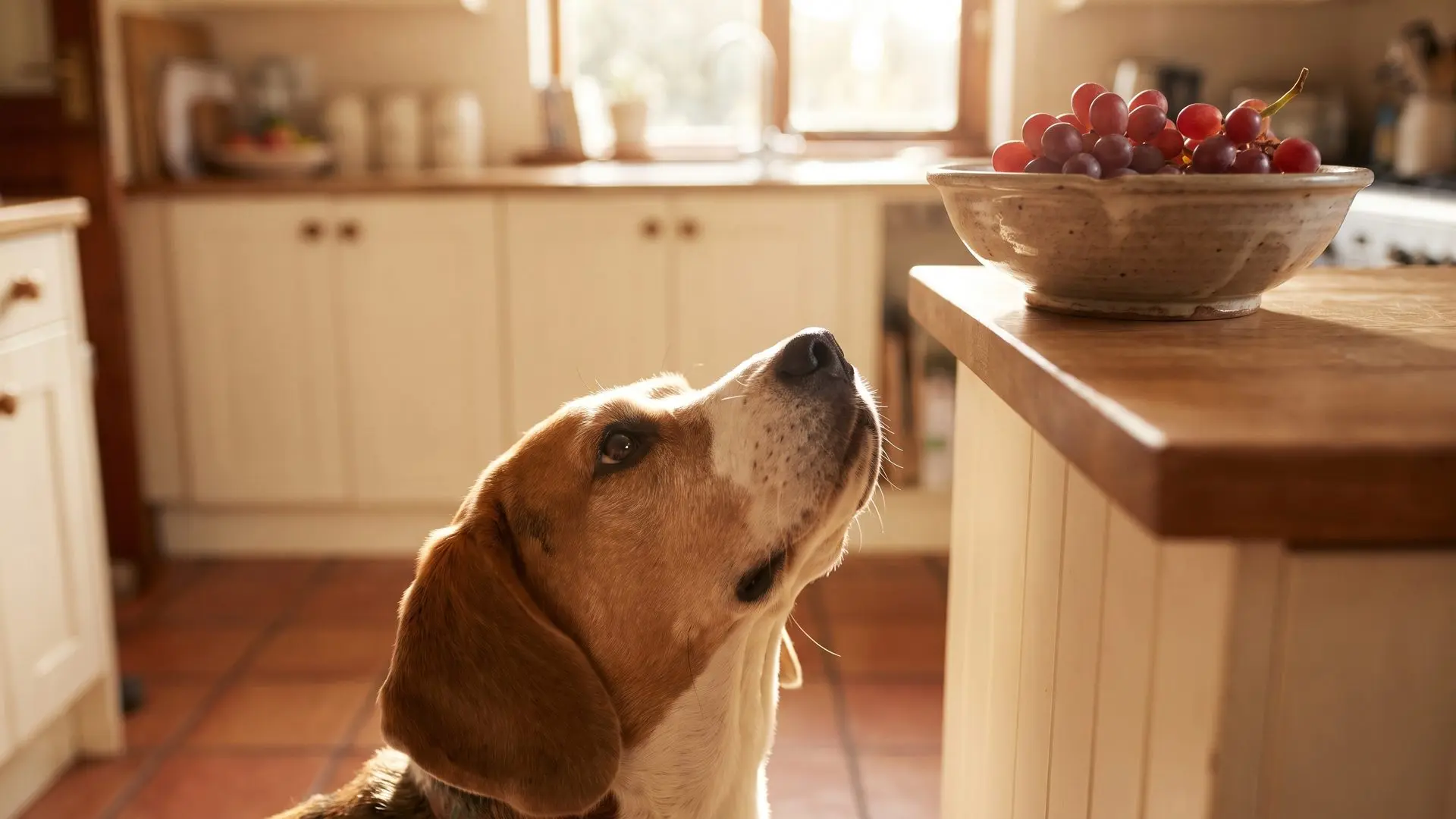
- Raisin sauces. Raisins can cause kidney injury in dogs. See our guide on why even one grape is risky.
- Bones. A cooked ham bone can splinter or be swallowed in a chunk. Veterinary groups including the AVMA and the ASPCA recommend keeping cooked bones away from dogs.
- String and netting. The twine on a roast can cause a blockage if swallowed.
- Spiral cuts and fat caps. The edge pieces are the saltiest and fattiest, and they are what dogs usually steal.
Can dogs eat ham? A quick reference
| Ham-related item | Okay for dogs? |
|---|
| A thumbnail-sized piece of plain lean ham | Rarely, in tiny amounts |
| Ham fat, rind and trimmings | No |
| Glazed ham | No |
| Deli or lunch-meat ham | No, salt and seasoning |
| Ham bone (cooked) | No |
| Ham with pineapple, raisins or cloves | No |
| Leftover ham sandwich | No, bread and onion are common extras |
The rest of the holiday table, side by side
Most guides stop at the ham. Dogs usually go for the sides too, so here is a quick guide to the other holiday foods.
| Food | Verdict |
|---|
| Mashed potatoes | A plain spoonful is fine. Butter, cream and garlic are not |
| Candied yams | No, sugar and marshmallow; plain sweet potato is fine |
| Green bean casserole | No, cream soup and fried onions |
| Cranberry sauce | No, mostly sugar; a few plain cranberries are fine |
| Macaroni and cheese | No, fat and lactose |
| Dinner rolls | A small plain bite is not toxic; raw dough is dangerous |
| Deviled eggs | No, mayonnaise, mustard and sometimes onion |
| Eggnog | No, alcohol and nutmeg are both toxic to dogs |
| Fruitcake and plum pudding | Never, raisins and often alcohol |
| Plain carrots, green beans | Yes, a good filler |
For turkey, stuffing and gravy, see our full Thanksgiving foods guide.
What to do if your dog ate ham
- Work out what and how much. A single slice of plain ham is different from a glazed ham bone and all the trimmings.
- Remove any remaining food, bone fragments and string.
- Call your veterinarian, an emergency clinic or a poison helpline if your dog ate a large amount, fatty trimmings, glaze, a bone, or anything with raisins or xylitol.
- ASPCA Animal Poison Control: (888) 426-4435
- Pet Poison Helpline: (855) 764-7661
- Watch for warning signs: repeated vomiting, a hunched or painful belly, lethargy, extreme thirst, diarrhea, or loss of appetite. Pancreatitis can appear a day or two after the meal.
- Do not induce vomiting unless a veterinary professional tells you to.
A consultation fee may apply to the helplines. If a visit turns out to be needed, the vet cost estimator can help you plan.
Safer ways to include your dog
If you want your dog to feel part of the meal, try these instead:
- A few cubes of plain, cooked, skinless chicken or turkey breast
- Plain green beans or carrots
- A spoonful of plain pumpkin puree
- A dog-safe chew or a stuffed food toy
- Their regular dinner with a small plain topper
Keep treats to about 10 percent of daily calories. The dog calorie calculator gives your dog's target, and the food safety checker covers other foods you are unsure about.
Keeping ham out of reach
- Slice the ham away from the counter edge and put the leftover in the fridge straight away.
- Dispose of bones, string and wrappers in a bin with a locking lid.
- Never leave a roasting pan or serving platter on a low table.
- Ask guests not to feed your dog, and give your dog a quiet room during the meal.
- Share holiday tips and ask questions on the PawTalk nutrition forum.
Related guides
*This guide is general education from the PawCalculator team, not veterinary advice. Sources: the Merck Veterinary Manual (pancreatitis and salt toxicity), ASPCA Animal Poison Control Center and AVMA guidance on holiday foods. If your pet is unwell or has eaten something risky, contact a veterinarian or poison helpline.