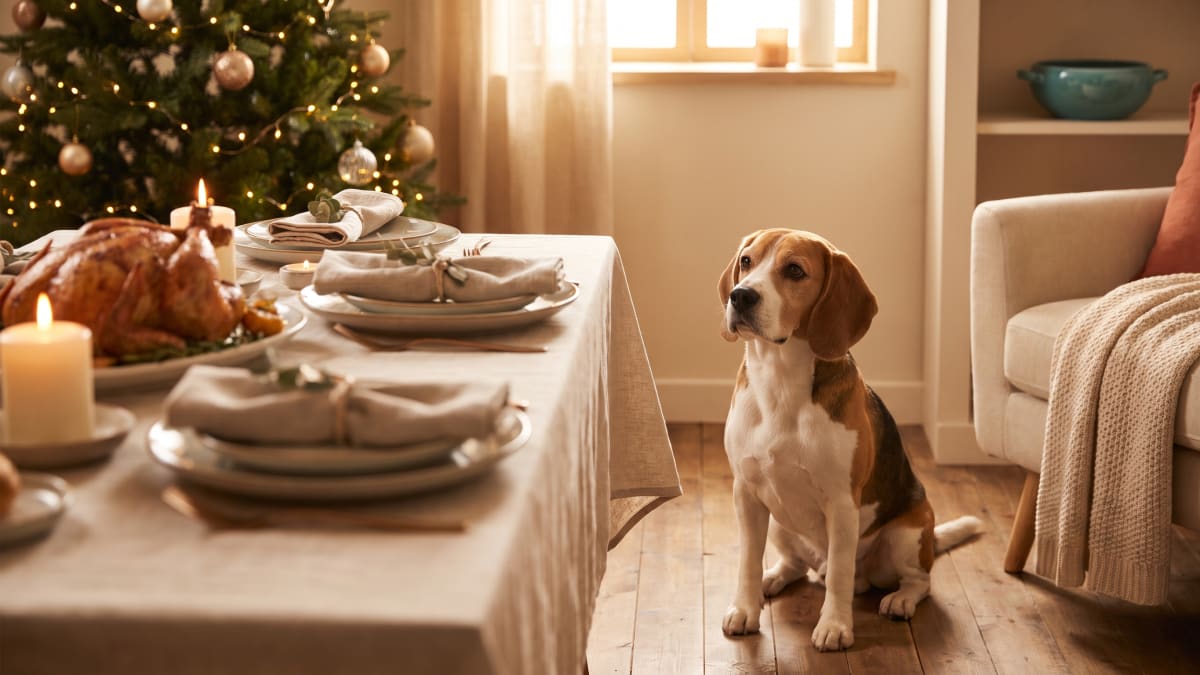
The house smells wonderful, guests keep arriving, and the dog is suddenly very interested in the kitchen. Holidays are exactly when pets get into things, because routines slip, doors open and plates sit at nose height.
Most of the risks are ordinary items. The good news is that a few small habits remove almost all of them. Here is what we would move, what we would swap, and what to do if your pet gets ahead of you.
The food hazards worth knowing
Chocolate and anything baked with it
Chocolate contains theobromine, which dogs and cats process slowly. Darker chocolate and baking chocolate are more concentrated, so a small amount can matter for a small dog. If it has already happened, start with our step-by-step guide: My dog ate chocolate: what to do right now, and use the chocolate toxicity chart to understand the amount involved.
Xylitol (birch sugar) in sugar-free treats
Xylitol is a sweetener in some sugar-free gum, candy, baked goods and peanut butters. In dogs it can cause a dangerous drop in blood sugar and, in larger amounts, liver injury. Check labels on stocking-stuffer candy and anything marked sugar-free. Our xylitol toxicity calculator can help you gauge what a given amount means for your dog's weight, but call a vet or poison helpline first rather than waiting.
Grapes, raisins and the desserts that hide them
Grapes and raisins can cause kidney injury in some dogs, and nobody can predict which dog is sensitive. That includes fruitcake, stollen, mince pies and trail mix. Treat any amount as worth a phone call. The grape and raisin toxicity calculator explains the thinking, and the food safety checker is handy when you are not sure about an ingredient.
Onions, garlic and chives
Stuffing, gravy and roasted vegetables are often cooked with onion and garlic. These can damage red blood cells in dogs and cats over time. A lick of gravy is not a crisis, but a plate of stuffing is worth a call.
Fatty scraps, skin and cooked bones
Turkey skin, ham fat and drippings can trigger pancreatitis, which is painful and often needs hospital care. Cooked bones can splinter or lodge in the throat or gut. Scrape plates into a bin your pet cannot open, not onto the floor.
Raw bread dough and alcohol
Raw yeast dough keeps rising in a warm stomach and can produce alcohol as it ferments. Eggnog, spiked punch and unattended glasses are a problem for the same reason. Keep both out of reach.
Nuts
Macadamia nuts are known to be toxic to dogs. Other nuts are often salted, spiced or high in fat, so skip them as pet treats.
The decorations that cause trouble
- Tinsel, ribbon and string. Cats in particular can swallow these, and long strands can cause a serious intestinal blockage. Roast-tying string and the netting around meat count too.
- Lilies. Many lilies are extremely toxic to cats, and even pollen or vase water can be a problem. If you receive a bouquet, check what is in it and keep any lilies away from your cat entirely.
- Tree water. Standing water can grow bacteria and may contain preservatives or fertiliser. Cover the tree stand.
- Candles and lights. Wagging tails knock candles over, and chewed cords can burn or shock. Use flameless candles and tuck cables out of reach.
- Ornaments and salt dough. Glass shatters. Homemade salt-dough ornaments are very salty, which is risky if eaten.
- Poinsettia, holly and mistletoe. Poinsettia is usually only mildly irritating, but holly and mistletoe can cause more significant stomach upset. It is simplest to keep them out of pet rooms.
A calmer way to run the day
- Give your pet a safe room. A quiet space with water, a bed and a chew toy makes busy gatherings easier on anxious animals.
- Brief your guests. Ask them not to share food, and to keep bags, coats and medications off the floor. Handbags with gum or candy are a classic.
- Prepare a pet-friendly plate. A spoonful of plain cooked turkey (no skin, seasoning or bones) or a few green beans keeps your pet included without risk. Keep treats within your pet's usual daily calories. The dog food calculator shows how much room there really is.
- Take out the trash. Carcasses, wrappers and corn cobs in an open bin are a common cause of emergency visits.
- Know your emergency plan before you need it. Holidays often mean your regular vet is closed. Save the number of your nearest emergency clinic now.
If something goes wrong
Call a veterinarian or a poison helpline straight away. Do not wait for symptoms, and do not induce vomiting unless a professional tells you to. Have your pet's weight, what they ate, roughly how much and when ready.
- ASPCA Animal Poison Control: (888) 426-4435
- Pet Poison Helpline: (855) 764-7661
Both are staffed by veterinary professionals, and a consultation fee may apply. Emergency visits can be expensive, so it is worth a quick look at our vet cost estimator before the season starts.
The short version
Keep chocolate, sugar-free sweets, raisins, onion-heavy dishes, fatty scraps and unbaked dough out of reach, tidy up tinsel and string, and keep lilies away from cats. Everything else is mostly about giving your pet a safe, quiet place to be part of the day.
This guide is general education from the PawCalculator team, not veterinary advice. For anything your pet has eaten or chewed, contact a veterinarian or poison helpline.