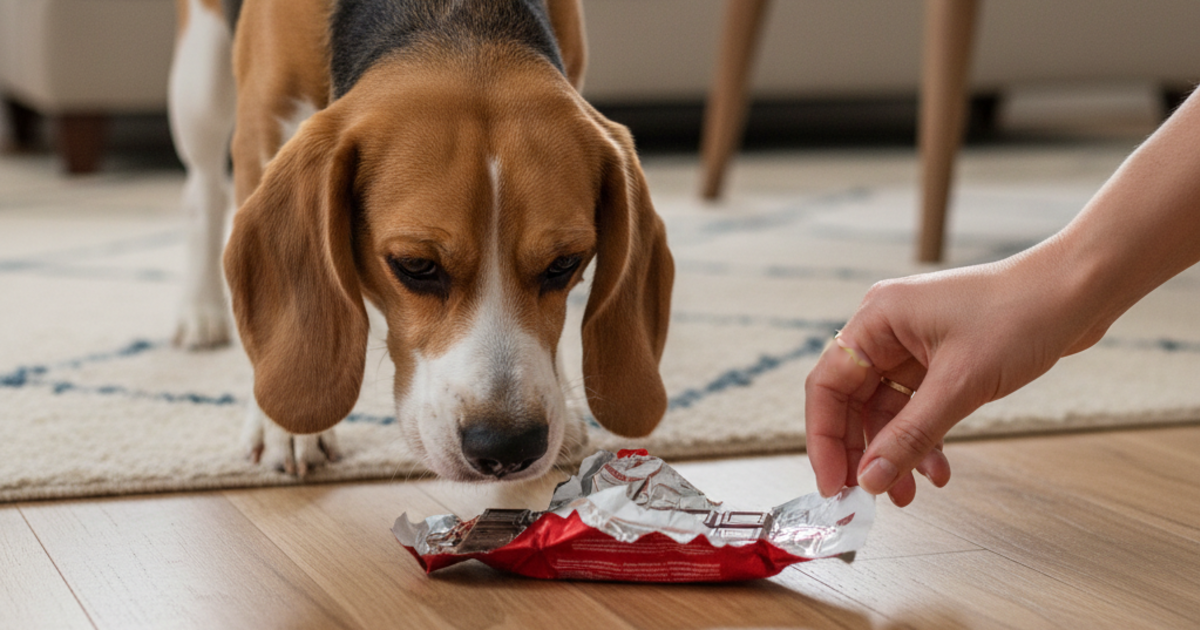
If your dog ate chocolate, act now, even if they seem fine. Figure out what kind of chocolate it was, roughly how much, and your dog's weight, then call your vet, an emergency clinic, or a pet poison line: ASPCA Animal Poison Control, 888-426-4435, or Pet Poison Helpline, 855-764-7661 (both may charge a consultation fee). Dark and baking chocolate are far more dangerous than milk chocolate, and small dogs are at the most risk.
The quickest way to gauge the danger is the dog chocolate toxicity calculator: enter the chocolate type, the amount, and your dog's weight.
This guide is general information, not a substitute for veterinary care. If your dog is already showing symptoms, go to an emergency vet now.
What to Do If Your Dog Eats Chocolate: Step by Step
- Take any remaining chocolate away and keep other pets away from it.
- Find the wrapper. Note the type (milk, dark, baking, cocoa powder) and the cocoa percentage if listed.
- Estimate the amount eaten. Check how much is missing. It's safer to guess high.
- Note the time. Treatment works best within the first couple of hours.
- Weigh your dog, or use their last known weight.
- Call your vet or a poison line with all of the above. They'll tell you whether to come in.
- Don't try home remedies unless a vet tells you to (more on that below).
Why Chocolate Is Toxic to Dogs
Chocolate contains theobromine and caffeine, called methylxanthines. Dogs break down theobromine much more slowly than people, so it builds up and overstimulates the heart and nervous system. The darker and more bitter the chocolate, the more theobromine it contains.
Theobromine by chocolate type
Approximate values from the Merck Veterinary Manual and ASPCA data. Brands vary.
| Chocolate type | Theobromine per oz (28 g) | Risk level |
|---|---|---|
| White chocolate | ~0.25 mg | Very low (but fat can upset the stomach) |
| Milk chocolate | ~44–58 mg | Moderate in small dogs |
| Semisweet / dark chocolate | ~150–160 mg | High |
| Unsweetened baking chocolate | ~390–450 mg | Very high |
| Dry cocoa powder | ~400–740 mg | Very high |
Toxic doses by body weight
The Merck Veterinary Manual puts the thresholds at roughly:
- About 20 mg/kg: mild signs such as vomiting, diarrhea and thirst
- 40–50 mg/kg: heart effects such as a racing or irregular heartbeat
- 60 mg/kg and above: tremors and seizures
Worked Example: How Much Chocolate Is Dangerous?
A 10 kg (22 lb) dog eats 2 oz (57 g) of milk chocolate.
- Theobromine eaten: 2 oz × 58 mg ≈ 116 mg
- Dose per kg: 116 ÷ 10 ≈ 11.6 mg/kg
- That's below the ~20 mg/kg mark for mild signs. This dog may get an upset stomach, but serious toxicity is unlikely. Still call your vet.
The same 10 kg dog eats 1 oz (28 g) of baking chocolate.
- Theobromine eaten: 1 oz × 450 mg ≈ 450 mg
- Dose per kg: 450 ÷ 10 = 45 mg/kg
- That's in the range for heart effects. This is an emergency. Go to the vet now.
Same dog, half the amount, four times the risk. That's why the chocolate type matters so much. Run your own numbers in the chocolate toxicity calculator.
Quick reference: amount that reaches ~20 mg/kg
| Dog weight | Milk chocolate | Dark (semisweet) | Baking chocolate |
|---|---|---|---|
| 5 kg (11 lb) | ~1.7 oz (49 g) | ~0.6 oz (18 g) | ~0.2 oz (6 g) |
| 10 kg (22 lb) | ~3.4 oz (98 g) | ~1.3 oz (35 g) | ~0.4 oz (12 g) |
| 20 kg (44 lb) | ~6.9 oz (195 g) | ~2.5 oz (71 g) | ~0.9 oz (25 g) |
| 30 kg (66 lb) | ~10.3 oz (293 g) | ~3.8 oz (106 g) | ~1.3 oz (37 g) |
These are the amounts where mild signs can start, not "safe" limits. Heart and seizure risk begins at roughly double and triple these amounts.
My Dog Ate Chocolate but Is Acting Fine
This is the most common situation, and it's a trap. Signs of chocolate poisoning usually appear 6 to 12 hours after eating, and theobromine can keep affecting the body for up to 72 hours. A dog that seems normal an hour later may still get sick overnight.
If the dose is low (your vet or the calculator will tell you), watching at home may be fine. If it's moderate or high, your vet will want to make your dog vomit while the chocolate is still in the stomach, which only works in the first few hours.
Symptoms of Chocolate Poisoning in Dogs
- Vomiting and diarrhea
- Restlessness, pacing, panting
- Increased thirst and urination
- Racing heart
- Muscle tremors or stiffness
- Seizures or collapse (severe cases)
What About Home Remedies?
Searches for "what to do if your dog eats chocolate home remedies" are common, but most home remedies make things worse:
- Don't make your dog vomit on your own. Hydrogen peroxide can cause stomach ulcers and aspiration. Only use it if a vet or poison line specifically tells you to, with their dose.
- Never use salt, mustard or your fingers to trigger vomiting. Salt can cause dangerous sodium levels.
- Don't give milk or food to "dilute" it. It doesn't help.
What does help: calling early. At the clinic, a vet can safely induce vomiting, give activated charcoal to limit absorption, run IV fluids, and treat heart or seizure symptoms if needed. Early treatment is quicker and much cheaper; the vet cost estimator gives a rough idea of emergency visit costs.
Hidden Chocolate Risks
- Cocoa bean mulch in gardens contains theobromine.
- Chocolate baked goods may also contain raisins, macadamia nuts or xylitol, all toxic to dogs.
- Wrappers and foil can cause a blockage.
- Cats are also sensitive to theobromine; use the cat chocolate toxicity calculator if your cat got into chocolate.
Not sure about another food? Check it in the food safety checker. For a deeper look at dose math, read chocolate toxicity in dogs and cats.
When to Call Your Vet
Call your vet or a poison line for any chocolate eaten by a small dog, and for any dark, baking or cocoa chocolate regardless of size. Go to an emergency vet immediately if you see:
- Repeated vomiting
- Tremors, twitching or stiffness
- A very fast or irregular heartbeat
- Seizures, collapse or extreme restlessness
- Any symptoms in a dog with heart disease
Poison control numbers (US): ASPCA Animal Poison Control Center 888-426-4435 · Pet Poison Helpline 855-764-7661. Doses and thresholds in this article are general guidance from veterinary references. Your vet's advice for your dog always comes first.
The Bottom Line
If your dog ate chocolate, don't wait for symptoms. Note the type and amount, check your dog's weight, and call your vet or a poison line. A little milk chocolate in a big dog is usually minor; a small piece of baking chocolate in a small dog can be life-threatening. The dog chocolate toxicity calculator gives you a risk estimate in seconds.
Frequently asked questions
PawCalculator Editorial
We combine veterinary references, published guidelines, and calculator-grade modeling. This article is for education, not a substitute for an exam.
+ Follow on PawTalk