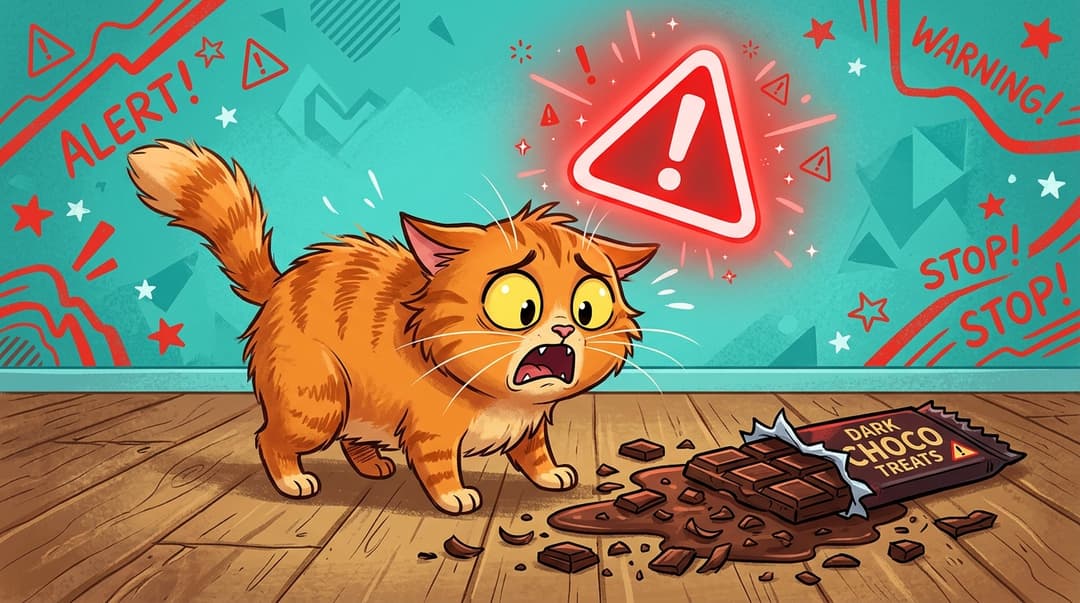
My Cat Ate Chocolate — How Worried Should I Be?
Your inputs
Results update live as you type.
Your results
Fill in the form to see your estimate.
Ready when you are
Fill in the form to see your reference estimate
Veterinary reference only
Same safety framing as the dog version — poison control CTA required.
Keep going with a related calculator.
My Cat Ate Chocolate — How Worried Should I Be?
Cats are actually more sensitive to theobromine toxicity than dogs on a per-kilogram basis, but chocolate poisoning is reported far less often in cats — likely because cats lack the sweet-taste receptors that make chocolate appealing to dogs and humans, so accidental large ingestions are rarer. When it does happen, the same theobromine thresholds and symptom progression apply as with dogs (restlessness and vomiting at lower doses, cardiac and neurological signs at higher doses), but because cats are typically smaller than dogs, a given amount of chocolate reaches a dangerous mg/kg threshold faster.
How to use this calculator
Enter your cat's weight, the chocolate type, and roughly how much was eaten. Because cats are typically smaller than dogs, the same absolute amount of chocolate reaches a dangerous mg/kg threshold faster — don't assume a "small amount" is automatically safe just because it looked small.
Theobromine content by chocolate type (approximate)
| Chocolate type | Theobromine (mg per oz / 28g) |
|---|---|
| White chocolate | ~0.25 mg (negligible) |
| Milk chocolate | ~60 mg |
| Dark chocolate | ~150 mg |
| Baking chocolate | ~450 mg |
Understanding your risk tier
Cats show the same general symptom progression as dogs — restlessness and vomiting at lower exposures, rapid heart rate and tremors at higher ones — but because cats are more sensitive to theobromine per kilogram of body weight, the calculator's thresholds are more conservative than the dog version. An average 9–10 lb cat crosses into a moderate-risk tier with meaningfully less chocolate than an average dog would.
If the calculator flags any risk above the lowest tier, call your vet or an animal poison control line rather than waiting to see if symptoms appear — early intervention (which may include inducing vomiting under professional guidance, or supportive care) is significantly more effective than treating established toxicity.
What to do in the first few minutes after a suspected ingestion
Speed matters more than most owners realize with theobromine exposure. If you catch your cat eating chocolate or find clear evidence shortly after (an opened wrapper, missing baked goods), remove any remaining chocolate immediately so no more is eaten, and try to identify the type and estimate the amount before calling — this information is exactly what a vet or poison control line needs to assess risk, and guessing after the fact is much harder than checking packaging in the moment. Do not attempt to induce vomiting at home without explicit professional guidance: the method and timing both matter, and doing it incorrectly can cause additional harm (aspiration risk, esophageal irritation) without reliably removing the chocolate. If you have access to your cat's weight (even an approximate recent number), have it ready — dosage-based risk assessment depends heavily on accurate body weight, and "average cat size" assumptions can meaningfully under- or overstate real risk for a cat on the smaller or larger end of normal.
Other common household toxins worth knowing about
Chocolate isn't the only everyday food or product that poses a disproportionate risk to cats specifically. Lilies (including many popular bouquet flowers) are severely toxic to cats even in small amounts — pollen alone can cause acute kidney failure, making them far more dangerous to cats than the chocolate-toxicity comparison most owners are already aware of. Onions, garlic, and other allium-family foods damage feline red blood cells and are toxic in meaningfully smaller amounts, relative to body size, than what's often assumed safe based on dog-focused advice. Human medications — particularly acetaminophen (Tylenol), which is dramatically more dangerous to cats than to dogs due to a metabolic difference in how cats process it — are a leading cause of accidental feline poisoning and should never be given without explicit veterinary direction. Keeping a general awareness of these adjacent risks is worthwhile precisely because a household that's chocolate-proofed a countertop often hasn't thought as carefully about a vase of lilies on the same counter.
Preventing repeat exposure in a multi-hazard kitchen
Cats that get into chocolate once often have access to it again unless the household setup actually changes, since the behavior (counter-surfing, investigating unattended food) tends to be a general trait rather than a one-time event. Storing chocolate and baking ingredients in closed cabinets rather than countertops or pantry shelves a cat can reach, being especially cautious during baking-heavy periods like holidays when cocoa powder and baking chocolate are more likely to be left out mid-recipe, and briefing house guests or visiting family about what's off-limits are all more reliable long-term fixes than hoping a cat that got into chocolate once won't try again. Baking chocolate deserves particular caution given its concentration — a relatively small amount poses meaningfully more risk than the same weight of milk chocolate, which is easy to underestimate if you're mentally comparing it to a more familiar candy-bar level of danger.
When to consult a professional
For health, dosage, or nutrition decisions, always confirm calculator output with your veterinarian. This tool provides reference estimates, not medical advice.
Emergency or unsure?
Call your vet or ASPCA Animal Poison Control — available 24/7.
Questions about this calculator
More sensitive per kilogram of body weight, though actual poisoning cases are less common since cats generally aren't drawn to chocolate the way dogs are.
The math, openly documented.
Weight & exposure
Pet weight and amount/product determine dose.
weight_kg · amount
Dose estimate
Compare with published veterinary thresholds.
dose = amount ÷ kg
Risk band
Map to call-vet / urgent / emergency actions.
band = tier(dose)
Action
Call vet or poison control — do not wait for symptoms.
ASPCA · Pet Poison Helpline
More from Health

Is Your Dog Overweight?
is my dog overweight: A fast, vet-referenced way to check — feel for ribs, look for a waist, check the abdominal tuck. G
Open tool
How Much Do Dog Vaccinations Cost?
how much do dog vaccines cost: Estimate first-year and annual vaccination costs, broken down by core (required) versus n
Open tool
Is It Too Hot to Walk Your Dog Right Now?
unvalidated — recommend keyword research before build: Check whether it's too hot to walk your dog based on air temperat
Open toolArticles from Insights



Got an edge case the calculator can't handle?
247 active threads about dog nutrition right now. Verified vets and experienced owners answer within hours.