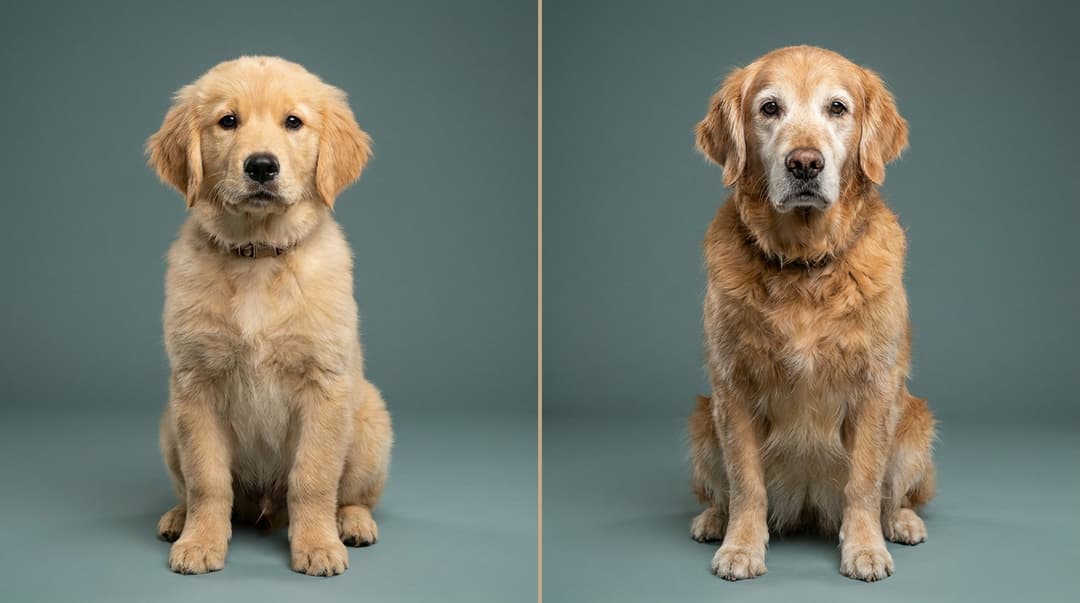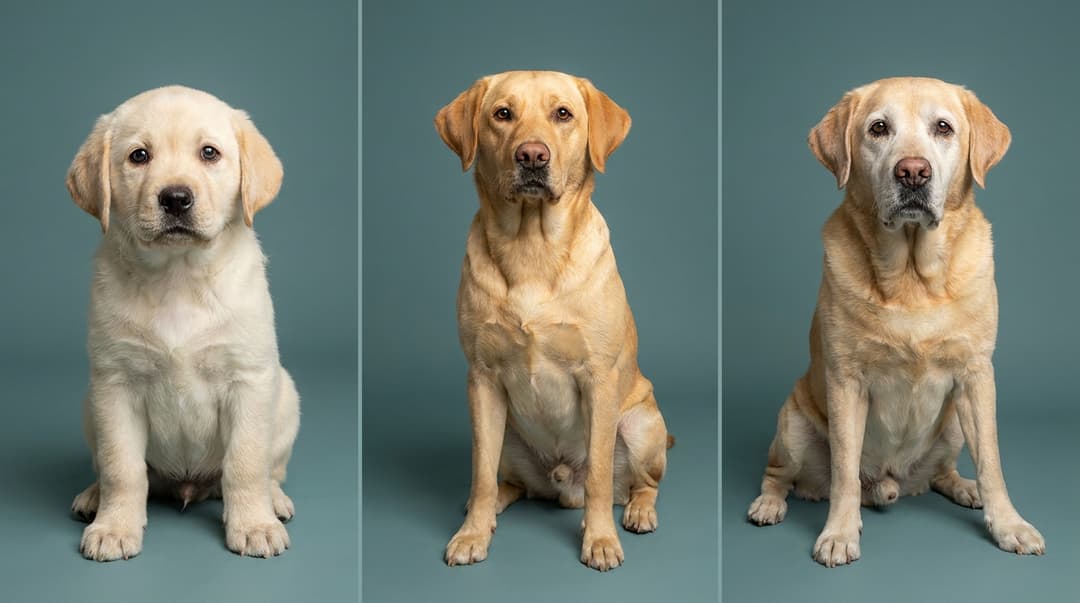
How to Use the Pet Age Calculator
Step 1 — Select pet type. Dogs and cats have different aging curves and must use different models — cats age on a more universal curve, while dog aging pace splits meaningfully by size.
Step 2 — Select dog breed (optional). Breed/size context materially changes dog age conversion, since large and giant breeds age faster in their senior years than small breeds do.
Step 3 — Enter exact age in years. Use decimals (for example 0.5 or 1.5) for better early-life accuracy, since the aging curve moves fastest in year one and precision matters most during that window.
Step 4 — Enter weight for dogs if breed is unknown. Size category is a core predictor of aging speed, so current weight lets the calculator apply the right curve even for a mixed-breed dog without a known breed standard.
Step 5 — Click Calculate. Review human-equivalent age, life stage, and care implications — the life stage label is what should actually inform preventive care timing, not the raw number alone.
Understanding Your Results
Why "×7" is outdated. Aging is non-linear and size-dependent, especially in dogs. The old rule came from simply dividing average human lifespan by average dog lifespan, which ignores that a 1-year-old dog is already physically and sexually mature — much closer to a human teenager than a 7-year-old child.
Modern dog conversion. Newer models reflect rapid early aging and slower later progression, with breed-size adjustments layered on top — this is why a Chihuahua and a Great Dane both reaching age 8 are not biologically the same age, despite sharing a calendar number.
Cat conversion curve. Cats age rapidly in years 1–2 (reaching roughly 24 human-years by their second birthday), then trend closer to +4 human years per calendar year as adults. Because the weight range across cat breeds is much narrower than across dogs, this curve doesn't split by size the way canine aging does.
Life stage matters. The value is most useful for screening schedules, diet strategy, and preventive care timing — reaching "senior" status is a trigger to shift care proactively, not a sign anything is already wrong.
What the human-year number doesn't tell you. It describes typical aging pace for your pet's size or species class, not their individual health status. A pet can have a "young" human-year equivalent and still have an unrelated health condition, or vice versa — this calculator is a planning tool for care timing, not a health assessment on its own.
Age Conversion Tables by Breed Size and Species
Dogs — Human Age Equivalent by Size Category
| Dog Age | Small (under 10kg) | Medium (10–25kg) | Large (25–45kg) | Giant (over 45kg) |
|---|---|---|---|---|
| 1 year | 15 | 15 | 15 | 15 |
| 2 years | 24 | 24 | 24 | 22 |
| 3 years | 28 | 28 | 28 | 31 |
| 4 years | 32 | 32 | 34 | 38 |
| 5 years | 36 | 36 | 40 | 45 |
| 6 years | 40 | 42 | 45 | 49 |
| 7 years | 44 | 47 | 50 | 56 |
| 8 years | 48 | 51 | 55 | 64 |
| 9 years | 52 | 56 | 61 | 71 |
| 10 years | 56 | 60 | 66 | 78 |
| 12 years | 64 | 69 | 77 | 93 |
| 15 years | 76 | 83 | 93 | — |
Giant breeds often enter geriatric territory much earlier than small breeds.
Cats — Human Age Equivalent
| Cat Age | Human Equivalent | Life Stage |
|---|---|---|
| 1 month | 1 year | Kitten |
| 3 months | 4 years | Kitten |
| 6 months | 10 years | Kitten |
| 1 year | 15 years | Junior |
| 2 years | 24 years | Junior |
| 3 years | 28 years | Adult |
| 4 years | 32 years | Adult |
| 5 years | 36 years | Adult |
| 6 years | 40 years | Mature |
| 7 years | 44 years | Senior |
| 8 years | 48 years | Senior |
| 10 years | 56 years | Senior |
| 12 years | 64 years | Senior |
| 15 years | 76 years | Geriatric |
| 18 years | 88 years | Geriatric |
| 20 years | 96 years | Geriatric |
Average Lifespan by Dog Breed Size
| Size Category | Average Lifespan | Senior Threshold | Geriatric Threshold |
|---|---|---|---|
| Toy / Small (under 5kg) | 14–18 years | 10 years | 14 years |
| Small (5–10kg) | 13–16 years | 9 years | 13 years |
| Medium (10–25kg) | 11–14 years | 8 years | 12 years |
| Large (25–45kg) | 9–12 years | 7 years | 10 years |
| Giant (over 45kg) | 7–10 years | 5–6 years | 8 years |
Specific Breed Typical Lifespans
| Breed | Average Lifespan | Senior Age | Notes |
|---|---|---|---|
| Chihuahua | 14–17 years | 10 years | One of the longest-lived breeds |
| Yorkshire Terrier | 13–16 years | 9 years | Dental disease common from age 5 |
| Beagle | 12–15 years | 8 years | Weight management critical |
| Cocker Spaniel | 12–14 years | 8 years | Ear and eye issues from age 6 |
| Labrador Retriever | 10–12 years | 7 years | Joint screening from age 5 |
| Golden Retriever | 10–12 years | 7 years | Cancer screening recommended from 6 |
| German Shepherd | 9–13 years | 7 years | Hip dysplasia screening from 5 |
| Boxer | 9–11 years | 6 years | Cardiac screening from age 5 |
| Rottweiler | 8–11 years | 6 years | Joint and cardiac monitoring |
| Great Dane | 7–10 years | 5 years | Gastric dilation risk throughout life |
| Bernese Mountain Dog | 6–9 years | 5 years | Cancer rates among highest of any breed |
Questions about this calculator
It depends on size and age. A 5-year medium dog is roughly 36 human years, while a 5-year giant breed can be closer to 45. The old multiply-by-7 shortcut is not accurate.