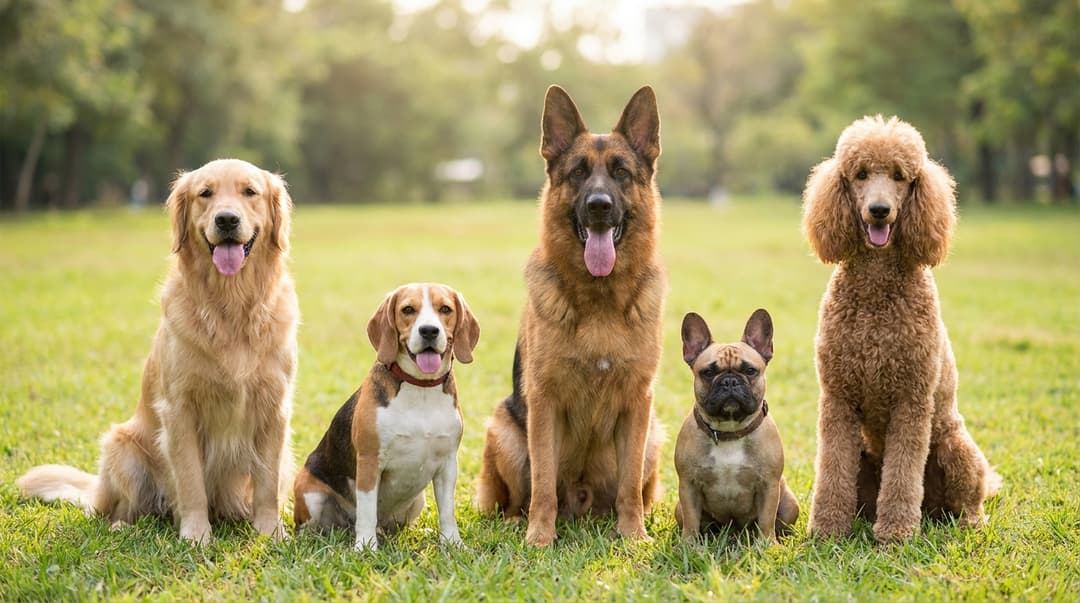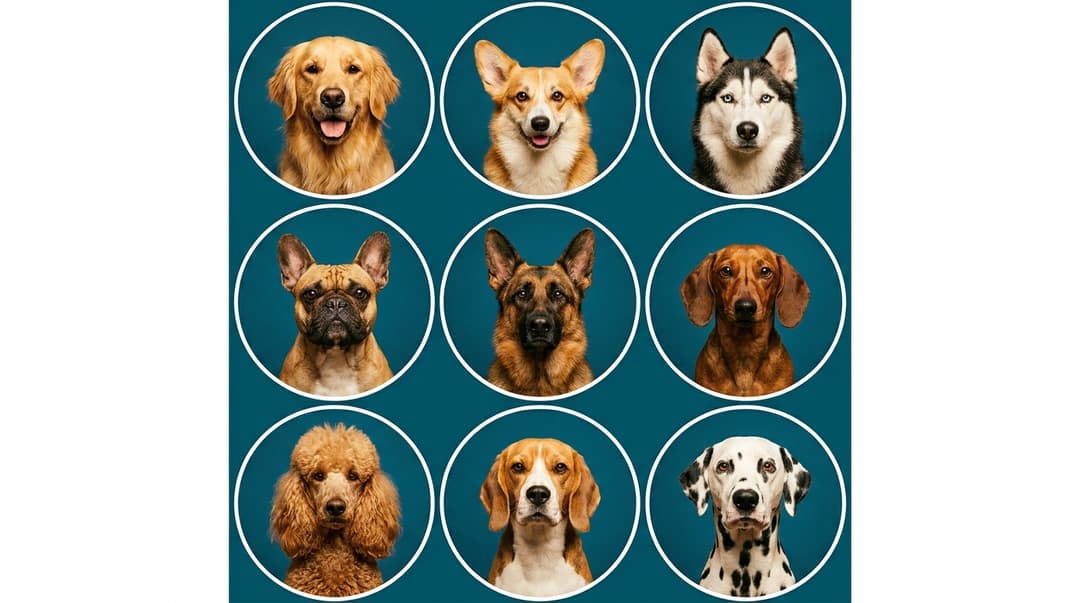
How to Use the Dog Breed Selector
Step 1 — Select pet type: Dog or Cat. The selector covers both dogs and cats. Cat breed matching is simpler — most domestic cats adapt to a wider range of environments than dogs — but breed matters for energy level, grooming requirements, and compatibility with children and other animals. Dog breed matching is more complex because working history, energy metabolism, and temperament are deeply breed-specific in ways that significantly affect owner satisfaction.
Step 2 — Select your living space. Space is the most misunderstood factor in breed selection. Living space is not just about size — it is about access to outdoor exercise and the owner's ability to compensate for indoor limitations. A Border Collie in a large apartment with a committed owner who runs daily will be happier than a Border Collie in a house with a yard but an owner who does not exercise them. That said, giant breeds in studios create practical problems regardless of exercise commitment — size relative to space matters for daily logistics.
Step 3 — Select your pet ownership experience. Some breeds are genuinely inappropriate for first-time owners — not because they are dangerous, but because they require experience to train, manage, and understand. Chow Chows, Akitas, Belgian Malinois, and Siberian Huskies are dogs that can thrive with knowledgeable owners and become serious problems with inexperienced ones. The selector uses your experience level to filter out breeds that consistently produce poor outcomes for new owners, while surfacing breeds that are forgiving and trainable for first-timers.
Step 4 — Select desired activity level. Be honest. Most people overestimate how active their lifestyle is when imagining their life with a dog. A breed matched to "high activity" needs genuine daily vigorous exercise — not a wish. If your current lifestyle is two 20-minute walks on weekdays and more on weekends, select Moderate. High activity means 60–90+ minutes of vigorous exercise daily, consistently, regardless of weather. Mismatching activity level is the single most common cause of breed regret and dog rehoming.
Step 5 — Select size, family situation, and allergy needs. Children and other pets significantly affect which breeds are appropriate. Some breeds have a strong prey drive that makes coexistence with cats and small animals unsafe. Some breeds have known temperament traits that require careful management with very young children. Allergy sufferers benefit from low-shedding breeds — though no dog is truly hypoallergenic, breeds with continuously growing hair coats (Poodles, Bichons, certain terriers) shed less dander into the environment.
Step 6 — Click Find My Perfect Breed. Results show your top matched breeds with compatibility scores across each input factor, typical care requirements, and links to further breed information. Use results as a starting point — research your top 3 matches in depth before making any decision.
Understanding Your Results
What the compatibility score measures. Each breed receives a score across six dimensions: space compatibility, exercise match, family suitability, grooming demand vs your stated tolerance, experience requirement vs your level, and special needs match (allergies, other pets). The overall score is a weighted average — exercise match and experience suitability carry more weight because mismatches in these areas cause the most problems. A breed scoring 90% overall but 60% on exercise match deserves careful consideration — that 60% will affect daily life more than the other dimensions combined.
Why your top match might surprise you. The algorithm prioritises lifestyle fit over popularity or aesthetics. Many people enter preferences and expect to see Labradors and Golden Retrievers — which are genuinely excellent family dogs — but receive a Whippet or a Cavalier King Charles Spaniel instead because those breeds more precisely match the stated lifestyle. Popular breeds are popular for good reasons, but they are also the breeds most commonly surrendered when owners discover the reality of their exercise and training needs does not match the assumption.
The difference between trainability and intelligence. High intelligence does not equal easy to train. Border Collies are widely considered the most intelligent dog breed — they are also one of the most challenging for average owners because their intelligence requires constant mental stimulation and they will problem-solve their way around inadequate containment and training. Breeds rated highly for trainability — Labrador Retrievers, Golden Retrievers, German Shepherds — combine intelligence with a strong desire to please humans, which makes them responsive to training. The selector uses trainability, not raw intelligence, as the matching factor.
Hypoallergenic breeds — what the term actually means. No dog is truly hypoallergenic. Dog allergies are triggered by the protein Can f 1, found in dog saliva, skin, and urine — not directly by fur. However, dogs with continuously growing hair coats (rather than a double coat that sheds seasonally) shed less dander into the environment because loose hair stays on the dog until groomed rather than depositing on furniture and floors. Breeds commonly described as hypoallergenic: Poodle, Bichon Frise, Portuguese Water Dog, Maltese, Yorkshire Terrier, Schnauzer, Soft Coated Wheaten Terrier, and Lagotto Romagnolo. If you have allergies, visit a breed before committing — individual sensitivity varies.
Why rescue dogs are a valid alternative to the breed selector. The selector covers purebred and recognised breed profiles. Mixed-breed rescue dogs do not fit neatly into these profiles — their temperament and physical traits may draw from multiple breeds in unpredictable ways. However, adult rescue dogs have a significant advantage: their actual personality is observable. A 3-year-old rescue dog has a known energy level, known reaction to children and other animals, and known temperament — no guessing from breed statistics. Many rescue organisations do careful behavioural assessment and can match dogs to specific household types with more precision than a breed selector can.
Breed Guide by Lifestyle
Best Breeds for Apartment Living
| Breed | Size | Energy Level | Shedding | Good with Kids | Notes |
|---|---|---|---|---|---|
| French Bulldog | Small | Low | Low | Yes | Exercise limited by brachycephalic airway — ideal for low-activity owners |
| Cavalier King Charles Spaniel | Small | Low–Moderate | Moderate | Yes | Gentle, adaptable, content with moderate walks |
| Shih Tzu | Toy | Low | Low (needs grooming) | Yes | Calm indoors, minimal exercise needs |
| Greyhound | Large | Low (indoors) | Very low | Yes | Surprisingly apartment-friendly — sprints briefly then sleeps |
| Bichon Frise | Small | Moderate | Very low | Yes | Hypoallergenic-friendly, playful but not demanding |
| Boston Terrier | Small | Moderate | Low | Yes | Friendly, manageable exercise needs |
| Pug | Toy | Low | Moderate | Yes | Heat-sensitive, minimal exercise; weight management critical |
| Basset Hound | Medium | Low | Moderate | Yes | Calm, low exercise needs; vocal when bored |
Best Breeds for Active Owners
| Breed | Size | Exercise Need | Intelligence | Working History | Notes |
|---|---|---|---|---|---|
| Border Collie | Medium | Very High | Highest | Herding | Needs 2+ hours + mental work daily — not for average owners |
| Siberian Husky | Medium–Large | Very High | High | Sled | Escape artist; needs secure containment and experienced owner |
| Australian Shepherd | Medium | High | Very High | Herding | Highly trainable; excels at dog sports |
| Vizsla | Medium | High | High | Hunting | Velcro dog — bonds intensely, needs vigorous daily exercise |
| Weimaraner | Large | High | High | Hunting | Needs experienced owner; intense prey drive |
| Belgian Malinois | Medium | Very High | Very High | Protection/police | Experienced owners only — mismatched Malinois is dangerous |
| Jack Russell Terrier | Small | High | High | Hunting | Enormous energy in small package; strong prey drive |
| Dalmatian | Large | High | Moderate | Carriage dog | Originally ran alongside carriages — needs significant distance |
Best Breeds for Families with Children
| Breed | Size | Patience with Kids | Energy | Trainability | Notes |
|---|---|---|---|---|---|
| Labrador Retriever | Large | Excellent | High | Excellent | Most consistently recommended family dog |
| Golden Retriever | Large | Excellent | High | Excellent | Gentle, patient, easy to train |
| Beagle | Medium | Very Good | Moderate | Good | Friendly, sturdy, curious; scent-driven outdoors |
| Boxer | Large | Very Good | High | Good | Playful and patient; bonds strongly with children |
| Cavalier King Charles | Small | Excellent | Low–Moderate | Good | Gentle enough for toddlers |
| Bernese Mountain Dog | Giant | Excellent | Moderate | Good | Calm, gentle giant; shorter lifespan than smaller breeds |
| Poodle (Standard) | Large | Excellent | High | Excellent | Hypoallergenic-friendly, highly intelligent, great with families |
| Irish Setter | Large | Very Good | High | Good | Enthusiastic, affectionate; needs active family |
Breeds for First-Time Owners
| Breed | Size | Trainability | Energy | Common Health Issues | Why It Works |
|---|---|---|---|---|---|
| Labrador Retriever | Large | Excellent | High | Obesity, hips | Forgiving of training mistakes, eager to please |
| Golden Retriever | Large | Excellent | High | Cancer, hips | Patient, gentle, excellent temperament |
| Poodle (any size) | Any | Excellent | Moderate–High | Bloat (Standard) | Highly trainable, low shedding, adaptable |
| Cavalier King Charles | Small | Good | Low | Heart disease | Easy to manage, affectionate, not demanding |
| Pug | Toy | Good | Low | Respiratory, eye | Simple exercise needs; adapt well to owner's schedule |
| Bichon Frise | Small | Good | Moderate | Dental | Cheerful, adaptable, low shedding |
| Shih Tzu | Toy | Good | Low | Eye, dental | Easy going, minimal exercise, good in small spaces |
| Papillon | Toy | Excellent | Moderate | Patellar luxation | Surprisingly trainable for size; alert and responsive |
Breeds to Avoid for Specific Situations
| Situation | Breeds to Avoid | Reason |
|---|---|---|
| First-time owner | Belgian Malinois, Chow Chow, Akita, Husky, Cane Corso | Require experienced handling; can become dangerous without it |
| Small apartment | Husky, Border Collie, Dalmatian, Weimaraner | Exercise needs cannot be met without large outdoor space and committed owner |
| Households with cats | Greyhound, Saluki, Jack Russell, Bedlington Terrier | High prey drive — cat safety cannot be guaranteed |
| Young toddlers | Chihuahua, Dachshund | Fragile dogs that bite when startled or mishandled by young children |
| Severe dog allergies | Double-coated breeds (GSD, Husky, Lab, Golden) | Heavy seasonal shedding deposits significant dander |
| Very hot climates | Husky, Malamute, Bernese Mountain Dog, Saint Bernard | Dense coats cause serious heat stress in hot weather |
| Very cold climates | Greyhound, Chihuahua, Doberman, Italian Greyhound | Minimal body fat and short coats — need protection below 5°C |
Questions about this calculator
Labrador Retrievers, Golden Retrievers, and Poodles top the list — high trainability, forgiving temperament, and adaptability. Use the selector for your specific space and activity level.