How to Use the Compatibility Checker
Step 1 — Select pet type: Dog or Cat. Compatibility dynamics differ significantly between species. Dogs have complex social hierarchies and strong breed-specific behavioural tendencies that affect household fit. Cats are more territorial and their compatibility with new animals depends heavily on introduction method and individual personality. The checker applies species-appropriate compatibility frameworks for each selection.
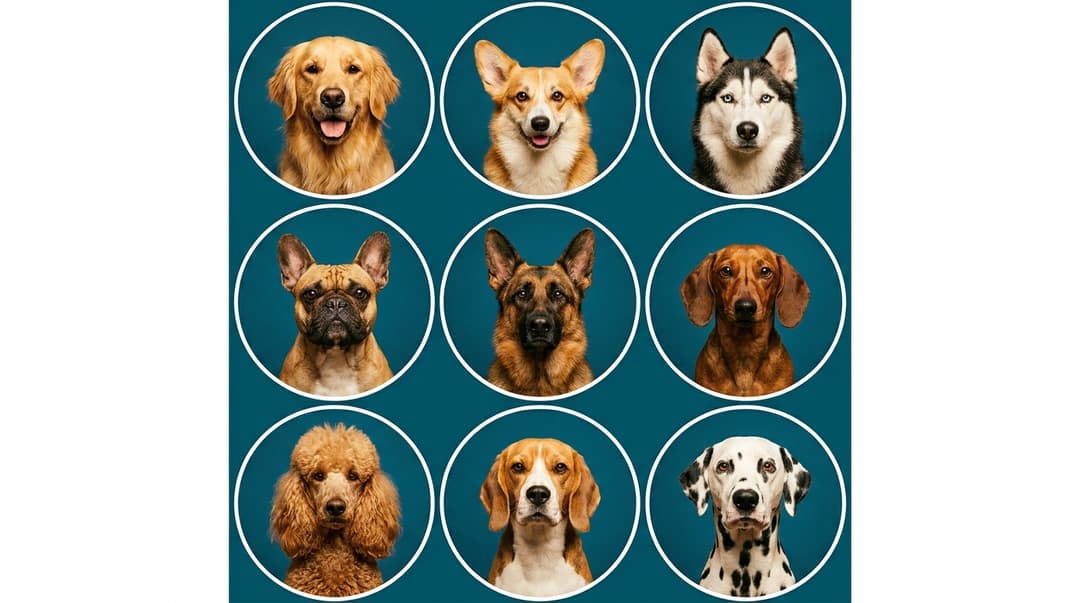
Step 2 — Select the breed you are considering. Breed selection loads the compatibility profile for that specific breed — their documented tendencies with children of different ages, other dogs, cats, small animals, and people with limited experience. These profiles are based on breed group working history, AKC and kennel club temperament standards, and veterinary behavioural literature. They represent statistical tendencies across the breed population, not certainties for any individual dog.
Step 3 — Add your family members. Add every person in the household — adults, children (by age group), and note any allergies or animal fears. Age of children matters significantly. A breed that is patient and gentle with school-age children may be inappropriate with toddlers due to the unpredictable physical handling young children impose. A household member who is afraid of dogs affects which breeds are suitable — a high-energy dog that jumps and demands attention will worsen a fear, while a calm, gentle breed may help.
Step 4 — Add existing pets. This is the most critical input for multi-pet households. Add every existing animal — other dogs (with breed and age), cats, and small animals like rabbits, guinea pigs, or birds. A breed with high prey drive living with a cat requires a specific management plan that many owners are not prepared to implement. Two unneutered male dogs of certain breeds in the same household creates predictable conflict. The checker flags specific combination risks and provides management guidance.
Step 5 — Select living space, time available, and experience level. These inputs complete the compatibility picture. A high-energy breed in a small apartment with a busy owner is a poor compatibility outcome even if it scores well on family and pet dimensions. A first-time owner with a breed that requires experienced handling is a mismatch regardless of other factors.
Step 6 — Click Analyse Compatibility. Your result shows compatibility scores across five dimensions with specific notes on any dimension scoring below 70%. Scores below 55% on any single dimension represent a genuine risk factor worth addressing before proceeding.
Understanding Your Results
What the compatibility score actually measures. The overall score is a weighted composite of five dimensions: family compatibility, existing pet compatibility, environment fit, time and exercise commitment match, and experience level suitability. Dimensions are not equally weighted — a 40% score on existing pet compatibility (indicating a genuine safety risk between animals) carries more practical weight than a 40% score on environment fit (indicating inconvenience rather than danger). Read dimension scores individually, not just the overall figure.
Why a high overall score can still hide a critical problem. A breed that scores 85% overall but 45% on compatibility with your existing cat has a fundamental problem that the overall score obscures. The checker flags any dimension below 55% as a risk flag regardless of overall score. Take these flags seriously — a dog that is dangerous to your cat does not become acceptable because it scores 95% on family compatibility.
Breed tendencies vs individual personality — the key distinction. Compatibility scores reflect breed-level tendencies based on working history and documented temperament. Individual dogs within any breed vary significantly. A Greyhound breed profile shows moderate-to-low cat compatibility due to prey drive — but a specific Greyhound that was raised from puppyhood with cats and has zero prey drive history may be perfectly safe with cats. Conversely, a breed with excellent cat compatibility scores, like a Golden Retriever, may produce an individual dog with unusually high prey drive. Breed scores set the prior probability — actual assessment of the specific dog matters equally.
The introduction method matters as much as compatibility score. A high compatibility score between two animals does not guarantee a successful introduction. Rushed introductions between existing pets and new animals are a leading cause of permanent incompatibility that could have been avoided. Dogs should be introduced on neutral ground, on lead, with calm energy. Cats need controlled introduction over days to weeks — separate rooms initially, scent exchange before visual contact, barrier introduction before free contact. The checker provides introduction guidance for each combination based on the specific animals involved.
When a low score does not mean impossible. A compatibility score below 55% is a warning, not a veto. Many households manage combinations that score poorly on compatibility through committed management: separate feeding stations, crate training, baby gates, structured introduction protocols, and professional behavioural support. The score tells you the difficulty level — a 40% cat compatibility score means the combination requires active management and carries ongoing risk, not that it cannot work with the right commitment and approach.
Compatibility Reference Tables
Dog Breeds — Compatibility with Children by Age Group
| Breed | Toddlers (0–3) | Young Children (4–8) | Older Children (9–12) | Teenagers | Key Notes |
|---|---|---|---|---|---|
| Labrador Retriever | Excellent | Excellent | Excellent | Excellent | Most consistently recommended family dog |
| Golden Retriever | Excellent | Excellent | Excellent | Excellent | Extremely patient; rarely reactive |
| Beagle | Good | Excellent | Excellent | Excellent | Sturdy and friendly; scent-driven outdoors |
| Cavalier King Charles | Excellent | Excellent | Excellent | Excellent | Gentle enough for toddlers |
| Boxer | Good | Excellent | Excellent | Excellent | Exuberant — can knock over toddlers |
| German Shepherd | Fair | Good | Excellent | Excellent | Protective; needs socialisation and training |
| Border Collie | Poor | Fair | Good | Excellent | May herd young children; not recommended with toddlers |
| Chihuahua | Poor | Poor | Fair | Good | Fragile; bites when mishandled by young children |
| Dachshund | Poor | Fair | Good | Good | Back injury risk from rough handling; can snap |
| Husky | Fair | Good | Excellent | Excellent | High energy may overwhelm small children |
| Greyhound | Good | Excellent | Excellent | Excellent | Calm and gentle despite size |
| Jack Russell Terrier | Poor | Fair | Good | Good | High prey drive; reactive with rough play |
| Poodle (Standard) | Good | Excellent | Excellent | Excellent | Intelligent, patient, excellent with older children |
| Rottweiler | Fair | Good | Good | Excellent | Requires experienced owner; excellent with proper training |
| French Bulldog | Excellent | Excellent | Excellent | Excellent | Calm and playful; heat sensitive |
Dog Breeds — Compatibility with Cats
| Breed | Cat Compatibility | Prey Drive | Notes |
|---|---|---|---|
| Basset Hound | High | Low | One of the safest breeds with cats |
| Cavalier King Charles | High | Very Low | Rarely shows prey drive toward cats |
| Golden Retriever | High | Low | Generally safe; individual variation |
| Labrador Retriever | High | Low–Moderate | Usually cat-friendly with early socialisation |
| Pug | High | Very Low | Not interested in chasing |
| Bichon Frise | High | Very Low | Gentle, non-threatening |
| Maltese | High | Very Low | Too small to be a threat; rarely chases |
| Poodle | High | Low | Intelligent and trainable; adapts to cats |
| Beagle | Moderate | Moderate | Will chase outdoors; manageable indoors with introduction |
| Border Collie | Moderate | Moderate | May herd cats; manageable with training |
| Greyhound | Low–Moderate | High | Racing history = strong prey drive; assess individually |
| Husky | Low | High | Strong prey drive; requires supervised management |
| Jack Russell Terrier | Low | Very High | Bred to hunt small animals; genuine risk to cats |
| Whippet | Low–Moderate | High | Sighthound prey drive; assess individually |
| German Shepherd | Moderate | Moderate | Depends heavily on individual and socialisation |
| Saluki | Very Low | Very High | Ancient sighthound — cats are prey |
| Bedlington Terrier | Very Low | Very High | Bred to kill small animals — not cat safe |
Dog-to-Dog Compatibility — Common Conflict Combinations
| Combination | Risk Level | Primary Cause | Management |
|---|---|---|---|
| Two intact males (any breed) | High | Testosterone-driven dominance | Neuter both — resolves most cases |
| Two dominant breeds (Akita, Chow, Malinois) | High | Resource guarding, status conflict | Requires very experienced owner |
| Sighthound + small dog | Moderate | Prey drive triggered by small dog running | Controlled introduction; always supervise |
| High-energy + senior dog | Moderate | Pestering stresses older dog | Separate rest spaces; managed interaction |
| Two herding breeds | Low–Moderate | Can work well; may compete | Channel energy through structured activity |
| Large breed + very small breed | Moderate | Size mismatch — injury risk during play | Supervise play; separate feeding |
| Two well-socialised medium breeds | Low | Generally compatible | Standard introduction protocol |
| Puppy + adult dog | Low–Moderate | Adult may be overwhelmed | Give adult escape routes and quiet space |
Household Compatibility by Living Space
| Living Space | Best Breed Types | Challenging Breed Types | Key Factor |
|---|---|---|---|
| Studio/small apartment | Toy, brachycephalic, calm small breeds | Working/herding breeds, giant breeds | Exercise commitment compensates for space |
| 1–2 bedroom apartment | Small to medium, moderate energy | Huskies, Border Collies, Dalmatians | Twice daily walks minimum required |
| House, small yard | Most breeds with moderate exercise | Giant breeds needing very large space | Yard supplements but does not replace walks |
| House, large yard | All breeds | None — size is not a constraint here | Owner commitment to training matters most |
| Farm/rural | Working breeds thrive | Toy breeds — predator and traffic risk | Working breeds need job/purpose |
Compatibility Score Guide — What Each Range Means
| Score Range | Label | What It Means | Action |
|---|---|---|---|
| 85–100% | Excellent Match | Breed fits your household across all dimensions | Proceed with standard due diligence |
| 70–84% | Good Match | Minor considerations on 1–2 dimensions | Read dimension notes; manageable with awareness |
| 55–69% | Fair Match | Meaningful challenges on key dimensions | Requires specific management plan before proceeding |
| 40–54% | Poor Match | Significant mismatch on important dimensions | Serious consideration needed; consult a behaviourist |
| Below 40% | Not Recommended | Fundamental incompatibility with your household | Consider alternative breeds |
Questions about this calculator
Yes — among the best family dogs for all ages. Main consideration with toddlers is exuberant jumping; train "four paws on the floor" from puppyhood.