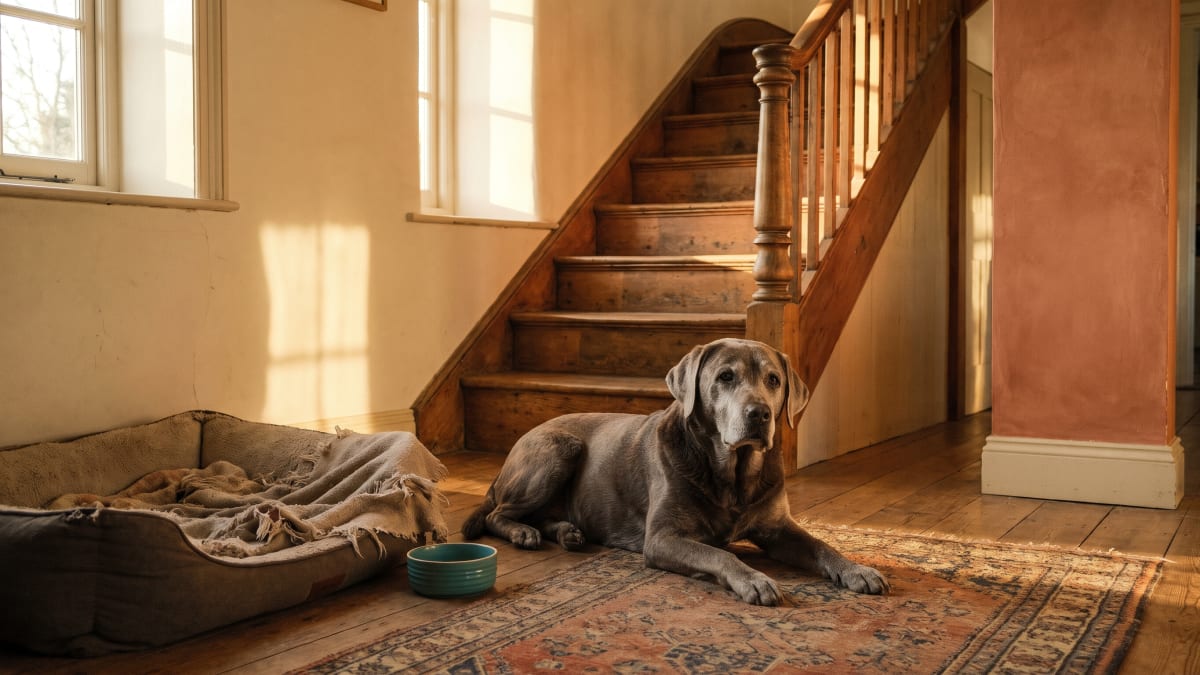
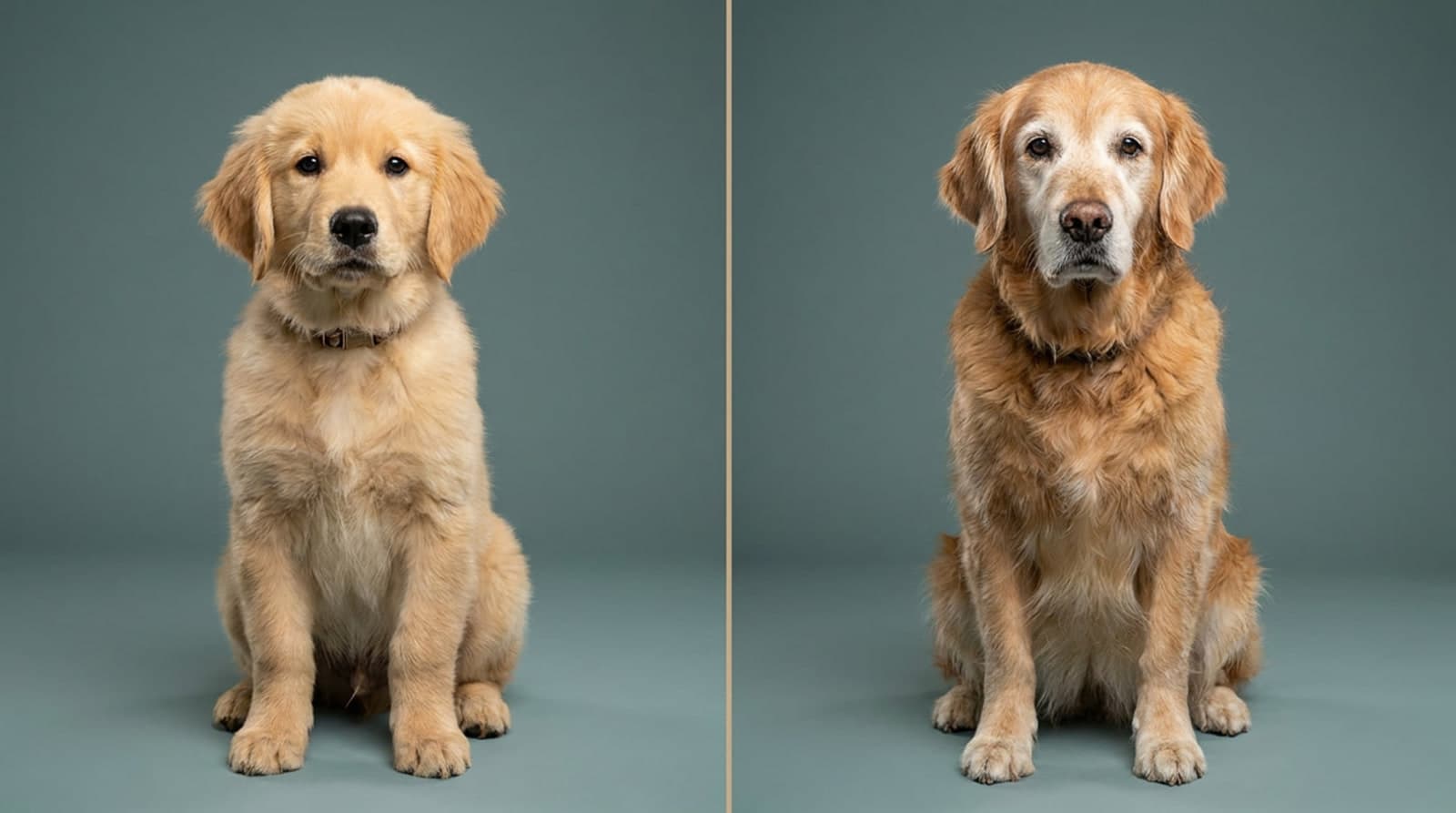
It usually arrives quietly. The morning walk gets shorter. The leap onto the sofa becomes a pause, then a look at you. You tell yourself he is just getting older, and that is true. It is also easy to miss that getting older and being in pain can look exactly the same.
Dogs do not complain the way we do. They adapt, and the adaptations are what we see. This guide is about noticing those changes early and knowing what to say to your vet.
Why dogs hide discomfort
Dogs are very good at carrying on. A dog who limps loudly is easy to help. A dog who quietly stops jumping, sleeps in a different spot or gets a little grumpy is much easier to overlook. Joint pain from osteoarthritis is very common in older dogs, but it is not the only cause of change, and it is treatable more often than owners expect.
Changes worth writing down
None of these prove pain on their own. Together, or when they are new, they are a good reason to book a check-up.
- Movement: stiffness after rest, slower on stairs, hesitating before jumping or getting in the car, a shorter stride, lagging behind on walks.
- Posture and body: reluctance to lie down or get up, sitting or lying in a different position, muscle thinning in the back legs.
- Mood: more irritable, clingy or withdrawn, less interested in play or greeting you.
- Sleep and rest: restless nights, panting or pacing for no obvious reason, more difficulty settling.
- Habits: accidents in the house, licking or chewing a joint, a change in appetite or drinking, weight loss or gain.
- Mind: staring at walls, getting stuck in corners, seeming confused, night waking. These can point to cognitive changes, which are also worth discussing with a vet.
A simple two-week notebook
Memory is a poor measure of slow change. For two weeks, jot down a few lines a day:
- How easily did they get up this morning?
- How far did the walk go before they slowed down?
- Did they use the stairs or jump on furniture?
- How was the night?
- Appetite and mood, on a scale of one to five.
A short video of your dog walking, taken from the side and from behind, is also very useful for a vet who only sees them nervous in a clinic.
What a vet visit can do
Ask for a full senior check. A veterinarian can examine joints and spine, check weight and body condition, and recommend blood work or imaging where appropriate. Many vets recommend senior dogs are seen about every six months, because changes happen faster in later life.
Pain management is an area where vets have real options, from prescription pain relief to weight management, physiotherapy and supplements, depending on the dog. Please do not give human painkillers such as ibuprofen, naproxen or paracetamol (acetaminophen). They can be dangerous for dogs. Any medication should be chosen and dosed by your vet.
Small changes at home that help
- Traction. Slippery floors are hard on stiff joints. Rugs or runners on the paths they use most make a real difference.
- Ramps and steps. Help for the car and sofa saves repeated impact.
- A supportive bed. Thick, orthopaedic-style bedding away from draughts.
- Shorter, more frequent walks. Gentle regular movement is generally better than one long outing, but follow your vet's advice.
- Keep them lean. Extra weight loads sore joints. Our dog BMI calculator and dog food calculator are a starting point, and our guides to feeding an older dog and when to switch to senior food go deeper.
- Nail trims and paw care. Long nails change how a dog stands and walks.
What counts as senior?
It depends on size and breed. Large dogs are often considered seniors earlier than small ones. Our dog age calculator gives a rough life-stage guide, but it is an estimate, not a diagnosis.
When to go sooner
Contact a vet promptly if your dog cries out, will not put weight on a leg, collapses, has a swollen or painful belly, struggles to breathe, stops eating or has any sudden change. Do not wait for the next routine appointment.
The kinder frame
Slowing down is not always a sign that the best years are over. For many dogs, treating pain brings back the walk, the tail and the sofa. Noticing is the first step, and you are already doing it.
This guide is general education from the PawCalculator team, not veterinary advice. Your own veterinarian knows your dog and is the right person to diagnose and treat pain.