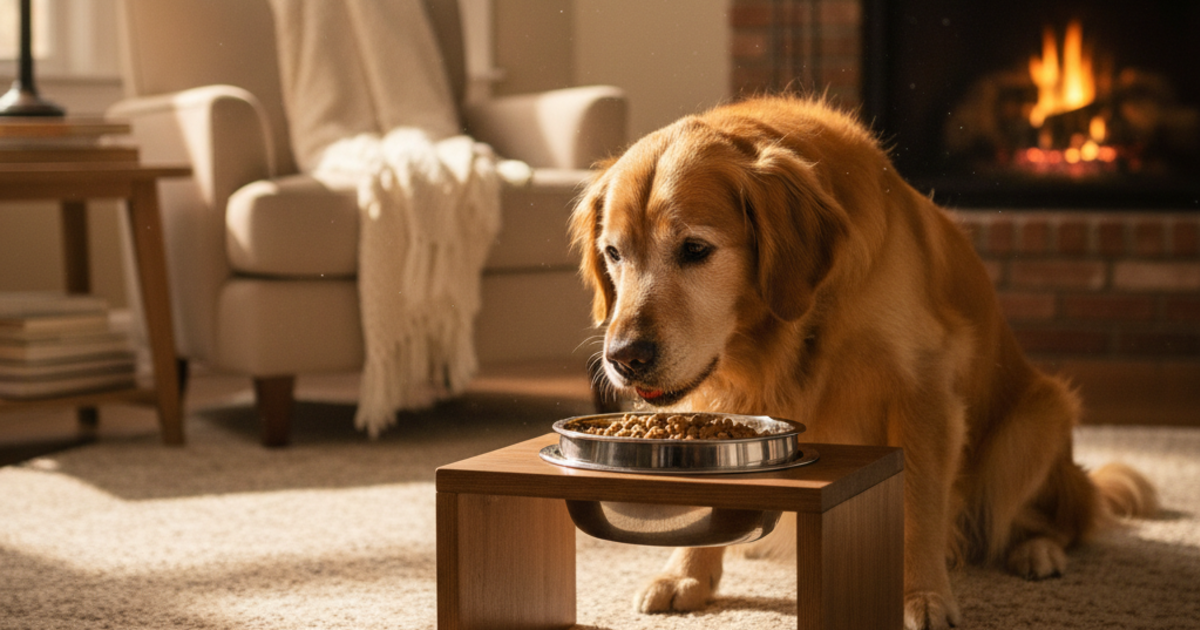
Most dogs are ready for senior dog food around the last 25% of their expected lifespan, which is how AAHA's senior care guidelines define "senior." In practice that's about 10–12 years for small breeds, 8–10 for medium, 7–8 for large and 5–6 for giant breeds. The switch isn't about a birthday, though. It's about your dog: slowing down, gaining or losing weight, stiff joints, or dental problems are all good reasons to reassess their food.
Older dogs often need fewer calories but just as much (or more) protein. The dog food calculator by weight and age adjusts portions as your dog gets older.
When Is a Dog Considered a Senior?
| Size | Adult weight | Typical lifespan | Senior from about |
|---|---|---|---|
| Small | Under 10 kg (22 lb) | 12–16 years | 10–12 years |
| Medium | 10–25 kg (22–55 lb) | 10–13 years | 8–10 years |
| Large | 25–45 kg (55–100 lb) | 9–12 years | 7–8 years |
| Giant | Over 45 kg (100 lb) | 7–10 years | 5–6 years |
Not sure where your dog falls? The dog age calculator converts your dog's age to human years based on size.
What Older Dogs Need From Their Food
Enough high-quality protein. It's a myth that seniors need low protein. Healthy older dogs lose muscle more easily, and research suggests they may need more protein than younger adults to hold onto it. Protein restriction is only for dogs with specific conditions, like advanced kidney disease, as advised by a vet.
Fewer calories, for most. Many seniors are less active, and weight gain speeds up arthritis. Some very old dogs (often 12+) swing the other way and start losing weight, so watch the trend.
Omega-3 fatty acids (EPA and DHA) from fish oil support joints, skin and possibly brain health.
Antioxidants and brain-support nutrients. Some senior diets add antioxidants or MCT oil, which have evidence for supporting cognitive function in older dogs.
Easy to chew and digest. Dental disease is very common in older dogs.
Fiber to help with regularity.
Soft Dog Food for Senior Dogs
If your dog drops kibble, chews on one side, or eats slowly, their teeth may hurt. Soft dog food for senior dogs can help:
- Canned or fresh food
- Kibble soaked in warm water for 10–15 minutes
- Mixing a little wet food into dry
But don't just switch textures and move on. Painful teeth need a vet check; treating dental disease often gives seniors a new lease on life.
How Much to Feed a Senior Dog: Worked Example
Many senior dogs do well on about 1.4 × RER, compared with 1.6 for a younger neutered adult.
A 20 kg (44 lb) neutered 10-year-old dog, senior kibble at 350 kcal per cup.
- RER = 70 × 20^0.75 ≈ 662 kcal
- Senior factor: 662 × 1.4 ≈ 927 kcal/day
- 927 ÷ 350 ≈ 2⅔ cups per day
- At 1.6 × RER (his old adult amount) he'd get 1,060 kcal, about 130 kcal more than he likely needs, which adds up to weight gain over months
Senior dog calories by weight
| Dog weight | Senior (~1.4 × RER) | Cups at 350 kcal/cup |
|---|---|---|
| 5 kg (11 lb) | ~328 kcal | ~1 |
| 10 kg (22 lb) | ~551 kcal | ~1½ |
| 20 kg (44 lb) | ~927 kcal | ~2⅔ |
| 30 kg (66 lb) | ~1,256 kcal | ~3½ |
| 40 kg (88 lb) | ~1,559 kcal | ~4½ |
These are starting points. Weigh your dog monthly and adjust by 10%. Very active seniors may need more; for a general portion check, the dog food calculator works for any life stage.
How to Choose the Best Senior Dog Food
- A complete and balanced AAFCO statement for adult maintenance (there's no separate AAFCO "senior" profile, so senior foods vary a lot)
- Calories per cup that match your dog's needs: lower for couch potatoes, higher for thin seniors
- Protein that isn't reduced unless your vet recommends it
- Added EPA/DHA for joints
- Kibble size and texture your dog can manage
The best dog food for older dogs is the one that keeps your dog at a lean, muscular body condition, not simply the one with "senior" on the bag. For more ideas, read our senior dog feeding guide.
How to Switch to Senior Dog Food
Change over 7–10 days: 25% new food, then 50%, then 75%, then 100%. Senior stomachs can be more sensitive, so go slower if needed. Add a weigh-in every two weeks for the first two months.
When to Call Your Vet
AAHA recommends checkups at least every six months for senior dogs, since problems show up faster. Call your vet sooner if your older dog:
- Loses weight without trying, or loses muscle over the spine and hips
- Drinks or pees much more than usual (possible kidney disease, diabetes or Cushing's)
- Has trouble chewing, bad breath, or drops food
- Vomits, has diarrhea, or skips meals for more than a day
- Seems confused, restless at night or "gets stuck" in corners (possible cognitive decline)
- Is stiff, reluctant to use stairs, or limps
The Bottom Line
Switch to senior dog food when your dog reaches the last quarter of their expected lifespan or starts showing age-related changes. Keep protein up, trim calories if they're gaining, and choose a texture they can eat comfortably. Use the dog food calculator by weight and age to set the right portion for your older dog.
Frequently asked questions
PawCalculator Editorial
We combine veterinary references, published guidelines, and calculator-grade modeling. This article is for education, not a substitute for an exam.
+ Follow on PawTalk