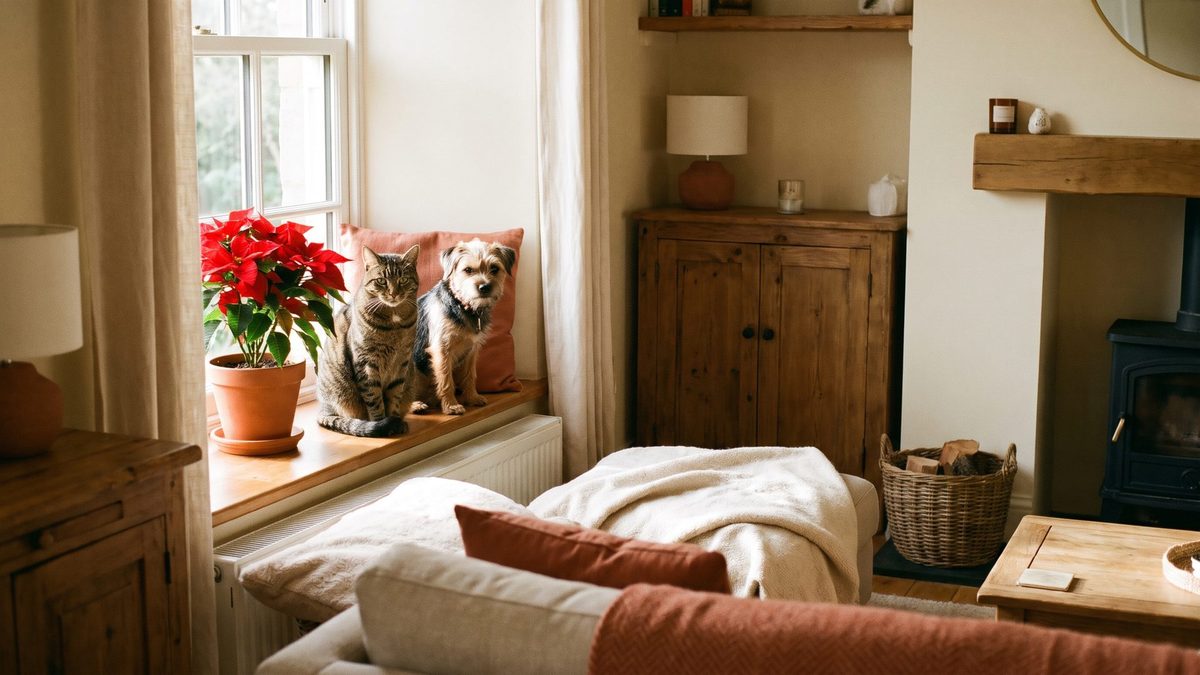
Poinsettias are mildly toxic to dogs and cats, not deadly. The milky sap can irritate the mouth and stomach, and the usual signs are drooling, lip licking and vomiting, with skin irritation if the sap touches fur. The bigger holiday plant dangers are lilies for cats, plus holly, mistletoe, amaryllis, cyclamen and paperwhite bulbs. Use the table below to decide what to display, and call a vet or poison helpline if your pet has eaten any plant you are unsure about.
Are poinsettias poisonous to pets?
The ASPCA lists poinsettia (Euphorbia pulcherrima) as mildly toxic to cats and dogs. Chewing the leaves or bracts can cause drooling, vomiting and sometimes diarrhea, and the sap can irritate skin and eyes. The myth that poinsettias are a leading cause of fatal poisonings is not borne out by poison-control reports. In most cases the pet recovers with little or no treatment.
That does not make the plant a good choice for a pet's reach. A cat that chews leaves can be miserable for a day, and repeated vomiting is a problem for small or older animals. If you have a determined chewer, put the plant somewhere your pet cannot get to.
Holiday plants at a glance
| Plant | Risk to pets | Typical signs |
|---|
| Poinsettia | Mild | Drooling, vomiting, skin irritation from sap |
| Christmas cactus | Considered non-toxic by the ASPCA | May cause mild upset if a lot is eaten |
| Holly | Toxic | Vomiting, diarrhea, drooling, lip smacking |
| Mistletoe | Toxic | Vomiting, diarrhea; more serious with large amounts or European types |
| Amaryllis | Toxic | Vomiting, drooling, belly pain, lethargy |
| Cyclamen | Toxic | Drooling, vomiting, with root and tuber the most potent |
| Paperwhites and other narcissus | Toxic | Vomiting, diarrhea, belly pain; bulbs are worst |
| Lilies (Easter, tiger, Asiatic, stargazer) | Extremely dangerous for cats | Kidney failure; even pollen or vase water can matter |
| Real Christmas tree (fir, spruce, pine) | Mild irritation | Needles can upset the stomach or cause an obstruction |
| Orchids (moth orchid) | Considered non-toxic by the ASPCA | Little concern |
If your plant is not in the table, search the ASPCA toxic and non-toxic plant list for the name and the species. Many common names cover several plants with different risks.
The one to take seriously: lilies and cats
If you receive a holiday bouquet, check it for lilies. Many true lilies are among the most dangerous plants for cats. A small amount of any part, including pollen groomed from the fur and water from the vase, can lead to acute kidney failure. Call a veterinarian immediately if your cat has had any exposure, even if she seems fine. Our veterinary cost estimator can help you plan if emergency care is needed.
Some "lilies" are not true lilies and have different effects, so the name on the tag matters. When in doubt in a house with cats, skip the bouquet or remove the lilies.
Other plants and decorations worth moving
- Holly: the berries and spiny leaves can cause vomiting and stomach upset.
- Mistletoe: berries and leaves are toxic. Hang it out of reach, not in a pot on a table.
- Amaryllis and paperwhite bulbs: the bulbs are the most toxic part. Keep unplanted bulbs sealed away.
- Tree water: can contain bacteria, fertilizer or preservatives. Cover the stand or use a guard.
- Needles: swallowed pine needles can scratch or block the gut.
- Tinsel, string and ribbon: especially dangerous for cats, because long strands can cause a serious intestinal blockage.
What to do if your pet chewed a plant
- Remove any plant material from your pet's mouth and take the plant away.
- Rinse the mouth gently with water and wipe sap off skin or fur.
- Identify the plant. A photo and the botanical name help. Keep the tag.
- Call a vet or poison helpline if your pet is vomiting repeatedly, drooling heavily, lethargic, or if the plant is not clearly a mild one.
- ASPCA Animal Poison Control: (888) 426-4435
- Pet Poison Helpline: (855) 764-7661
- Do not induce vomiting unless a veterinary professional tells you to.
A consultation fee may apply to the helplines. Both are staffed by veterinary professionals and can give advice based on your pet's species, weight and what was eaten.
Pet-friendlier holiday decorating
- Pick plants the ASPCA lists as non-toxic, such as a Christmas cactus, and keep them on a high shelf anyway.
- Use faux plants or dried displays with no berries.
- Put real plants in a room your pet cannot enter.
- Hang decorations above tail and paw height, and use unbreakable ornaments on lower branches.
- Switch to flameless candles and tuck cables out of reach.
- Ask guests not to leave bouquets within reach.
For food hazards, see our guide to holiday hazards for dogs and cats, and swap decorating tips with other owners on the PawTalk advice forum.
Related guides
*This guide is general education from the PawCalculator team, not veterinary advice. Sources: the ASPCA toxic and non-toxic plant list and ASPCA Animal Poison Control Center, and the Merck Veterinary Manual. If your pet has eaten a plant, contact a veterinarian or poison helpline.