
How Much Should You Feed Your Cat?
Your inputs
Results update live as you type.
Your results
Fill in the form to see your estimate.
Ready when you are
Fill in the form to see your reference estimate
Keep going with a related calculator.
How Much Should You Feed Your Cat?
Wet and dry cat food can't be measured on the same scale — dry food is calorie-dense (typically 300-400 kcal per cup) while canned wet food is much less concentrated (often under 100 kcal per 3 oz can) due to its high moisture content, so a chart that just says "X cups" without specifying food type will be wrong for half of readers. This chart breaks portions out separately for dry-only, wet-only, and mixed-feeding households, cross-referenced against your cat's weight and life stage, since kittens need roughly 2-3x the calories per pound of an adult cat during peak growth.
How to use this calculator
Enter your cat's weight, life stage, food type (dry, wet, or mixed), and the calorie density from your food's label. Portions are calculated separately by food type since dry and wet food differ roughly 3–4x in calorie density per volume.
Approximate daily portions (adult cat, maintenance)
| Cat weight | Dry food (350 kcal/cup) | Wet food (90 kcal/3oz can) |
|---|---|---|
| 8 lb (3.6 kg) | ~⅓ cup | ~1.5 cans |
| 10 lb (4.5 kg) | ~⅜ cup | ~1.8 cans |
| 12 lb (5.4 kg) | ~⅖ cup | ~2 cans |
| 15 lb (6.8 kg) | ~½ cup | ~2.4 cans |
Kitten feeding pattern (approximate, by age)
| Age | Meals per day | Relative calorie need vs. adult |
|---|---|---|
| 8–12 weeks | 4 | ~2.5x per lb |
| 3–6 months | 3 | ~2x per lb |
| 6–12 months | 2–3 | ~1.5x per lb, tapering to adult |
| 12+ months (adult) | 2 | 1x (baseline) |
Understanding your results
If you're mixing wet and dry, don't feed full portions of both — calculate the calories coming from whichever food makes up most of the diet, then fill the remaining daily target with the other type, rather than treating each portion as independent. Bag and can feeding guidelines tend to run generous industry-wide, so if your cat is gaining weight at the "recommended" amount, that's a normal reason to feed less than the label suggests, not a sign something's wrong with your cat.
Why meal frequency matters, not just total calories. Kittens have small stomachs and high energy needs relative to size, which is why they need more frequent, smaller meals rather than the same total calories split into two large adult-style meals — free-feeding dry food is common for kittens specifically for this reason, with portions still tracked against a daily target.
Multi-cat households need per-cat tracking, not a shared bowl total. If cats free-feed from a shared bowl, it's hard to know if one cat is eating significantly more than its share — separate feeding stations or supervised meals make individual portion tracking possible, which matters especially if one cat needs a different calorie target than another.
Reading your specific food's label instead of relying on averages
The portion figures in this chart use commonly cited average calorie densities, but actual pet food varies enough between brands and formulas that checking your specific food's label is what turns a rough chart into an accurate portion. Dry food calorie density can range from roughly 300 to over 500 kcal per cup depending on the formula, and wet food varies similarly by brand and moisture content — a portion calculated from this chart's average figures could be meaningfully off for a food on either end of that range. If your food's label lists "kcal/kg" rather than "kcal/cup" or "kcal/can," that's still usable, but it requires converting using the total weight of a cup or can of that specific product, which is more precise than assuming a generic conversion applies. When in doubt, the Cat Food Calculator tool on this site walks through that conversion using your exact food's label figures rather than the average density this chart assumes.
Adjusting portions as circumstances change
The portions in this chart represent a starting point for a healthy cat at a stable weight and typical activity level, and several common situations call for a deliberate adjustment rather than sticking rigidly to the chart figure. A cat recovering from illness or surgery may temporarily need a different feeding approach entirely (sometimes more frequent, smaller meals, or a prescription recovery diet) under your vet's specific guidance rather than the standard maintenance chart. A cat that's recently been spayed or neutered typically sees a modest drop in metabolic rate, which means the same portion that maintained weight before surgery can lead to gradual gain afterward if not adjusted down slightly. And for any cat trending away from a healthy weight in either direction over a few consecutive weigh-ins, the chart's starting portion should be treated as the number to adjust from based on that trend, not a fixed target to defend regardless of how your specific cat is actually responding to it.
When to consult a professional
For health, dosage, or nutrition decisions, always confirm calculator output with your veterinarian. This tool provides reference estimates, not medical advice.
Questions about this calculator
Calorie density differs by roughly 3-4x between typical dry kibble and canned wet food, so a "cup" or "can" measurement means very different calorie totals depending on which you're feeding.
The math, openly documented.
Inputs
Enter the details that affect your estimate.
weight · age · breed
Normalize
Validate ranges and convert units when needed.
lbs ↔ kg
Calculate
Veterinary or industry-standard formulas applied.
result = f(inputs)
Results
Clear outputs with context and disclaimers.
display + notes
More from Nutrition
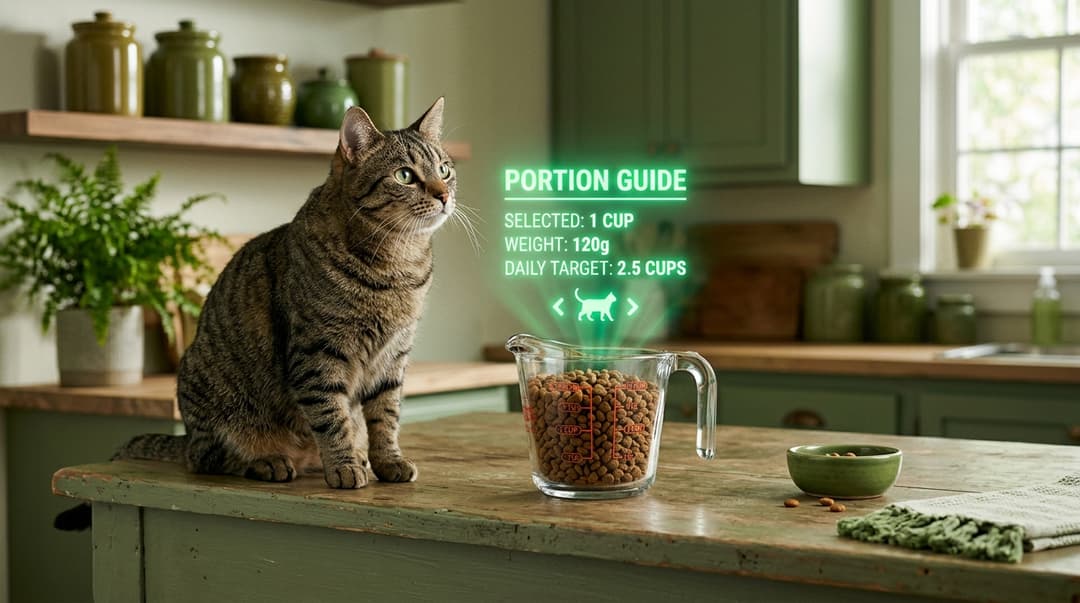
How Much Food Does Your Cat Need?
cat food calculator: Get an exact daily portion in grams or cups based on your cat's weight, life stage, and the calorie
Open tool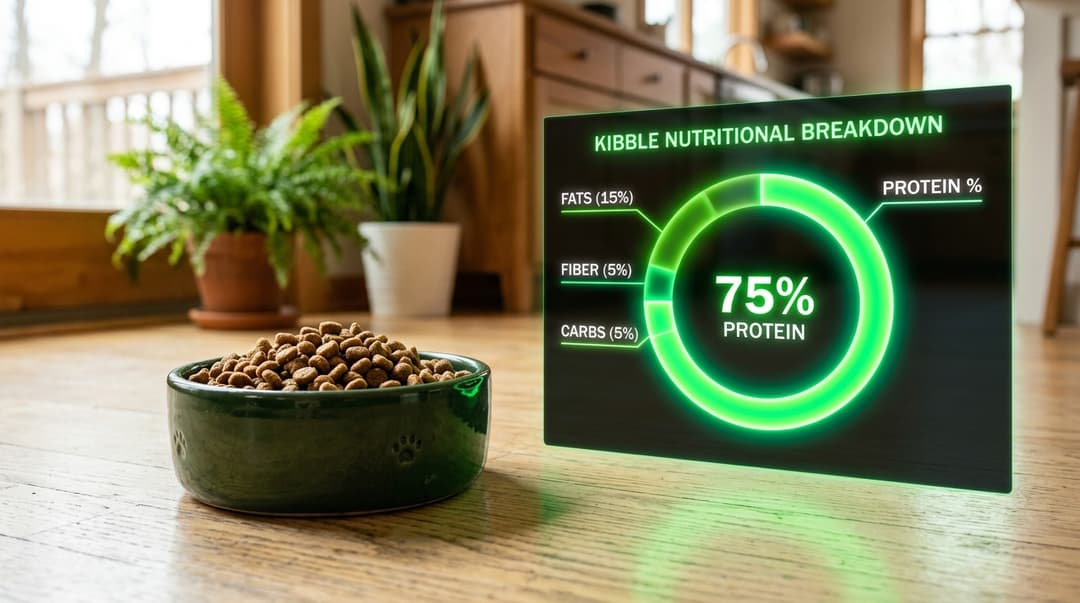
How Much Protein Does Your Dog Need?
dog protein calculator: Estimate your dog's daily protein target in grams, adjusted for growth, activity, and life stage
Open tool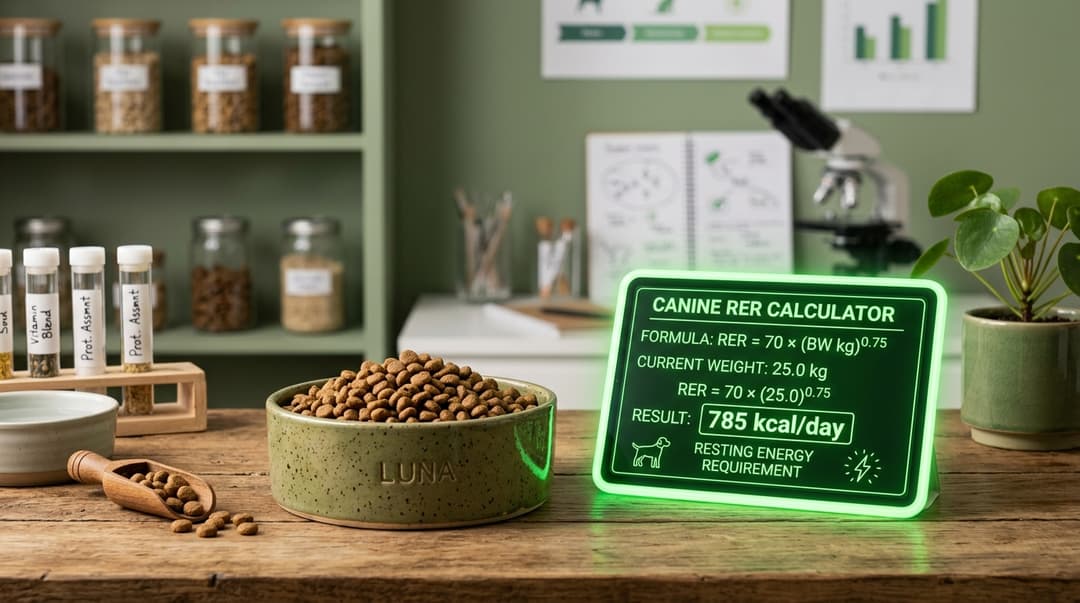
Calculate Your Dog's RER (Resting Energy Requirement)
dog rer calculator: Calculate Resting Energy Requirement using the exact WSAVA-referenced formula: 70 × (weight in kg)^0
Open toolArticles from Insights
Got an edge case the calculator can't handle?
247 active threads about dog nutrition right now. Verified vets and experienced owners answer within hours.