Raw Diet for Dogs: Complete BARF Guide for Beginners
Most people who switch to raw feeding do it after something goes wrong. A dog with chronic ear infections that won't clear. Skin that's been itchy for two years despite three different kibbles. Stools so loose the vet just shrugs and says "sensitive stomach."
Raw feeding isn't a trend. It's been around longer than commercial dog food. What's changed is that more owners are asking harder questions about what's actually in the bag - and not liking the answers.
This guide covers the BARF diet from the ground up: what it is, exactly what to feed, how much, and how to start without making the mistakes that send most beginners back to kibble out of frustration.
What BARF Actually Means
BARF stands for Biologically Appropriate Raw Food - sometimes called Bones and Raw Food. Australian vet Dr. Ian Billinghurst coined the term in the 1990s, arguing that dogs evolved eating whole prey, not grain-heavy processed pellets.
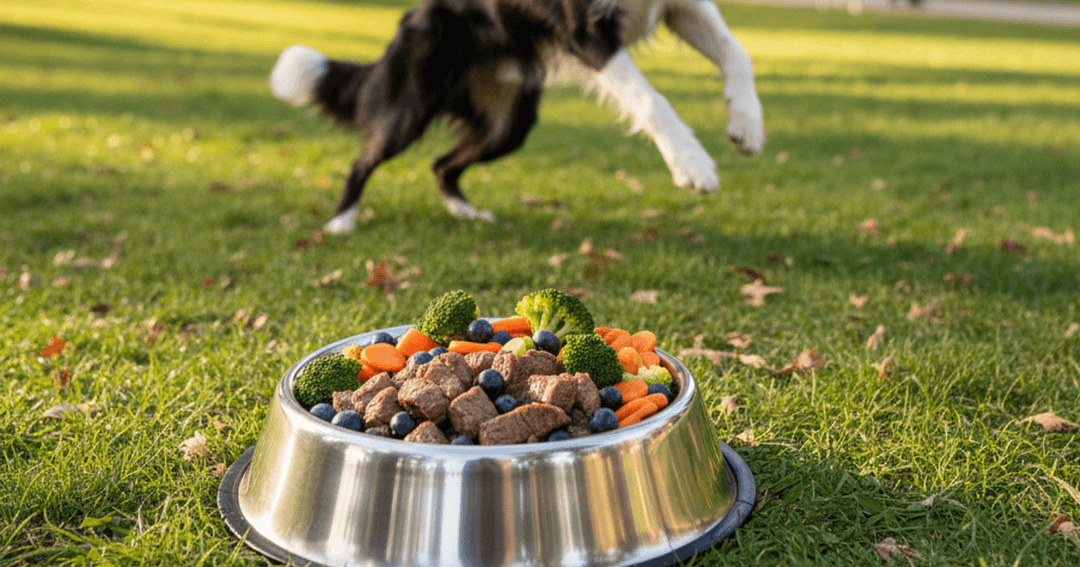
The premise is straightforward: feed a dog what its digestive system was built for. Raw muscle meat, edible bone, organ meat, and a small amount of plant matter. No preservatives, no rendered by-products, no fillers.
What BARF is not is throwing a chicken breast in a bowl and calling it done. Balance matters. Get it wrong consistently and you create deficiencies that won't show up for months - then show up badly.
What Changes When You Switch (And What Doesn't)
Within the first few weeks, most owners notice the same things: smaller stools, less smell, a coat that starts to look different - not dramatically, but noticeably. Dogs that were gassy often stop being gassy. Dogs with loose stools often firm up.
What doesn't change immediately: energy, weight, behaviour. Give it 6-8 weeks before drawing conclusions.
What sometimes gets worse before it gets better: digestion. The gut microbiome shifts during transition. Some dogs handle it smoothly. Others get loose stools for a week. That's normal. What's not normal is vomiting, blood, or symptoms that go beyond 10 days.
The BARF Ratio - What Goes in the Bowl
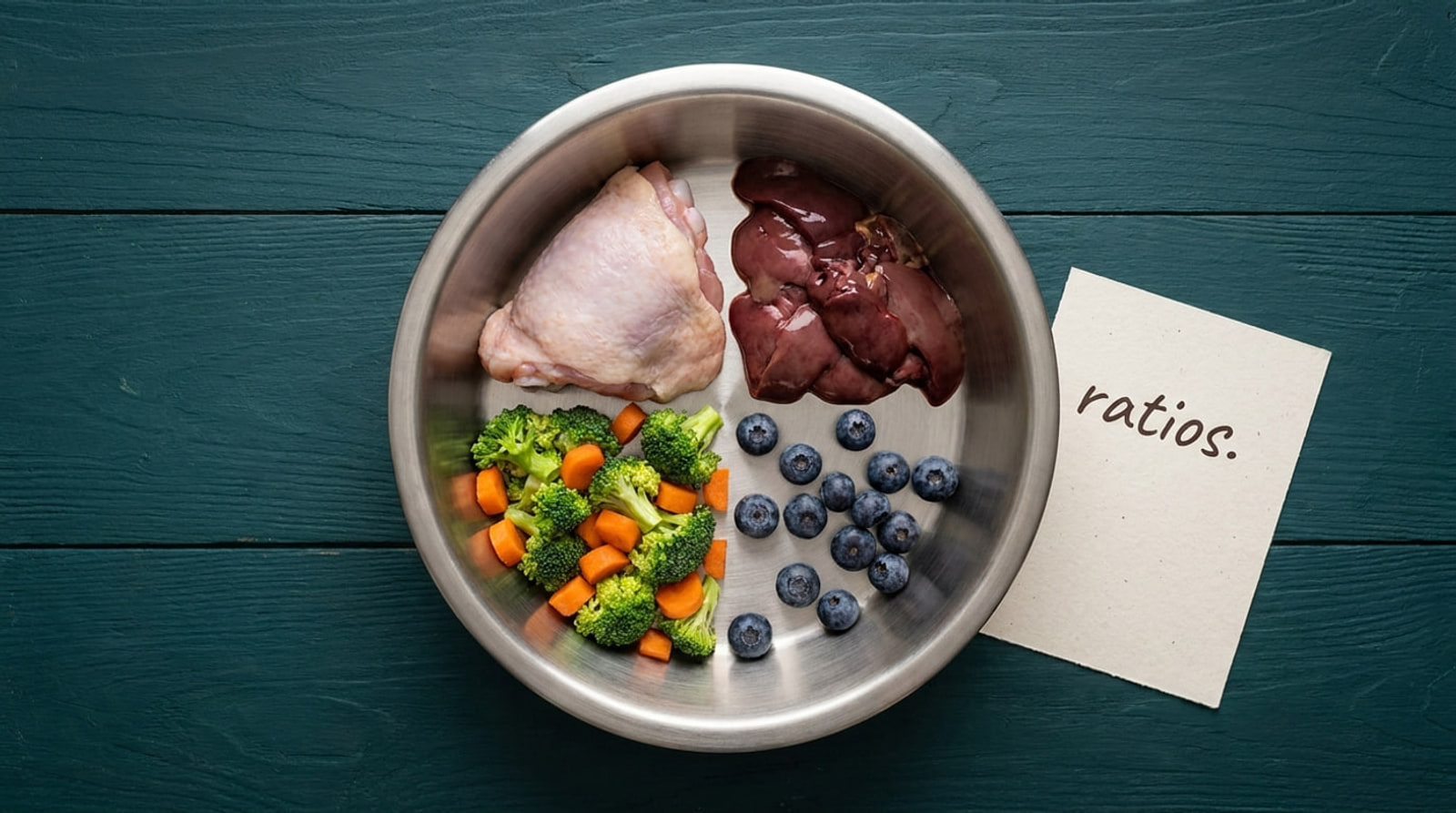
A properly balanced BARF diet follows this breakdown by weight:
| Component | Target % |
|---|---|
| Muscle meat | 70% |
| Raw meaty bones | 10% |
| Liver | 5% |
| Other secreting organs | 5% |
| Vegetables & fruit | 7% |
| Eggs, seeds, dairy | 3% |
This isn't guesswork - it's modelled on whole prey composition. A rabbit carcass breaks down to roughly these ratios naturally.
Muscle Meat (70%)
The bulk of every meal. Rotate across at least 3-4 proteins over time:
- Chicken thighs and breast
- Beef mince or chunks
- Turkey
- Lamb
- Pork (freeze for 2 weeks before feeding to reduce parasite risk)
- Duck, rabbit, venison when available
Variety matters here. Feeding only chicken long-term creates amino acid gaps. Think of it like rotating crops - each protein brings something different.
Raw Meaty Bones (10%)
This is your calcium and phosphorus source. Get the ratio wrong - too many bones - and stools turn white and chalky. Too few and you're calcium deficient over time.
Good starting bones:
- Chicken necks and wings (soft, good for beginners)
- Duck necks
- Lamb ribs
- Turkey necks for larger dogs
One rule, no exceptions: never feed cooked bones. Cooking makes bone brittle and splinter-prone. Raw bone compresses and digests more safely.
Liver (5%)
Liver is the most nutrient-dense food in the diet. Vitamin A, B12, folate, iron, copper - nothing else comes close per gram. Beef liver, chicken liver, lamb liver all work.
The catch: 5% is also the ceiling. Exceed it consistently and you can run into vitamin A issues. Start with less than you think you need and build up.
Other Secreting Organs (5%)
Kidney, spleen, pancreas, brain. These aren't interchangeable with muscle meat - they contain fat-soluble vitamins and trace minerals that muscle meat simply doesn't have in useful quantities.
If sourcing these is difficult locally, a good raw feeding butcher will often have them. Ethnic butchers are frequently the best source and the most affordable.
Vegetables and Fruit (7%)
Dogs aren't obligate carnivores. They ferment plant matter in the gut and extract nutrients from it - less efficiently than humans, but meaningfully. The key is preparation: lightly blend or briefly steam vegetables to break down cell walls. Raw chunks pass through largely undigested.
Useful vegetables: spinach, kale, broccoli, carrots, zucchini, cucumber
Useful fruits: blueberries, apple (no seeds), watermelon (no rind)
Hard no's: grapes and raisins, onion and garlic, avocado, cherries with pits.
Eggs, Seeds, Dairy (3%)
Raw eggs - shell included if you want the calcium - kefir, plain yogurt in small amounts, ground flaxseed, pumpkin seeds. This category adds omega-3s, probiotics, and variety.
How Much to Feed
The standard starting point for adult dogs: 2-3% of ideal body weight per day, split across two meals.
Adjustments:
- Highly active or working dogs: 3-4%
- Low-activity seniors: 1.5-2%
- Puppies: 5-10% of current body weight, 3-4 meals daily
These are starting points, not fixed rules. Watch the dog. If ribs become visible, feed more. If the waist disappears, feed less. Weight is your real feedback mechanism.
Use the PawCalculator Dog Food Calculator to get a more precise daily target based on your dog's weight, age, breed, and activity level.
How to Start: The Actual Step-by-Step
Step 1: Vet check first
Get a baseline blood panel before switching. It gives you something to compare against at 3 and 6 months - and it's the only way to know objectively whether the diet is working.
Step 2: One protein only - chicken
Start with chicken, nothing else. It's cheap, digestible, and available everywhere. Chicken thighs with bone-in are ideal for the first few weeks. Single-protein introduction means if something goes wrong, you know exactly what caused it.
Feed chicken only for 2-3 weeks.
Step 3: Transition over 10 days
Don't switch overnight. A sudden diet change disrupts gut bacteria regardless of what you're switching to.
- Days 1-3: 75% current food, 25% raw
- Days 4-6: 50/50
- Days 7-9: 25% current food, 75% raw
- Day 10+: 100% raw
Some dogs need 14 days instead of 10. Go by how the dog responds, not the calendar.
Step 4: Muscle meat first, add complexity slowly
Week 1-2: muscle meat only. No bones, no organs, no vegetables yet.
Week 3: introduce raw meaty bones. Supervise feeding until you're confident.
Week 4-5: add liver, starting at 1% of the diet. Increase to 5% over 2-3 weeks.
Week 6+: add other organs, then vegetables and the remaining components.
The Mistakes That Actually Derail People
Too much liver too fast. This is the number one beginner error. Start small and build over weeks, not days.
Skipping organs because they seem optional. They're not. Muscle meat and bones alone can leave vitamin gaps over time.
Cooked bones. Worth repeating because it still happens.
Not rotating proteins. Introduce variety gradually once transition stabilizes.
Judging the diet in the first two weeks. The transition period can look rough. The clearer picture usually appears around week 6-8.
Safety in the Kitchen
Raw meat handling isn't complicated but it is consistent:
- Separate boards, knives, and bowls for dog food
- Defrost in the fridge, not on the counter
- Feed in an easy-to-clean area
- Remove uneaten food after 20-30 minutes
- Wash hands after every handling session
- Store raw food away from ready-to-eat items
If you have young children or immunocompromised people in the household, use stricter hygiene controls.
Signs It's Working
By week 6-8 of properly balanced raw feeding:
- Coat often looks shinier and softer
- Stools are usually smaller and less odorous
- Teeth may show less tartar over time
- Gas often decreases
- Itching may improve in some dogs
- Energy may feel more consistent
If you're seeing the opposite - persistent loose stools beyond week 3, weight loss, lethargy, vomiting - review the balance and involve your vet.
Frequently Asked Questions
Is raw feeding safe for all dogs?
Not without modification. Puppies under 8 weeks, immunocompromised dogs, pregnant dogs, and dogs on certain medications need veterinary guidance before switching.
Can I mix raw food with kibble?
The raw feeding community is divided on this. Some dogs handle mixed feeding, others do better with separate meals.
How much does it cost compared to kibble?
It depends on sourcing. Buying in bulk and freezing usually lowers cost.
Do I need supplements?
A correctly balanced BARF plan may not need many extras, but omega-3 intake is a common gap when fish is absent.
My dog has loose stools on raw - what should I do?
Check transition timing first, then review bone and organ ratios before making larger changes.
Calculator outputs are estimates - always confirm significant diet changes with your vet. Use the Raw Diet Planner to build a balanced meal plan based on your dog's specific weight and targets.
Partner picks for this guide
As an Awin affiliate, Paw Calculator may earn a commission from qualifying purchases. Prices and availability can change.


PawCalculator Editorial
We combine veterinary references, published guidelines, and calculator-grade modeling. This article is for education, not a substitute for an exam.
+ Follow on PawTalk