How to Use Pet Memories
Step 1 — Create your pet's profile. Enter your pet's name, species, breed, and date of birth or adoption. This creates the foundation of your pet's personal timeline. You can create profiles for multiple pets — each gets their own dedicated memory log and milestone tracker.
Step 2 — Log your first memory. Every memory entry has three components: a date, a category, and a description. Categories include First Moments (first walk, first night home, first vet visit), Training Achievements (first sit, first recall, first off-lead walk), Health Milestones (vaccinations, spay/neuter, first dental cleaning), Fun Moments (first swim, first hike, first dog park visit), and Everyday Magic (favourite sleeping spot discovered, best friend met, first time on the sofa).
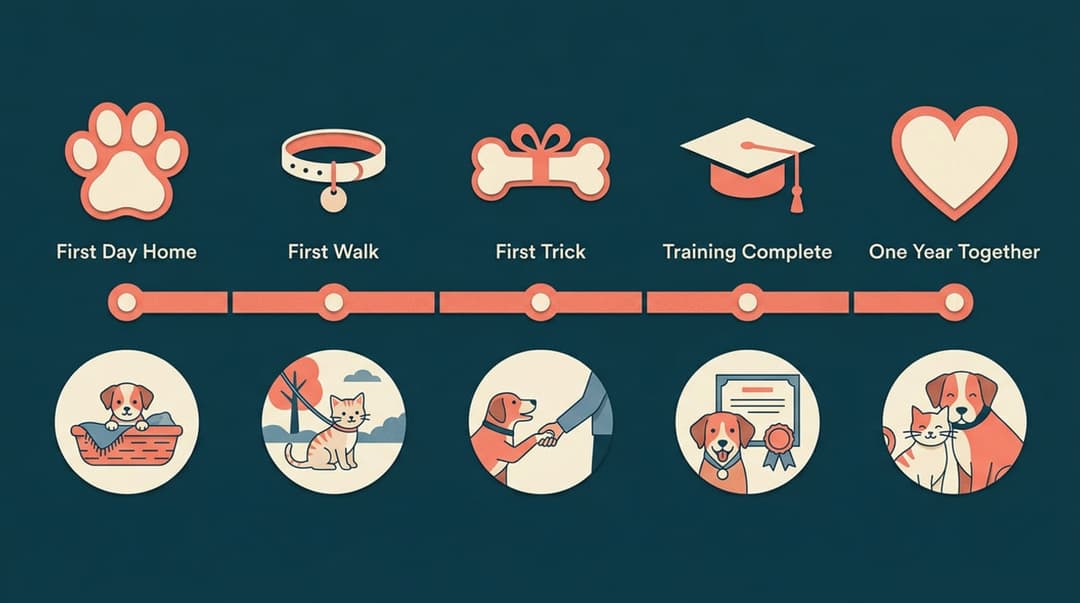
Step 3 — Build your timeline. Each logged memory appears on a visual timeline in chronological order. The timeline shows your pet's journey from arrival to today — a record that grows more meaningful over time. Milestone badges appear automatically when significant events are logged: first birthday badge, first training achievement badge, one-year together badge.
Step 4 — Revisit and add as you go. The most valuable use of Pet Memories is consistency — logging regularly rather than trying to remember everything later. A brief note on the day something happens takes 30 seconds and creates a permanent record. Most owners find they revisit their pet's timeline far more than they expected, especially during difficult times or when celebrating anniversaries.
Why Keeping a Pet Memory Log Matters
The first year passes faster than you expect. The first 12 months with a new pet are extraordinary — rapid development in puppies and kittens, the gradual building of trust with a rescue, the discovery of your pet's personality and preferences. Most owners look back at this period and wish they had documented more of it. A structured memory log captures the small moments — the first time they slept through the night, the first time they chose to sit beside you, the first successful recall at the park — that feel permanent in the moment but fade without documentation.
Medical history as a practical tool. Beyond sentimental value, a chronological record of your pet's life has real practical utility. When did that limping first appear? How long ago did you notice the change in appetite? When was the last time they had that skin reaction? Owners who keep records can answer these questions accurately at vet appointments — vague estimates like "maybe a few months ago" are replaced by a specific date. Vets can diagnose and treat more effectively with accurate timelines. The memories log doubles as an informal medical diary.
Grief and legacy. For owners who have lost a pet, a memory log becomes something irreplaceable. The average dog lives 11–12 years — a significant portion of an owner's adult life. A detailed timeline of that life, with photos and descriptions of meaningful moments, is a form of documentation that matters deeply after loss. Many owners who did not keep records wish they had. Those who did return to them repeatedly as a source of comfort.
Sharing your pet's story. Pet memories make naturally shareable content — milestone posts, anniversary updates, and "day one vs now" comparisons are among the most engaged pet content on social media. A structured log makes it easy to find and share these moments at the right time.
Milestone Guide — What to Log and When
First Week — Arrival Milestones
| Milestone | Why It Matters | Log It |
|---|---|---|
| First night home | Sets the tone for settling in — note how they slept and where | Day 1 |
| First meal in new home | Appetite on arrival indicates stress level | Day 1 |
| First exploration of the house | Where they went first, what they investigated | Day 1–2 |
| First interaction with family members | Who they warmed to first, how they reacted | Day 1–3 |
| First walk or outdoor experience | How they handled the new environment | Day 2–5 |
| First vet visit | Baseline weight, health check, vaccination start | Within first 2 weeks |
First Month — Settling Milestones
| Milestone | Why It Matters |
|---|---|
| First full night's sleep without waking | Settling in confirmed |
| First time approaching you for affection (unprompted) | Trust building moment |
| First play session | Personality beginning to show |
| First favourite spot claimed | Comfort and territory establishment |
| First meeting with neighbour/visitor | Socialisation response noted |
| First time showing their personality clearly | The moment you really met them |
Training Milestones — Dogs
| Achievement | Typical Timeline | Notes |
|---|---|---|
| Responds to name | Week 1–2 | Fundamental |
| Sits on command | Week 2–4 | First formal command |
| Lies down on command | Week 3–6 | Building on sit |
| Toilet trained (no accidents) | 4–12 weeks (varies widely) | Patience required |
| Walks on loose lead | 4–12 weeks | Critical for quality of life |
| Comes when called (recall) | 4–16 weeks | Most important safety command |
| Stays on command | 8–16 weeks | Impulse control |
| Greets visitors calmly | 8–20 weeks | Socialisation milestone |
| First off-lead walk in secure area | When recall is reliable | Major milestone |
| First off-lead walk in open space | When recall is solid | Celebrate this one |
Health Milestones to Log
| Milestone | When | Why Log It |
|---|---|---|
| First vaccination | 6–8 weeks | Series start date |
| Second vaccination | 10–12 weeks | |
| Final puppy/kitten vaccination | 14–16 weeks | Series complete |
| First annual booster | 1 year after final series | |
| Spay/neuter | Typically 6–12 months | Surgery date and recovery notes |
| First dental cleaning | Typically age 2–3 | |
| First senior bloodwork | Age 7 (medium/large breeds) | Baseline established |
| Any illness or injury | When it occurs | Timeline for vet reference |
| Weight at each vet visit | Each visit | Trend tracking |
| Medication changes | When they occur | Accurate history |
Fun and Personality Milestones
| Milestone | Notes |
|---|---|
| Favourite toy discovered | Note what it is — useful for replacements |
| Favourite sleeping spot | Where they chose, not where you put them |
| First swim | Reaction — loved it, hated it, or cautious |
| First hike or long walk | Distance and how they handled it |
| Best friend (dog or human) | Who they are most excited to see |
| Favourite treat discovered | Useful for training reference |
| Funniest habit noticed | For the memory log, not the vet |
| First anniversary together | Celebrate it |
| First birthday | Breed-appropriate celebration |
Questions about this tool
A structured record of your pet's life — milestones, health events, and meaningful moments in a chronological timeline with badges. Sentimental keepsake and practical health reference.