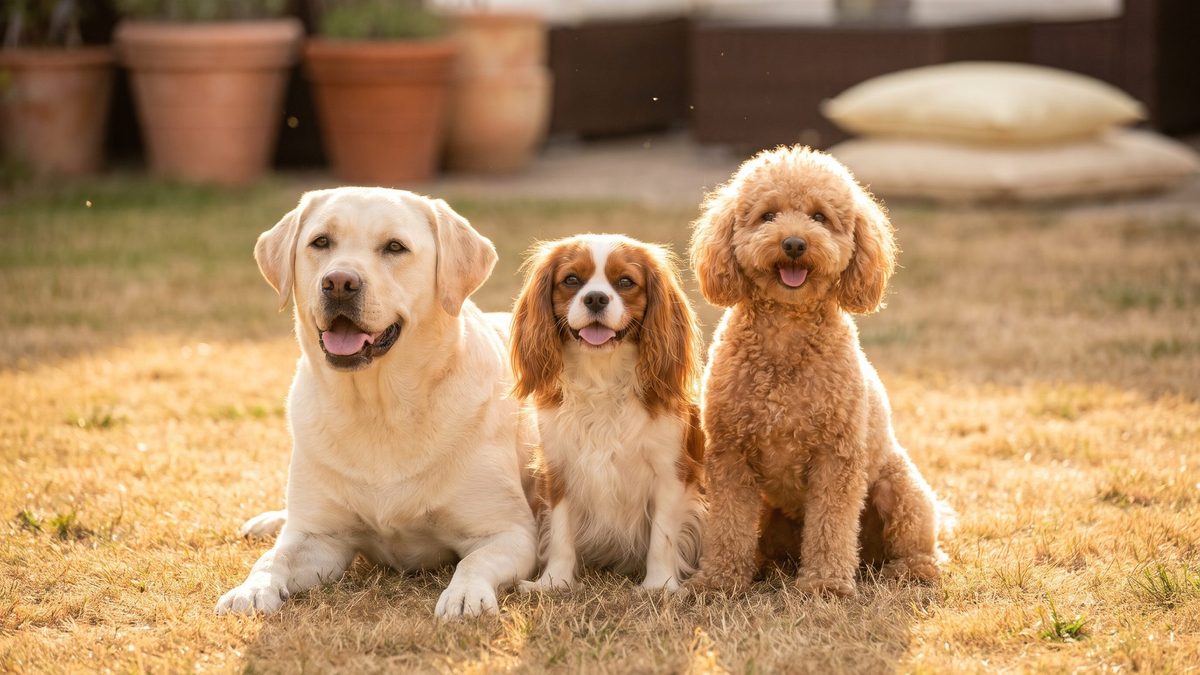
The best dogs for first-time owners are friendly, trainable and tolerant of mistakes. Common beginner-friendly picks include the Labrador Retriever, Golden Retriever, Cavalier King Charles Spaniel, Poodle, Bichon Frise, Havanese, Shih Tzu, Papillon, Greyhound and Boston Terrier. The right choice depends less on breed labels than on your home, time, energy and budget, and every dog is an individual.
What makes a dog good for beginners
Look for these traits:
- Trainability. A dog that learns quickly and wants to please makes early training easier. See our smartest dog breeds guide.
- Even temperament. Friendly, stable dogs are easier to socialize.
- Manageable energy. A dog whose exercise needs match your lifestyle is less likely to become destructive.
- Reasonable grooming. Some coats need professional care. See grooming costs.
- Fewer health problems. Some breeds have well-known health risks.
- Size that fits your home. See best dogs for apartments.
10 beginner-friendly dog breeds
| Breed | Size | Why it suits beginners | Watch out for |
|---|
| Labrador Retriever | Large | Friendly, trainable, eager | High energy and chewing when young; weight gain |
| Golden Retriever | Large | Gentle, friendly, trainable | Heavy shedding; higher cancer risk |
| Cavalier King Charles Spaniel | Small | Affectionate, adaptable | Heart disease risk; separation anxiety |
| Poodle (mini or standard) | Small to large | Smart, low shedding | Grooming costs; needs mental work |
| Bichon Frise | Small | Cheerful, social | Grooming; housetraining can take time |
| Havanese | Small | Friendly, adaptable | Grooming; can be vocal |
| Shih Tzu | Small | Calm, companionable | Grooming; breathing in heat |
| Papillon | Small | Smart, lively | Fragile; needs socialization |
| Greyhound | Large | Calm indoors, often low energy | Strong prey drive; needs a secure area |
| Boston Terrier | Small | Friendly, compact | Breathing issues; sensitive to heat |
Adult dogs from shelters or rescues can also make excellent first dogs, because their personality is already visible and they are often past the most demanding puppy stage.
Breeds that can be hard for beginners
Some breeds are best left to experienced owners, at least for a first dog: high-drive herding and working breeds that need hours of exercise and structured jobs, strongly independent breeds, dogs bred for guarding, and some large dogs that need confident handling. This does not mean they are bad dogs. They simply need more skill, time and consistency than many beginners expect.
Questions to ask before choosing
- How much time do I have? Dogs need daily exercise, training and company. See how far to walk your dog.
- What can I afford? Costs include food, vet care, grooming and insurance. See how much a dog costs per year.
- What is my living space? Consider size, noise and rules.
- Who lives with me? Children, other pets and allergies matter. See dog breeds for families and low-shedding breeds.
- Puppy or adult? Puppies need housetraining, socialization and lots of attention. See our puppy guide.
Tips for a smooth start
- Enroll in a puppy or beginner class. Training helps you as much as your dog. See training costs.
- Crate train and housetrain consistently. See crate training.
- Choose a vet early and keep up with vaccines. See vet visit costs.
- Feed the right amount. Use our dog food calculator to avoid overfeeding.
- Socialize safely with people and other dogs.
- Plan for travel and time away. See boarding costs.
Common beginner mistakes to avoid
Many first-time owners choose a dog based on looks and underestimate energy, shedding or training needs. Others skip training classes, give too much freedom too early or leave a puppy alone for long periods. Housetraining accidents, chewing and barking are normal in the first months, and a plan makes them easier to manage.
Set up the home before the dog arrives: a crate or pen, safe chew toys, baby gates, a quiet resting area and secured trash and medications. Have food, a collar with ID tags, a leash, a harness and poop bags ready. Book a vet visit within the first few days, and ask the breeder or shelter for records.
Adopt or buy?
Shelters and rescues often have adult dogs of every breed type, and staff can match you with a calm, beginner-friendly dog. If you buy from a breeder, choose one who health tests the parents and lets you meet them. Avoid online sellers who refuse visits or sell puppies too young. Our {link("adoption", "adoption cost guide")} explains typical fees and what they include.
A realistic week with a first dog
Expect two to three walks a day for most dogs, training in short bursts, feeding on a schedule and time for play and rest. Puppies need many more breaks, including overnight in the first weeks. If your schedule is packed, plan for a sitter, walker or daycare. See {link("b-walker", "dog walker costs")}.
Whichever breed you choose, give yourself a few weeks of patience. Most dogs need time to settle, and the early routines you build, from feeding times to quiet rest, shape behavior for years.
Find your match
Use our breed selector to compare breeds by size, energy and care needs, and read the breed selector guide and compatibility guide before you decide. This guide is general education, and a reputable breeder, shelter or your vet can help with specific questions.
Related guides
Swap experiences with other owners on the PawTalk breeds forum.
This guide is general education from the PawCalculator team, not veterinary advice. Sources: the American Kennel Club, the AVMA and breed club health recommendations. Every dog and cat is an individual; talk to your veterinarian about your pet's needs.