
What Breeds Make Up Your Dog?
Your inputs
Results update live as you type.
Your results
Live — updates as you change inputs.
Likely breed matches
33% trait match
#1 Golden Retriever
#2 Labrador Retriever
33% trait match
#3 Border Collie
33% trait match
Trait-based estimate — not genetic percentages.
DNA tests ($70–150) provide actual ancestry breakdowns.
Veterinary reference only
Trait-based estimate — not DNA-level accuracy.
Keep going with a related calculator.
What Breeds Make Up Your Dog?
A trait-based identifier can't replace a DNA test for certainty (DNA tests run roughly $70-150 and analyze actual genetic markers), but physical and behavioral traits — ear carriage, coat type, tail set, build, and common behavior patterns — do correlate strongly enough with breed groups to narrow the likely ancestry meaningfully, especially for identifying a dominant breed influence. This is a different tool from our Breed Selector (which recommends breeds that fit your lifestyle) — this one works backward from a dog you already have, using observable traits rather than DNA.
How to use this calculator
Select your dog's size and coat type — the two traits that correlate most reliably with breed group at a glance. More traits generally sharpen the estimate, but even these two narrow the field meaningfully.
What traits correlate with what
| Trait | Groups it often points toward |
|---|---|
| Erect ears, dense double coat | Northern/spitz-type breeds |
| Long floppy ears, webbed feet | Sporting/retriever-type breeds |
| Short muzzle, compact build | Brachycephalic breed influence |
| Wiry coat, terrier build | Terrier-type breeds |
| Herding instinct, medium athletic build | Herding-group breeds |
Understanding your results
The result names a likely dominant breed influence, not a confirmed ancestry breakdown — treat it as "this is probably a meaningful part of the mix" rather than "this is exactly what your dog is." Physical traits don't always track cleanly with genetics: a dog can carry substantial ancestry from a breed whose defining traits are recessive or diluted by other breeds in the mix, which is a common reason trait-based results and DNA-test results don't fully agree. If the result surprises you, that's not necessarily wrong — it's a real limitation of trait-based inference, not a bug. For a confident percentage breakdown, or to screen for breed-associated health risks, an actual DNA test (commonly $70–150) analyzes genetic markers directly rather than inferring from appearance.
Why coat and size are the two strongest single-trait signals. They're the most heritable, least behaviorally-influenced traits available without a DNA sample — behavior can be shaped as much by upbringing as by genetics, and build can vary with individual condition, but coat type and adult size track fairly reliably with specific breed groups.
More traits sharpen the estimate, but with diminishing returns. Adding ear shape or tail carriage narrows things further, but no combination of visible traits fully replaces genetic testing — a dog can visually resemble one breed group while carrying meaningful ancestry from a visually different one.
Getting the most out of a trait-based estimate
Since coat type and size are the two strongest single-trait signals, taking a moment to assess them carefully before entering them matters more than it might seem. For coat type, look past surface grooming (a recently clipped double-coated dog can temporarily look shorter-coated than their true type) and consider what the coat does structurally — does it shed seasonally in a heavy undercoat pattern, does it grow continuously and need regular trims, or does it stay relatively short and low-maintenance year-round. For size, current adult weight is straightforward for a grown dog, but for a still-growing puppy, consider using the Puppy Weight Calculator's predicted adult size instead of current weight, since entering a puppy's current small size directly here can skew the estimate toward smaller breed groups than the dog is actually likely to represent once grown.
When trait-based results and gut instinct disagree
It's common to have a strong personal hunch about what breed your dog "looks like" based on a single standout feature — a particular ear shape, a coat pattern, a facial expression that reminds you of a specific breed — and find that this tool's systematic trait analysis suggests something different. This isn't necessarily a sign the tool got it wrong; single standout features are often the least reliable signal precisely because they're the most visually memorable, while the more statistically informative traits (overall build, coat structure, size) can point toward a different, less visually obvious breed group. If your dog's result surprises you, it's worth treating that as interesting information rather than dismissing it — a DNA test is the only way to fully resolve the disagreement between visual instinct and trait-based inference, and results that defy expectation are exactly the kind of case where that additional certainty tends to be most satisfying.
When to consult a professional
For health, dosage, or nutrition decisions, always confirm calculator output with your veterinarian. This tool provides reference estimates, not medical advice.
Questions about this calculator
Meaningfully less precise — DNA tests analyze genetic markers directly, while trait-based tools infer likely ancestry from physical/behavioral patterns, which works better for identifying a dominant breed than precise percentage breakdowns.
The math, openly documented.
Inputs
Enter the details that affect your estimate.
weight · age · breed
Normalize
Validate ranges and convert units when needed.
lbs ↔ kg
Calculate
Veterinary or industry-standard formulas applied.
result = f(inputs)
Results
Clear outputs with context and disclaimers.
display + notes
More from Breeds
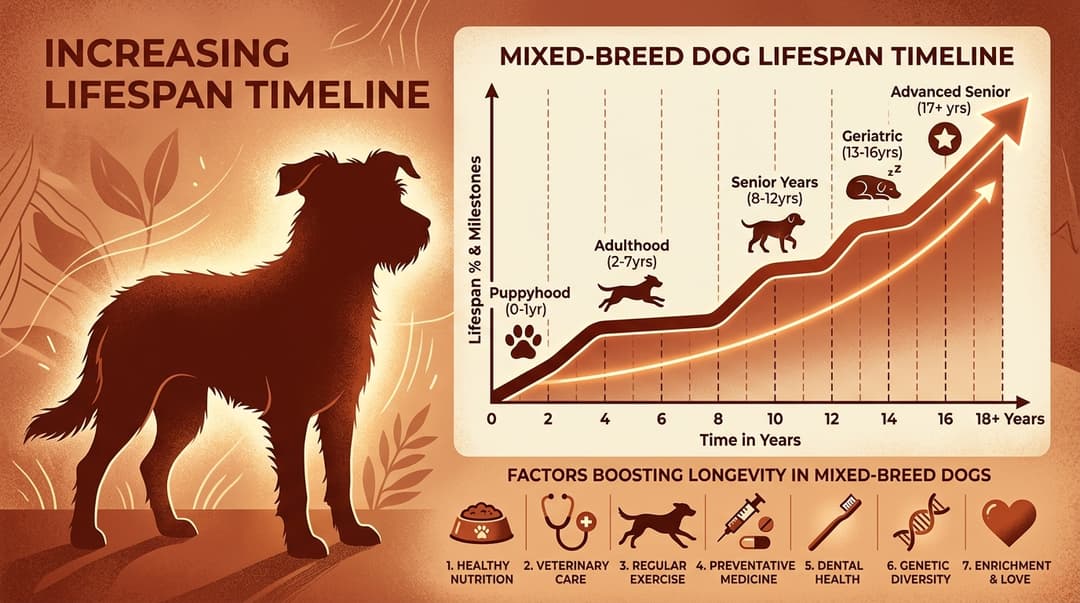
How Long Will Your Mixed-Breed Dog Live?
mixed breed dog life expectancy calculator: Mixed-breed dogs often outlive purebreds of similar size — here's what actua
Open tool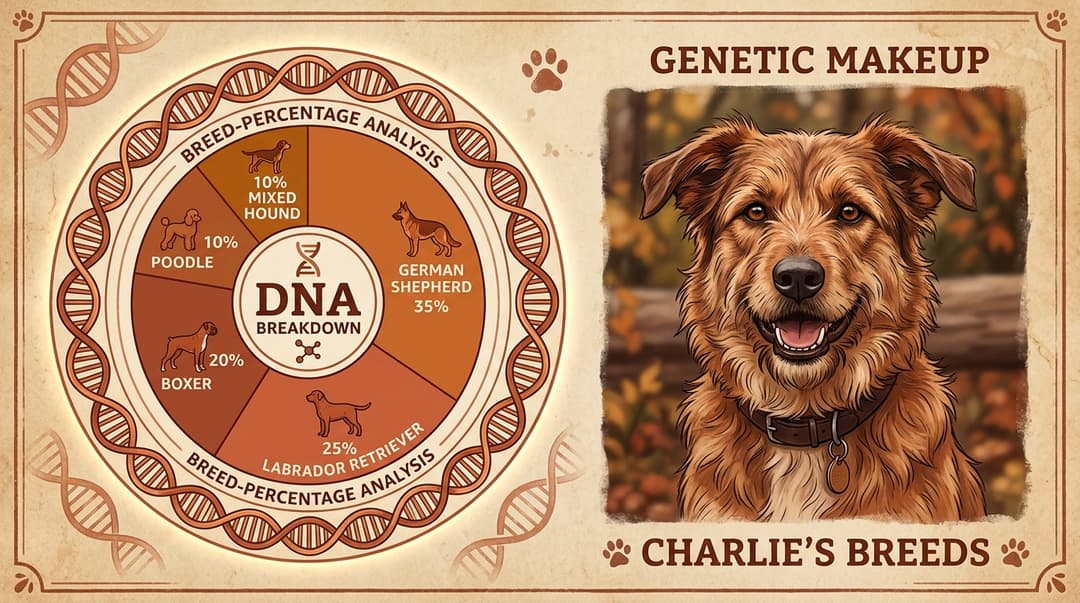
What's the Breed Mix of Your Dog?
dog breed percentage calculator: Get a rough breed-mix estimate from physical traits, or see what a DNA test (typically
Open toolArticles from Insights

Got an edge case the calculator can't handle?
247 active threads about dog nutrition right now. Verified vets and experienced owners answer within hours.