The myth: if it's fine for you, it's fine for your dog
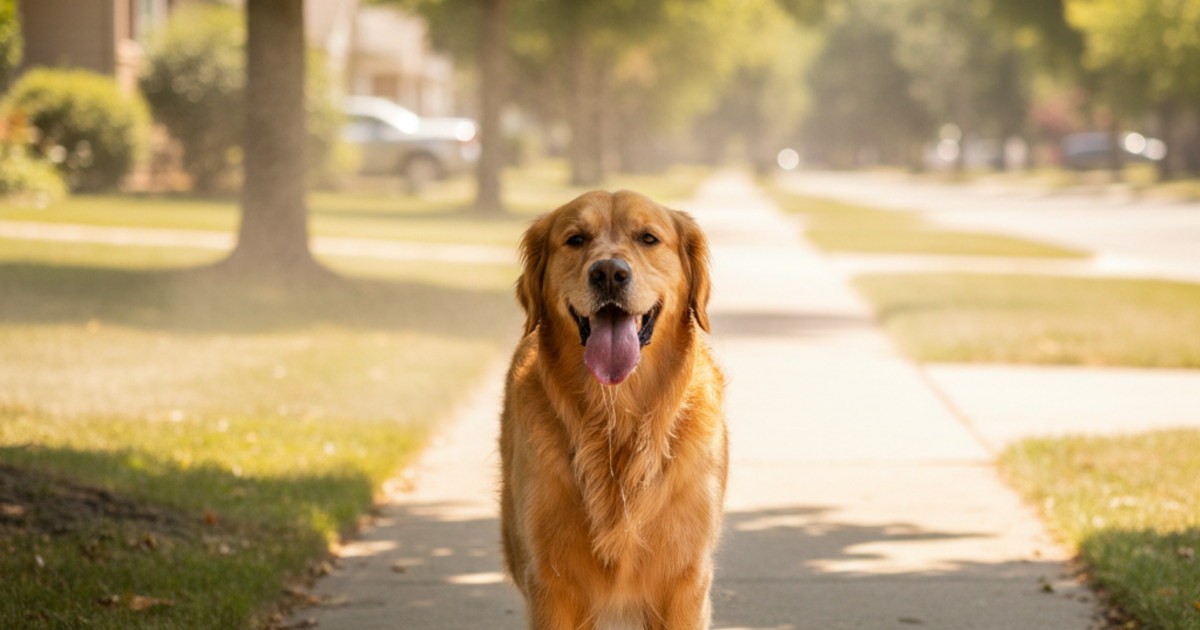
A comfortable 85°F afternoon for a person in sandals can be dangerous for a dog walking barefoot on asphalt, or for a flat-faced breed that can't cool itself efficiently no matter the temperature. Dogs don't sweat through their skin the way people do. They rely mainly on panting, plus a small amount of sweating through their paw pads, to release heat. That system works fine most of the year and gets overwhelmed fast once air temperature, humidity, and direct sun stack up together.
Why "it's not that hot out" isn't the right test
Air temperature alone doesn't tell you whether a walk is safe. Humidity matters because panting cools a dog through evaporation, and evaporation slows down as humidity rises, the same reason a humid 85°F feels so much worse than a dry 85°F. Direct sun matters because it heats surfaces well past the air temperature reading. And exertion matters because a dog running or hiking generates its own internal heat on top of whatever the environment is adding.
The commonly cited pavement check is the back-of-hand test: press the back of your hand to the pavement, and if you can't hold it there comfortably for five seconds, it's too hot for your dog's paws. It's a simple test, but it only covers paw safety, not heatstroke risk from the air and exertion combined.
Who's at higher risk, regardless of temperature
Some dogs hit dangerous territory at temperatures that would be a non-issue for others.
Brachycephalic (flat-faced) breeds such as Bulldogs, Pugs, Boston Terriers, and Shih Tzus have shortened airways that make panting a less effective cooling method. They're at meaningfully elevated heat stroke risk even at moderate temperatures.
Senior dogs and puppies regulate body temperature less efficiently than healthy adult dogs.
Overweight dogs carry extra insulation that traps heat and makes panting less effective at shedding it.
Dogs with thick or double coats (Huskies, Malamutes, Chow Chows) are built for cold, not heat, despite what their tolerance for winter weather might suggest.
Dogs with heart or respiratory conditions have less capacity to compensate when their cooling system is under strain.
Recognizing heat stress before it becomes heatstroke
Early signs include heavy panting that doesn't ease up, bright red gums or tongue, excessive drooling, and reluctance to keep moving. If those progress to wobbling, vomiting, disorientation, or collapse, that's an emergency, not a "let's finish the walk and see" situation. Heatstroke in dogs can escalate quickly and needs immediate veterinary care, not just a cool-down period at home.
Common mistakes owners make with heat and exercise
Judging safety by air temperature alone. Humidity and direct sun exposure can turn a "reasonable" temperature into a genuinely risky one. A shaded, low-humidity 88°F morning and a sunny, humid 82°F afternoon are not the same walk.
Skipping the pavement check. Paw pad burns happen fast on hot asphalt, often faster than heatstroke symptoms show up, and they're easy to prevent just by testing the ground before heading out.
Assuming a short walk is automatically safe. Distance matters less than conditions. A 10-minute walk in full midday sun with a brachycephalic breed can be riskier than a 40-minute walk at dawn.
Not adjusting timing seasonally. Shifting walks to early morning or evening during hot months is a simple fix that a lot of owners only make after a bad experience.
Ignoring coat type in the risk calculation. Assuming a "cold weather breed" handles heat fine because it handles cold fine is backward. Heavy coats trap heat regardless of what they were bred for.
Withholding water to avoid bathroom breaks on a walk. Access to water is one of the simplest ways to help a dog regulate temperature during exercise, and skipping it to shorten the outing works against that.
Recommended tools
- Dog Sunburn / Heat Index Safety Calculator: check whether it's currently safe to walk your dog based on temperature, humidity, and pavement conditions.
- Dog Walking Calculator: get a recommended walk distance adjusted for breed, age, and weather.
- Dog Exercise Calculator: see a daily exercise recommendation that accounts for your dog's energy level and health status, not just a flat 30-minute rule.
- Dog BMI Calculator: check whether excess weight is adding to your dog's heat risk.
- Vet Cost Estimator: see what an emergency heatstroke visit could cost, as a reason to prevent one.
The bottom line
Heat safety for dogs isn't just "check the temperature." It's temperature plus humidity plus sun exposure plus your specific dog's coat, weight, age, and face shape. A flat-faced or overweight senior dog can be at risk on a day that's completely fine for a lean, short-coated adult. When in doubt, test the pavement, watch for early panting distress, and shift the walk to cooler hours rather than pushing through. Run your current conditions through the heat safety calculator before you head out if you're at all unsure.
Frequently asked questions
PawCalculator Editorial
We combine veterinary references, published guidelines, and calculator-grade modeling. This article is for education, not a substitute for an exam.
+ Follow on PawTalk