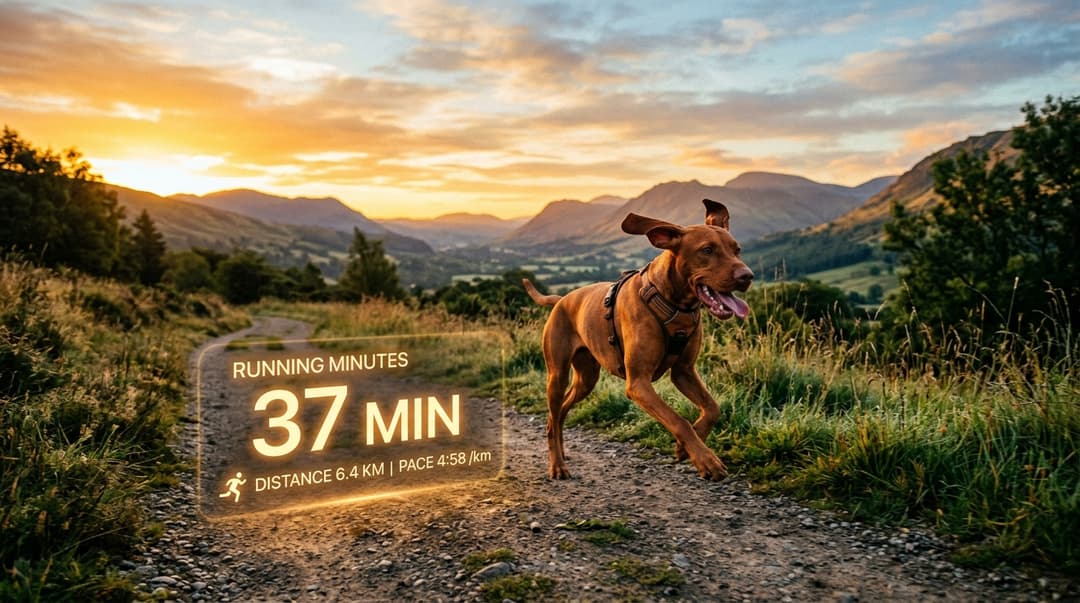
How Much Exercise Does Your Dog Actually Need?
Your inputs
Results update live as you type.
Your results
Live — updates as you change inputs.
Daily exercise
51–69 min/day
Recommended minutes
Keep going with a related calculator.
How Much Exercise Does Your Dog Actually Need?
"30 minutes a day" is a common default recommendation, but actual need swings widely — a working-line herding or sporting breed may need 60-90+ minutes of real activity daily to avoid behavioral issues from pent-up energy, while a brachycephalic breed or a senior dog with joint issues may need far less, with heat and breathing tolerance being limiting factors rather than stamina. This calculator factors in breed energy category, age, and any noted health limitations to suggest a realistic daily range, distinct from our Dog Walking Calculator, which focuses specifically on walking distance rather than total activity time across all exercise types.
How to use this calculator
Select energy level, age category, and any health limitations (joint issues, heart condition, brachycephalic breathing). The calculator returns a daily activity-time range rather than a single number, since "enough" exercise varies more by individual dog than by breed alone.
Daily activity ranges by energy level
| Energy level | Typical daily range |
|---|---|
| Low | 20–30 minutes |
| Moderate | 30–60 minutes |
| High | 60–90 minutes |
| Very high (working/sporting lines) | 90+ minutes, often split into sessions |
Understanding your results
A health limitation selection lowers the range regardless of energy level, because breathing capacity or joint stress becomes the limiting factor rather than stamina — a high-energy brachycephalic breed still needs the brachycephalic adjustment applied, since heat and airway tolerance cap safe exertion independent of how much the dog wants to run. If your dog seems restless even after hitting the calculated range, the gap is often mental rather than physical: training, puzzle feeders, and scent work address a different need than leg-tiring exercise, and many high-energy breeds need both to actually settle.
Building a weekly routine instead of a daily minimum
Treating the calculated range as a single daily checkbox misses how exercise needs actually play out over a week. Most dogs do better with a routine that varies in intensity across the week rather than an identical session every single day — a couple of higher-intensity days (a longer hike, a dog-park session, a run) balanced against lower-key days (a shorter neighborhood walk plus some training or puzzle-feeder time) mirrors how most owners' schedules realistically work anyway, and it gives joints and muscles recovery time between harder efforts, which matters more as a dog ages. For high-energy breeds especially, consistency across the week matters more than hitting a perfect number on any single day — a dog that gets 90 minutes on Saturday and almost nothing Monday through Friday will generally show more behavioral fallout than one getting a steadier 45-60 minutes most days, even though the weekly total might be similar.
Matching exercise type to what your dog actually needs
Not all activity time is interchangeable. A dog bred for scent work or tracking often finds a slow walk with lots of sniffing time more mentally satisfying than a fast-paced run, even though the run burns more energy — sniffing engages a dog's primary sense in a way that supports mental fatigue, not just physical tiredness. Herding breeds and working-line dogs frequently need a task-oriented component (structured training, agility-style obstacles, a job to do) alongside raw physical activity, since pure repetition without a mental component tends to leave that pent-up, restless energy the FAQ below describes even after a physically tiring walk. For dogs recovering from injury or managing a chronic joint condition, low-impact options — swimming, a slow leash walk on soft ground, controlled leash-walking on a treadmill — deliver cardiovascular and mental benefit without the jarring impact of running or jumping, and are usually a better fit than simply shortening a high-impact routine.
Adjusting the routine as your dog ages
The right amount and type of exercise isn't static across a dog's life, and re-checking this calculator periodically (rather than setting a routine once as a puppy and never revisiting it) accounts for that. A dog transitioning from adult to senior often doesn't need dramatically less total activity time right away, but the type usually needs to shift — lower-impact options, more frequent shorter sessions instead of one long outing, and closer attention to how the dog recovers the day after exercise (stiffness, reluctance to get up, unusual lethargy) are the signals that a routine built for a younger dog needs adjusting. Conversely, an adolescent dog going through a high-energy phase (often 6 months to 2 years depending on breed) may temporarily need more than the standard adult range for that breed, since this stage often comes with a burst of physical energy paired with limited impulse control — a combination that tends to produce destructive or hyperactive behavior if the calculated range isn't being met consistently during this window.
When to consult a professional
For health, dosage, or nutrition decisions, always confirm calculator output with your veterinarian. This tool provides reference estimates, not medical advice.
Questions about this calculator
For low-to-moderate energy breeds and seniors, often yes; for high-energy working and sporting breeds, 30 minutes is frequently well under what's needed to prevent boredom-driven behavior issues.
The math, openly documented.
Inputs
Enter the details that affect your estimate.
weight · age · breed
Normalize
Validate ranges and convert units when needed.
lbs ↔ kg
Calculate
Veterinary or industry-standard formulas applied.
result = f(inputs)
Results
Clear outputs with context and disclaimers.
display + notes
More from Lifestyle
How Much Will It Cost to Transport Your Pet?
fedex pet shipping cost: Compare estimated costs for airline cargo, in-cabin flying, and professional ground transport s
Open tool
How Much Does Dog Training Cost?
how much does dog training cost: Compare estimated costs across group classes, private in-home training, and board-and-t
Open tool
What Does It Really Cost to Own a Cat?
cost of owning a cat: Estimate the real lifetime cost of cat ownership — food, litter, vet care, and the occasional emer
Open toolArticles from Insights

Got an edge case the calculator can't handle?
247 active threads about dog nutrition right now. Verified vets and experienced owners answer within hours.