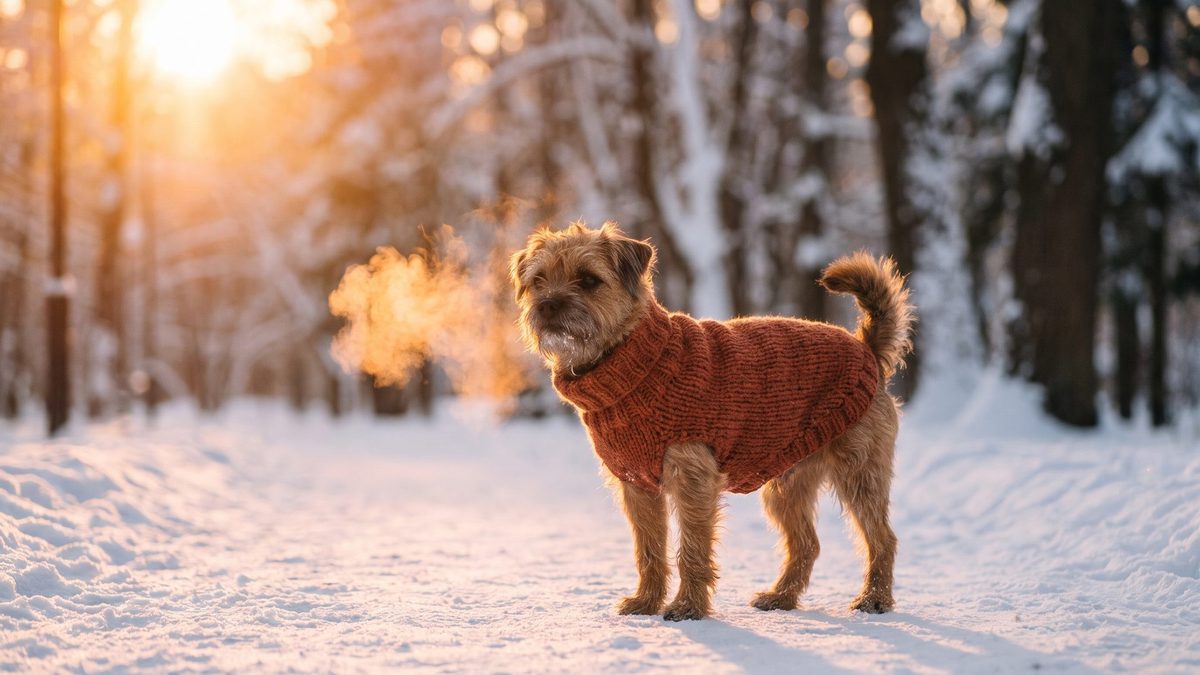
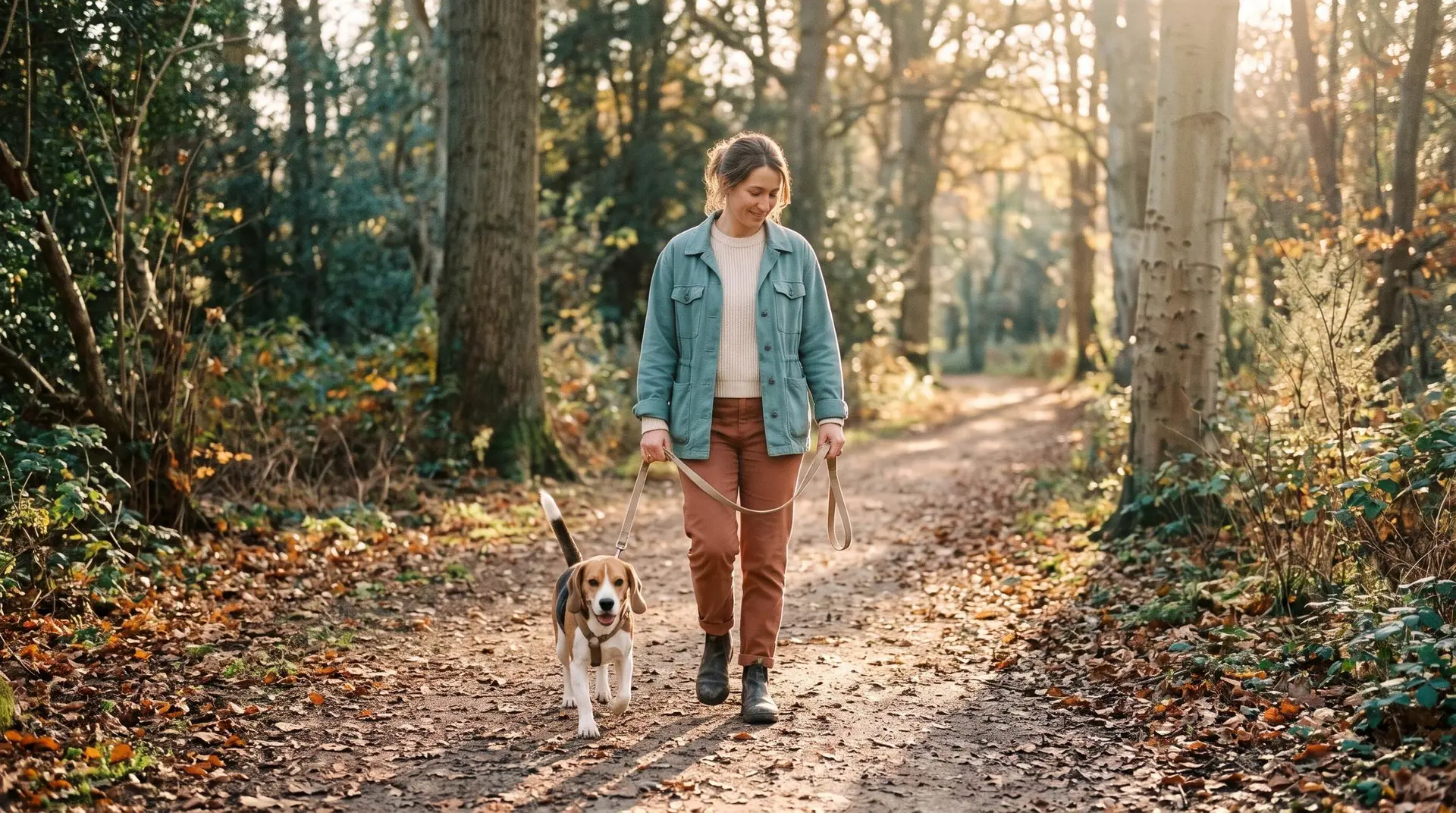
There is no single temperature that is too cold for every dog. As a rule of thumb, most healthy dogs are comfortable above about 45°F (7°C), small and short-coated dogs start to feel the cold below that, and below 32°F (0°C) walks for small, thin-coated, young, old or unwell dogs should be short. Below about 20°F (-7°C) it is unsafe to leave most dogs outside for long. The guide below breaks it down by size, coat and age, and lists the signs that it is time to head home.
The quick guide: how cold is too cold by dog size
These are rule-of-thumb starting points based on commonly cited veterinary guidance, including advice from the American Kennel Club (AKC) that small dogs should have only short outings once it is at or below freezing, and AVMA advice that coat, body fat, age and health all change how well a dog tolerates cold. They are not strict limits. Your own dog's behavior decides.
| Air temperature | Small or thin-coated (Chihuahua, Greyhound, Frenchie) | Medium dogs (Beagle, Border Collie) | Large and thick-coated (Husky, Newfoundland, Malamute) |
|---|
| Above 45°F (7°C) | Usually fine; consider a light coat if windy or wet | Fine | Fine |
| 32 to 45°F (0 to 7°C) | Coat recommended; shorten walks | Usually fine; watch for shivering | Fine and often happiest |
| 20 to 32°F (-7 to 0°C) | Short potty walks only; the AKC suggests about 10 to 15 minutes | Shorter walks; coat for short-haired dogs | Usually fine for normal walks; check paws |
| Below 20°F (-7°C) | Potty breaks only, with a coat and boots | Brief outings, closely supervised | Shorten walks; wind chill and ice matter |
| Below 0°F (-18°C) | Stay indoors | Stay indoors apart from quick breaks | Short, supervised breaks; frostbite risk rises |
Wind chill, damp fur and snow matter as much as the number on the thermometer. A dry 25°F day with no wind feels very different from a wet 25°F day with a cold wind.
What changes how cold a dog feels
- Size and body fat. Small dogs lose heat faster, and lean dogs have less insulation.
- Coat type. A double coat (Husky, Bernese) insulates well. A single, thin coat (Whippet, Boxer, Dachshund) does not.
- Age. Puppies and senior dogs regulate body temperature less well, and arthritis often feels worse in the cold.
- Health. Diabetes, heart, kidney and thyroid conditions can lower tolerance. Ask your vet about your dog.
- Acclimatisation. A dog used to cold weather copes better than one that lives indoors and rarely goes out.
- Activity. A running dog generates heat. A dog standing or sniffing slowly cools down.
Signs your dog is too cold
Head inside and warm your dog up if you notice:
- Shivering or shaking that does not stop
- Whining, anxiety or reluctance to keep walking
- Lifting paws, limping or stopping on ice
- A tucked tail, hunched posture or slowing down
- Cold ears, tail or paws, or pale, grey or hard-feeling skin, which can signal frostbite
- Confusion, weakness or extreme sleepiness, which can signal hypothermia
Hypothermia and frostbite are emergencies. Wrap your dog in a dry blanket, move to a warm room and call your vet or an emergency clinic. Do not rub frostbitten skin or use hot water.
Cold weather walking tips
- Shorten, don't skip. Two or three brief walks beat one long one in the cold.
- Use a coat or sweater for small, short-haired, senior and puppy dogs. It should cover the chest and belly without restricting movement.
- Protect paws. Wipe off ice, salt and de-icer after every walk. Some de-icers are harmful if licked. Boots or paw balm can help.
- Stay on cleared paths and keep your dog on a leash. Frozen ponds and rivers are a danger.
- Dry your dog after walks, especially between the toes.
- Do the 60-second test. If you would not stand outside in your clothes for a minute without discomfort, your small dog probably will not either.
How much exercise does your dog need in winter?
Exercise needs do not disappear in winter, but you can shift the type. Indoor games, scent work, short training sessions and stair or hallway fetch can fill the gap on frozen days. Use the dog walking calculator to see a daily target for your dog's breed, age and weight, and the dog heat safety calculator when the weather swings the other way.
Cold weather also changes food needs. Dogs that spend a lot of time outdoors in winter may burn more energy, while indoor dogs often move less. Our dog calorie calculator is a good starting point, and your vet can advise on changes.
Can dogs stay outside in the cold?
Only for short periods, and with shelter. Even breeds bred for cold climates need a dry, wind-proof, insulated shelter if they spend any time outdoors, and most dogs are better kept inside overnight. The AVMA recommends bringing pets inside during extreme cold. Never leave a dog in a car in cold weather, because the cabin cools quickly.
Related guides
You can also ask other owners how they handle winter walks on the PawTalk advice forum.
*This guide is general education from the PawCalculator team, not veterinary advice. Sources: American Kennel Club (AKC) and AVMA cold-weather guidance, and the Merck Veterinary Manual on hypothermia and frostbite. If your dog shows signs of hypothermia or frostbite, contact a veterinarian right away.