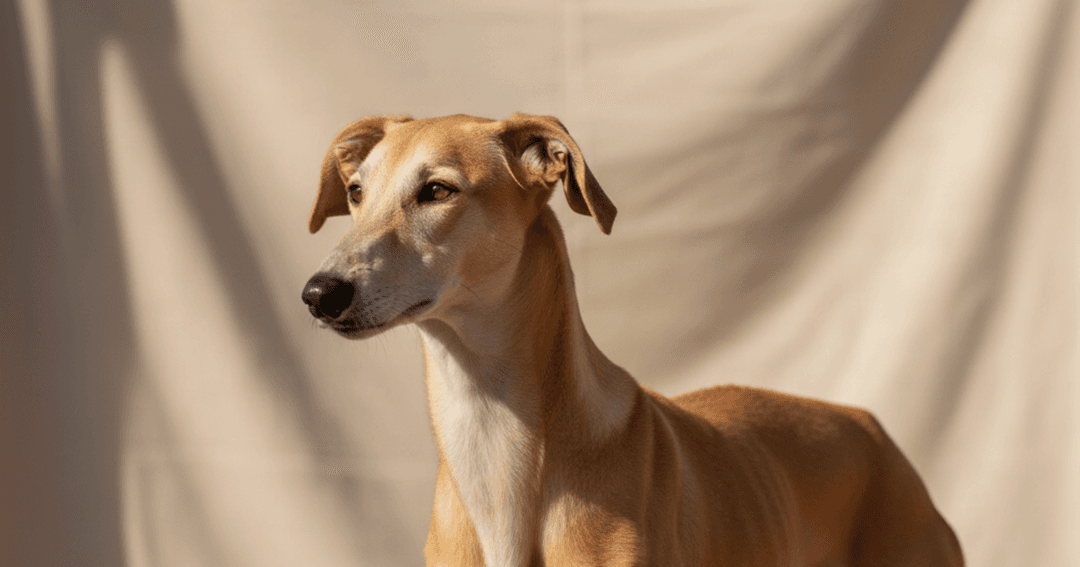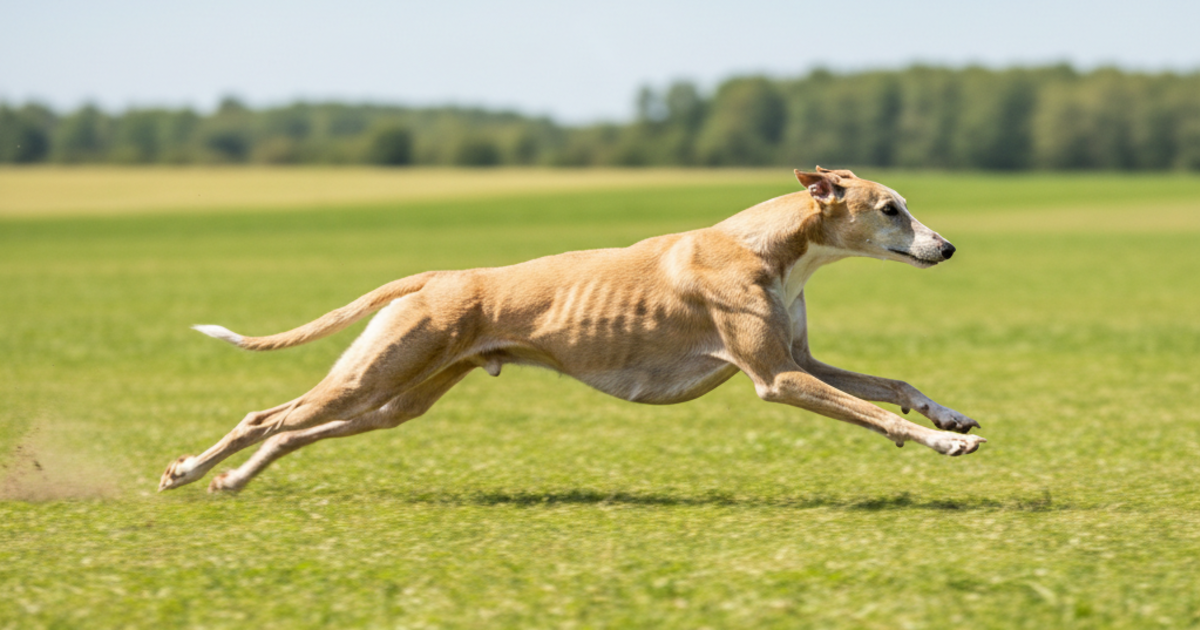
The fastest dog breed is the greyhound, which can reach about 40-45 mph (64-72 km/h) in short sprints. Salukis, Whippets, Vizslas, Afghan Hounds and a handful of other sighthounds and athletic breeds follow close behind. Fast dogs need safe places to run, regular exercise and food matched to their energy output.
Few things are as striking as a greyhound in full flight, legs stretched and body almost floating over the ground. Speed in dogs comes from a mix of body shape, muscle type, flexible spine and centuries of selective breeding for chasing prey. Top speeds are hard to measure precisely, since most figures come from racing records, informal tests and estimates, so treat the numbers below as approximate. This guide ranks 10 of the fastest dog breeds, explains why they are so fast, compares speeds, covers how much exercise these athletes need, how to feed them and how to keep them safe. To plan daily activity for your own dog, use the dog exercise calculator.
Top 10 fastest dog breeds
| Rank | Breed | Approximate top speed | Group |
|---|---|---|---|
| 1 | Greyhound | 40-45 mph (64-72 km/h) | Sighthound |
| 2 | Saluki | 40-43 mph (64-69 km/h) | Sighthound |
| 3 | Afghan Hound | 35-40 mph (56-64 km/h) | Sighthound |
| 4 | Vizsla | 35-40 mph (56-64 km/h) | Sporting |
| 5 | Jack Russell Terrier | 30-38 mph (48-61 km/h) | Terrier |
| 6 | Whippet | 35 mph (56 km/h) | Sighthound |
| 7 | Borzoi | 35-36 mph (56-58 km/h) | Sighthound |
| 8 | Dalmatian | 35 mph (56 km/h) | Non-sporting |
| 9 | Ibizan Hound | 35 mph (56 km/h) | Sighthound |
| 10 | Doberman Pinscher | 32-35 mph (51-56 km/h) | Working |
Other contenders often named include the Azawakh, German Shepherd, Border Collie, Australian Shepherd and Weimaraner. Speed varies by individual, age, fitness and terrain.
1. Greyhound
The undisputed champion. Greyhounds were bred for coursing and are now famous for racing. A lean build, deep chest, long legs and a highly flexible spine let them cover enormous ground with each stride, and they can reach top speed within a few strides. Despite their athletic reputation, many greyhounds are calm "couch potatoes" at home and sleep up to 18 hours a day.
- Size: 60-70 lb (27-32 kg)
- Temperament: gentle, quiet, sensitive
- Notes: sprinters rather than endurance runners, thin coat, need a secure area to run
2. Saluki
An ancient Middle Eastern sighthound known as the "royal dog of Egypt." Salukis combine speed with remarkable endurance and can run long distances at a fast pace, a combination that suits hunting across open desert.
- Size: 40-60 lb (18-27 kg)
- Temperament: reserved, independent, loyal
- Notes: strong prey drive, needs a very secure fence
3. Afghan Hound
Despite the glamorous coat, the Afghan Hound was bred to hunt in rugged mountain terrain. Its large feet and powerful hindquarters make it quick and agile.
- Size: 50-60 lb (23-27 kg)
- Temperament: dignified, aloof, sometimes clownish
- Notes: long coat needs frequent grooming
4. Vizsla
A Hungarian sporting dog bred to point and retrieve. Vizslas are lean, high-energy athletes that thrive on running, hiking and training. Their speed and endurance make them excellent running partners.
- Size: 45-65 lb (20-29 kg)
- Temperament: affectionate, energetic, sensitive
- Notes: needs a lot of daily exercise and company
5. Jack Russell Terrier
Small in size but astonishing in speed and agility. Jack Russells were bred to chase foxes and bolt them from burrows, and can reach impressive speeds relative to their size.
- Size: 13-17 lb (6-8 kg)
- Temperament: bold, clever, tireless
- Notes: needs intense daily exercise and mental work, and can be a handful for new owners
6. Whippet
Sometimes called the "poor man's racehorse," the Whippet is a smaller sighthound that accelerates quickly and has long been used in racing. Despite their speed, Whippets are gentle, calm indoors and make good family companions.
- Size: 25-40 lb (11-18 kg)
- Temperament: gentle, affectionate, calm
- Notes: thin coat, feels the cold
7. Borzoi
A tall, elegant Russian sighthound bred to chase wolves. Borzois have long, powerful legs and a deep chest. They are fast over distance and have an impressive stride.
- Size: 60-105 lb (27-48 kg)
- Temperament: quiet, dignified, independent
- Notes: large dog, needs space, risk of bloat
8. Dalmatian
Bred as carriage dogs that ran alongside horse-drawn carriages for hours, Dalmatians have outstanding endurance and respectable speed.
- Size: 45-70 lb (20-32 kg)
- Temperament: energetic, outgoing, sensitive
- Notes: need lots of exercise, and are prone to urinary stones and deafness
9. Ibizan Hound
A lean, agile sighthound from the Balearic Islands, known for jumping ability as well as speed. Ibizan Hounds can clear tall fences with ease.
- Size: 40-50 lb (18-23 kg)
- Temperament: playful, independent, clownish
- Notes: needs very secure fencing and supervision
10. Doberman Pinscher
Muscular, sleek and powerful, Dobermans are fast and agile working dogs developed as guard dogs and companions.
- Size: 60-100 lb (27-45 kg)
- Temperament: loyal, alert, trainable
- Notes: need exercise and training, with health risks including heart disease
Why are these dogs so fast?
| Factor | How it helps |
|---|---|
| Lean, aerodynamic build | Reduces drag and weight |
| Deep chest | Room for large lungs and a strong heart |
| Long legs | Longer stride length |
| Flexible spine | Allows a "double suspension gallop," where the dog stretches and gathers the body in each stride |
| Fast-twitch muscle fibers | Explosive power for sprinting |
| Large heart and high red blood cell count | Greater oxygen delivery, especially in greyhounds |
| Light bones and thin skin | Less weight to carry |
| Selective breeding | Centuries of selection for chasing ability |
Sprinters vs endurance runners
Not all fast dogs are the same. Greyhounds and Whippets are sprinters, with explosive speed over short distances and a need for recovery. Salukis, Vizslas, Dalmatians and Siberian Huskies are better at maintaining a steady pace over long distances. Choose a breed that matches the activity you want, whether that is sprinting in a fenced field or running alongside you on trails.
How much exercise do fast dogs need?
Needs vary by breed and individual.
| Type | Typical daily exercise |
|---|---|
| Greyhound and Whippet | 30-60 minutes, including some off-leash sprinting in a secure area |
| Saluki, Borzoi, Afghan Hound | 60 minutes with chances to run |
| Vizsla | 1-2 hours of vigorous exercise |
| Jack Russell Terrier | 1-2 hours with mental challenges |
| Dalmatian | 1-2 hours |
| Doberman | 1 hour or more with training |
Puppies and adolescents should not be over-exercised, especially large breeds, as their joints are still developing. Avoid forced running in hot weather. Use the dog exercise calculator to estimate a sensible daily routine based on your dog's age, size and energy.
Feeding a fast dog
Athletic dogs burn more calories than couch dogs, but each breed is different. Many sighthounds are naturally lean and should be kept that way.
- Choose a complete-and-balanced diet for life stage and activity.
- Measure calories and adjust to body condition. You should be able to feel ribs, and a visible waist is normal for sighthounds.
- Feed active dogs more on heavy exercise days, and cut back on rest days.
- Offer water before and after exercise.
- Avoid hard exercise right after meals, especially in deep-chested breeds at risk of bloat. Wait an hour or two.
- Split meals into two or three portions for deep-chested dogs.
Worked example: feeding an active Vizsla
A 25 kg (55 lb) active adult Vizsla.
- Resting energy: RER = 70 × 25^0.75 = 70 × 11.18 = about 783 kcal.
- Active adult factor of about 2.0: 783 × 2.0 = about 1,566 kcal per day. Very active working days may need more, and less active days less.
- If the food is 3,800 kcal per kg: 1,566 ÷ 3.8 = about 412 g per day.
- Split into two meals of about 205 g each, with exercise at least an hour before or after.
- Treat budget: about 157 kcal (10%), subtracted from meals.
- Check body condition monthly and adjust.
Use the dog calorie calculator to estimate your dog's energy needs.
Safety tips for fast dogs
- Run only in securely fenced areas. Sighthounds can spot prey from far away and are difficult to recall once they start a chase.
- Use a long line or a secure harness when off-leash is not safe.
- Microchip and tag your dog, and consider a GPS collar.
- Warm up and cool down to reduce injury risk.
- Avoid hot pavement and extreme heat. Short-coated, lean dogs also feel the cold, so use coats in winter.
- Protect paws on rough terrain.
- Watch for injuries such as torn toenails, muscle strains and toe injuries, which are common in sprinters.
- Do not let fast dogs run unsupervised around roads.
- Consider a muzzle in lure coursing or when around small animals if needed.
- Be aware of anesthesia sensitivity in sighthounds, and tell your vet the breed before procedures.
Choosing a fast dog for your lifestyle
Speed does not always mean a high-maintenance dog. Many greyhounds and Whippets are calm at home with short bursts of exercise, while Vizslas, Jack Russells and Dalmatians need much more activity and mental work. Think about your space, schedule, other pets and experience. Use the breed selector to compare breeds against your lifestyle.
Fun facts
- A greyhound's stride can reach about 25 feet (7.5 m) at full speed.
- Greyhounds can accelerate from 0 to about 40 mph in a handful of strides.
- Retired racing greyhounds are often adopted as pets and tend to adjust well.
- The cheetah is the fastest land animal at about 60-70 mph, so even the greyhound is not the fastest on earth.
- The fastest dog times vary widely by source, and a dog's age, training and surface all affect speed.
When to call your vet
See your vet if your dog limps after running, has a torn nail or injured pad, shows signs of heat stress such as heavy panting, drooling or collapse, or if you notice reduced stamina, coughing or fainting, which can be heart-related. Seek emergency care for a swollen abdomen with retching, which can indicate bloat in deep-chested breeds.
The bottom line
The greyhound is the fastest dog breed at around 40-45 mph, with Salukis, Afghan Hounds, Vizslas and Whippets close behind. Fast dogs need secure places to run, tailored exercise and food that matches their activity. Plan your dog's routine with the dog exercise calculator.
Frequently asked questions
PawCalculator Editorial
We combine veterinary references, published guidelines, and calculator-grade modeling. This article is for education, not a substitute for an exam.
+ Follow on PawTalk