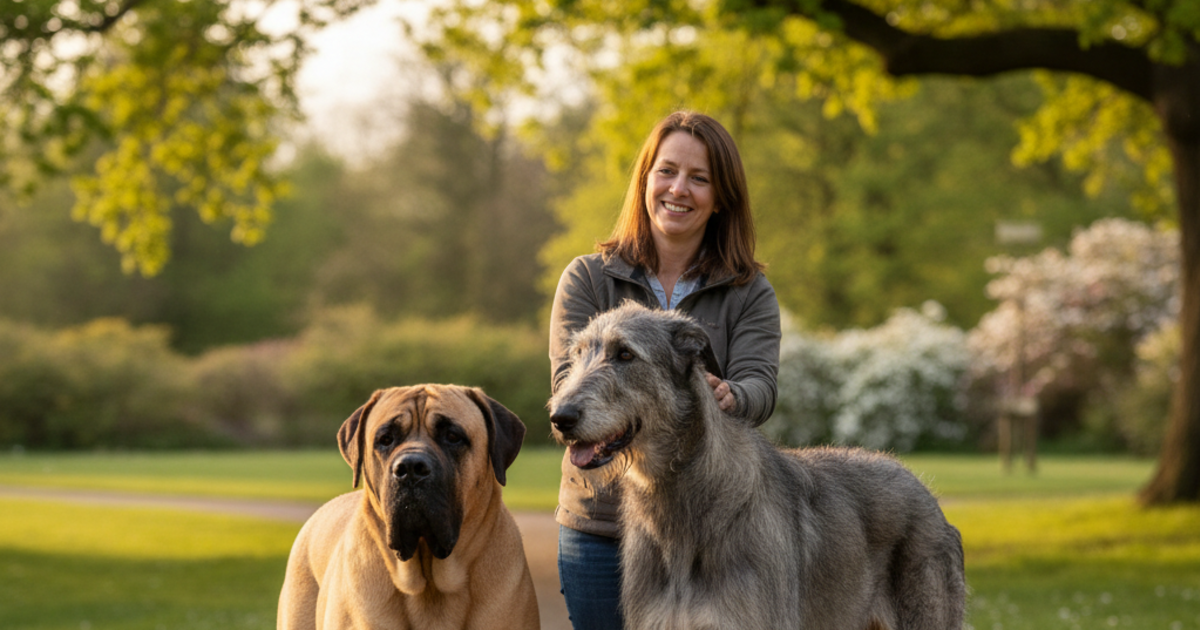
The biggest dog breed in the world depends on how you measure. By weight, it's the English Mastiff: adult males often weigh 70–100 kg (160–230 lb). By height, it's the Irish Wolfhound, with males standing at least 32 inches (81 cm) at the shoulder. The Great Dane is right there too, and a Great Dane named Zeus holds the record for the tallest dog ever at 44 inches (112 cm).
Size comes with trade-offs. Giant breeds grow for up to two years, eat a lot, and have the shortest lifespans of any dogs, often 6–10 years. Here's how the largest breeds compare.
The Largest Dog Breeds Compared
Heights are at the shoulder for adult males; females usually run a few inches shorter and 10–20% lighter. Ranges are drawn from breed club (AKC and FCI) standards and typical adult sizes.
| Breed | Height (male) | Weight (male) | Typical lifespan |
|---|---|---|---|
| English Mastiff | 30+ in (76+ cm) | 70–105 kg (160–230 lb) | 6–10 years |
| Irish Wolfhound | 32–35 in (81–89 cm) | 55–70 kg (120–155 lb) | 6–8 years |
| Great Dane | 30–32 in (76–81 cm) | 64–80 kg (140–175 lb) | 7–10 years |
| Saint Bernard | 28–30 in (71–76 cm) | 64–82 kg (140–180 lb) | 8–10 years |
| Boerboel | 24–27 in (61–69 cm) | 68–90 kg (150–200 lb) | 9–11 years |
| Neapolitan Mastiff | 26–31 in (66–79 cm) | 68–70 kg (150 lb) | 7–9 years |
| Newfoundland | 28 in (71 cm) | 59–68 kg (130–150 lb) | 9–10 years |
| Leonberger | 28–31 in (71–79 cm) | 50–77 kg (110–170 lb) | 7–9 years |
| Tibetan Mastiff | 26+ in (66+ cm) | 41–68 kg (90–150 lb) | 10–12 years |
| Anatolian Shepherd | 29 in (74 cm) | 50–68 kg (110–150 lb) | 11–13 years |
| Scottish Deerhound | 30–32 in (76–81 cm) | 39–50 kg (85–110 lb) | 8–11 years |
| Great Pyrenees | 27–32 in (69–81 cm) | 45+ kg (100+ lb) | 10–12 years |
What is the heaviest dog breed?
The English Mastiff. It's a broad, deep-chested dog, and big males regularly top 90 kg (200 lb). The Guinness record holder, a Mastiff named Zorba, weighed about 155 kg (343 lb) in 1989, though that's far outside the healthy range.
What is the tallest dog breed?
The Irish Wolfhound has the tallest breed standard, while individual Great Danes often match or beat it. Both are lean, long-legged sighthound or mastiff-type builds, so they're tall without the Mastiff's bulk.
How Big Will a Giant Breed Puppy Get?
Giant breeds grow for 18–24 months, far longer than small dogs, which are done by around 9–12 months. That slow finish means an eight-month-old Great Dane might look full-grown and still have 15–20 kg to add.
The dog size calculator shows where a breed sits on the toy-to-giant scale, and the puppy weight calculator estimates your puppy's adult weight from current weight and age.
What It Costs to Feed the Biggest Dog Breeds
Big dogs eat more, but not in a straight line. Calorie needs rise with weight to the power of 0.75, so a dog ten times heavier doesn't need ten times the food.
Worked example: a 70 kg (154 lb) neutered adult English Mastiff.
- Resting Energy Requirement (RER) = 70 × 70^0.75 ≈ 1,694 kcal
- Neutered adult factor of 1.6: 1,694 × 1.6 ≈ 2,710 kcal/day
- With a kibble at 380 kcal per cup, that's about 7 cups a day
Many giant dogs are less active than that 1.6 factor assumes and do better closer to 1.3–1.4, so watch body condition and adjust. Run your own dog's numbers in the dog food calculator.
Giant-breed puppies need a food labeled for large-breed growth. These diets keep calcium and calories in a tighter range, which helps limit the rapid growth linked to joint problems.
Why the Biggest Breeds Live Shorter Lives
Across dogs, bigger usually means shorter-lived. Researchers think large dogs age faster once they're adults, and giant breeds have higher rates of bone cancer (osteosarcoma), dilated cardiomyopathy and bloat. The breed lifespan calculator gives breed-specific ranges and the health factors that shift them.
Things that genuinely help a giant dog live longer:
- Keeping them lean. A long-running Purina study in Labradors found lean-fed dogs lived about 1.8 years longer than their littermates.
- Controlled puppy growth on a large-breed puppy food.
- Joint care: avoiding forced running and lots of stairs while they're growing.
- Knowing the signs of bloat (see below).
Is a Giant Breed Right for You?
Before you fall for a Wolfhound or a Newfie, be honest about space, budget and time. Medications, crates, beds and even vet sedation are dosed by weight, so everything costs more. Many giant breeds are gentle and calm indoors, but they still need training early, because a 70 kg dog that pulls on a leash is a real problem.
The dog breed selector matches breeds to your home, schedule and family if you're weighing a giant breed against something smaller. Our guide to dog life expectancy explains how size shapes lifespan in mixed breeds too.
When to Call Your Vet
Giant, deep-chested breeds are at the highest risk of gastric dilatation-volvulus (GDV, or bloat), which can kill within hours. Go to an emergency vet immediately if your dog shows:
- Unproductive retching (trying to vomit with nothing coming up)
- A swollen, tight belly
- Restlessness, pacing or drooling
- Pale gums, fast breathing or collapse
Also call your vet about limping in a young giant-breed dog, swelling on a leg bone, coughing or fainting (possible heart disease), or a puppy growing noticeably faster than expected.
The Bottom Line
The English Mastiff is the heaviest dog breed and the Irish Wolfhound the tallest, with the Great Dane close behind. All of them bring big food bills, slow puppyhoods and shorter lives. If you're set on a gentle giant, plan for it: check the adult size with the dog size calculator, budget for the food, and learn the signs of bloat before you bring your puppy home.
Frequently asked questions
PawCalculator Editorial
We combine veterinary references, published guidelines, and calculator-grade modeling. This article is for education, not a substitute for an exam.
+ Follow on PawTalk