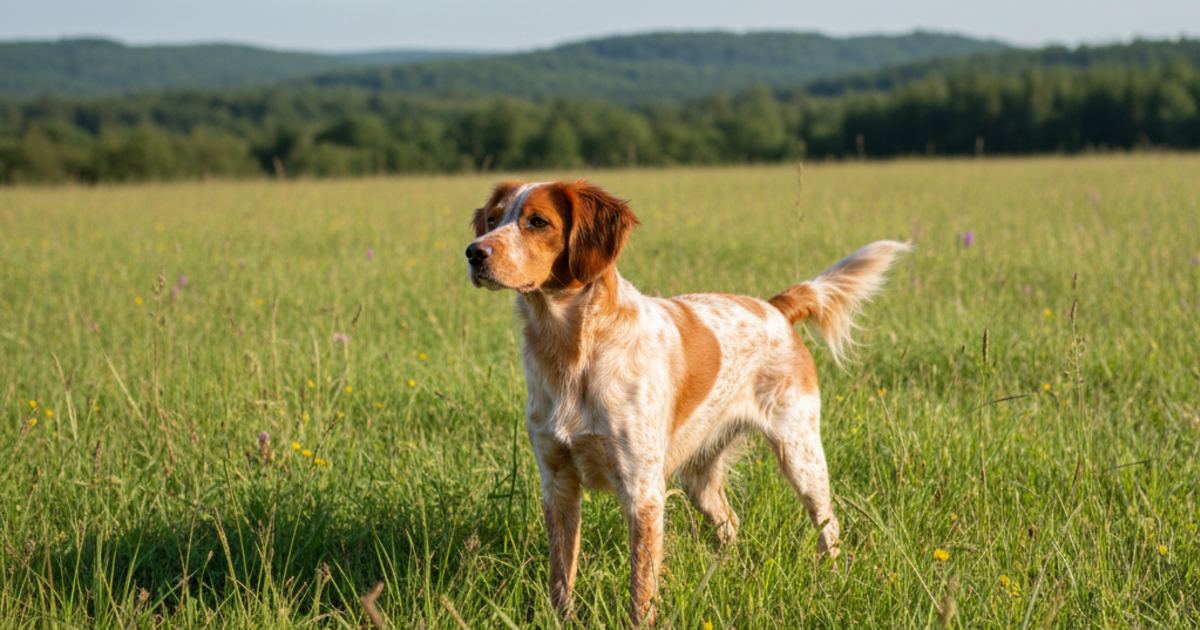
The Brittany is a medium-sized sporting dog, usually 30-40 lb and 17.5-20.5 inches tall, with a friendly, eager-to-please personality and very high energy. Expect 12-14 years of life, an easy-care coat and a need for at least an hour or more of vigorous exercise every day.
Originally bred in the Brittany region of France to point and retrieve game birds, the Brittany is now a popular family and sporting companion. It is affectionate, bright and happiest when it has a job and a person to share it with. But that energy is not for everyone. This guide covers the Brittany's size, appearance, temperament, exercise and training needs, grooming, common health concerns, feeding and who this breed suits best. Use the breed selector to compare it with other breeds.
Brittany at a glance
| Trait | Typical range |
|---|---|
| Height | 17.5-20.5 inches |
| Weight | About 30-40 lb (14-18 kg) |
| Lifespan | Roughly 12-14 years |
| Coat | Dense, flat or wavy, medium length |
| Colors | Orange and white, liver and white, sometimes with roan or tricolor patterns |
| Group | Sporting |
| Energy | Very high |
| Trainability | High, sensitive to harsh correction |
History and purpose
The Brittany was developed in the province of Brittany, France, as a versatile bird dog that could both point and retrieve. It was once called the Brittany Spaniel, but the American Kennel Club dropped "Spaniel" from the name in 1982 because the breed works more like a pointer than a flushing spaniel. Many Brittanys are born with naturally short or absent tails. Today they excel in field work and dog sports.
Temperament
- Friendly and affectionate. Brittanys are devoted to their people and often follow them from room to room.
- Eager to please. They respond well to positive training.
- Sensitive. Harsh corrections can make them shut down or become anxious.
- Energetic and playful. They need an outlet every day.
- Good with children and other dogs when well socialized, though their enthusiasm can overwhelm small children.
- Not a guard dog. They tend to greet strangers warmly.
- Prey drive. Birds, squirrels and small animals may trigger chasing, so use a leash or secure fencing.
Exercise needs
This is not a casual walk breed. Plan on at least 60-90 minutes of vigorous exercise daily, ideally with a mix of:
- Off-leash running in a safe, fenced area
- Retrieving games and fetch
- Hiking, jogging or biking with an adult dog
- Scent work, agility or field training
- Puzzle toys and mental challenges
A bored Brittany can become destructive, noisy or anxious. Puppies should not do forced, repetitive or high-impact exercise until their joints have matured, so ask your vet about age-appropriate activity.
Training and socialization
Brittanys learn quickly and enjoy training sessions. Use rewards, short sessions and variety.
- Start early with basic cues, loose-leash walking and recall.
- Socialize broadly to people, dogs, sounds and places during puppyhood.
- Teach a reliable recall, since their instinct is to range ahead.
- Practice settling on a mat so they learn to relax.
- Use positive methods. Avoid harsh corrections.
- Keep them engaged with new tasks to avoid boredom.
Grooming
The Brittany's coat is easy to care for compared with many sporting breeds.
- Brush weekly to remove loose hair and debris, more in shedding seasons.
- Check and clean the ears regularly, since drop ears can trap moisture and lead to infections.
- Trim nails every few weeks.
- Bathe as needed, such as after muddy runs.
- Brush the teeth several times a week.
- Check for burrs, ticks and cuts after outdoor trips.
Common health concerns
Brittanys are generally healthy, but responsible breeders screen for known conditions. Ask for health testing documentation.
- Hip dysplasia: a joint condition that can cause pain and arthritis.
- Epilepsy: seizures can occur in the breed.
- Hypothyroidism: an underactive thyroid affecting weight, coat and energy.
- Ear infections: more likely in dogs with drop ears and an active outdoor life.
- Eye problems, including cataracts in some lines.
- Other inherited conditions, which a reputable breeder will discuss.
Regular vet checkups, vaccinations, parasite prevention and weight control help keep them healthy.
Feeding a Brittany
Energy needs depend on age, neuter status and activity level. A very active hunting or sport dog needs far more calories than a family pet. Feed a complete and balanced diet for your dog's life stage, measure portions and keep your Brittany lean, which protects the joints.
Worked example
A 17 kg (37 lb) neutered adult Brittany.
- Resting energy: RER = 70 × 17^0.75 = 70 × 8.37 = about 586 kcal.
- Typical neutered adult family pet: 586 × 1.6 = about 938 kcal per day.
- Very active field or sport dog: 586 × 2.0 = about 1,170 kcal per day, sometimes higher during heavy seasons.
- If the food is 3,700 kcal per kg: 938 ÷ 3.7 = about 253 g per day for the family pet, or 1,170 ÷ 3.7 = about 316 g per day for the working dog.
- Split into two meals to reduce the risk of bloat, and avoid hard exercise right after eating.
- Adjust by about 10% based on body condition. You should feel the ribs without seeing them.
Use the dog calorie calculator to estimate calories for your own dog.
Is a Brittany right for you?
A Brittany may suit you if you:
- Enjoy running, hiking or field sports
- Can offer daily vigorous exercise and mental stimulation
- Want an affectionate dog who is close to the family
- Have a secure yard and the time for training
A Brittany may not suit you if you:
- Live a sedentary lifestyle
- Spend long hours away from home
- Prefer a calm, low-energy dog
- Cannot provide secure fencing or a leash-based routine
Living with a Brittany: tips
- Secure your yard. Brittanys can jump and dig.
- Give them a job, such as retrieving, scent games or training.
- Avoid leaving them alone for long periods, which can cause separation anxiety.
- Keep them cool in warm weather and provide water on outings.
- Use a harness or a long line for hikes where recall is not yet reliable.
When to call your vet
Contact your vet if your Brittany has seizures, repeated ear shaking or discharge, limping, difficulty rising, changes in appetite, unexplained weight changes or low energy. Seek emergency care for a swollen abdomen with retching, collapse or seizures lasting more than a few minutes. For suspected poisoning, call the ASPCA Animal Poison Control Center at 888-426-4435 or the Pet Poison Helpline at 855-764-7661 (fees may apply).
The bottom line
The Brittany is a sweet, athletic and trainable companion for active households. If you can meet its exercise and training needs, it will repay you with loyalty and joy. Compare it with other breeds using the breed selector, and plan feeding with the dog calorie calculator.
Frequently asked questions
PawCalculator Editorial
We combine veterinary references, published guidelines, and calculator-grade modeling. This article is for education, not a substitute for an exam.
+ Follow on PawTalk