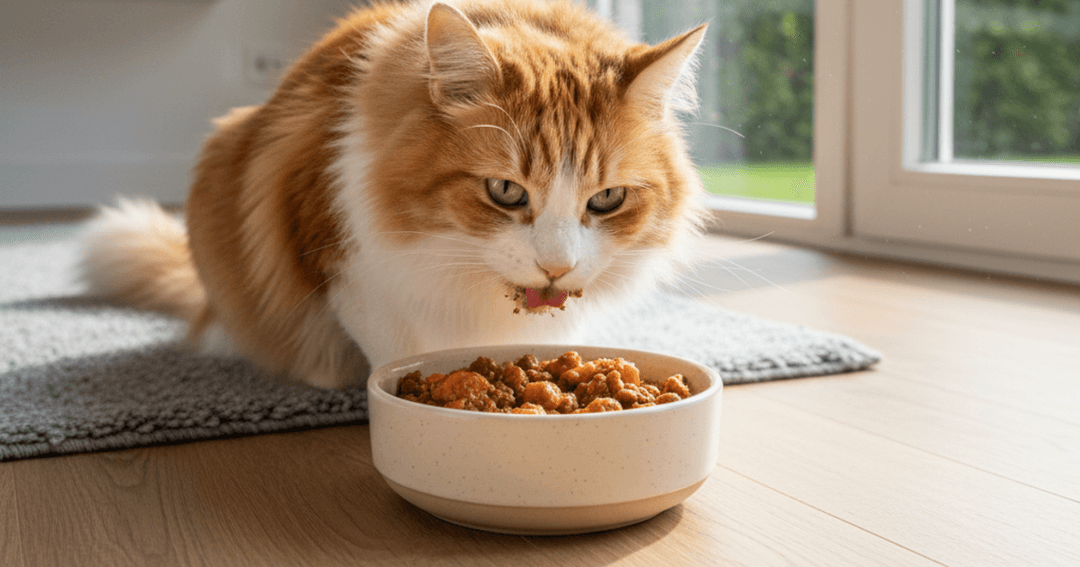
Sensitive stomach cat food helps most when it's highly digestible, uses one main animal protein, keeps fat moderate, and adds gentle fiber or prebiotics. Feeding it in small, frequent meals matters almost as much as the food itself, because eating too much too fast is one of the most common reasons cats throw up. If your cat vomits more than about once a week, though, that's not "just a sensitive stomach." It's worth a vet visit.
To work out small-meal portions for your cat, use the cat food calculator.
Signs Your Cat May Have a Sensitive Stomach
- Vomiting food or bile, especially soon after eating
- Soft stools or diarrhea
- Frequent hairballs
- Gas, gurgling, or a tender belly
- Eating grass or plants
Many of these can also point to inflammatory bowel disease, food allergy, parasites, hyperthyroidism, kidney disease or intestinal lymphoma. A vet check comes first, and the vet cost estimator can help you budget for it.
What to Look For in Cat Food for a Sensitive Stomach
A single named animal protein first. Chicken, turkey, duck, rabbit or salmon. Fewer protein sources mean fewer possible triggers.
High digestibility. Foods labeled for sensitive digestion or gastrointestinal support are designed to be absorbed more fully, which leaves less for the gut to struggle with.
Moderate fat. Rich foods can cause loose stools in some cats. Compare labels on a dry matter basis rather than as-fed.
Gentle fiber and prebiotics. Pumpkin, psyllium, beet pulp, and prebiotics like FOS help regulate stools and hairballs.
Fewer extras. Heavy use of dyes and a long list of flavorings add nothing a sensitive cat needs.
An AAFCO complete and balanced statement for your cat's life stage.
Common cat food triggers
The most frequently reported food allergens in cats are beef, fish and chicken, simply because they're the most common proteins in cat food. Dairy is another frequent culprit; most adult cats don't digest lactose well.
Wet vs Dry Cat Food for a Sensitive Stomach
| Wet cat food | Dry cat food | |
|---|---|---|
| Water content | ~75–80% | ~8–10% |
| Calories per gram | Lower | Much higher |
| Good for | Hydration, slower eating, urinary health | Convenience, puzzle feeders |
| Watch out for | Spoils after ~4 hours out | Gulping, then vomiting |
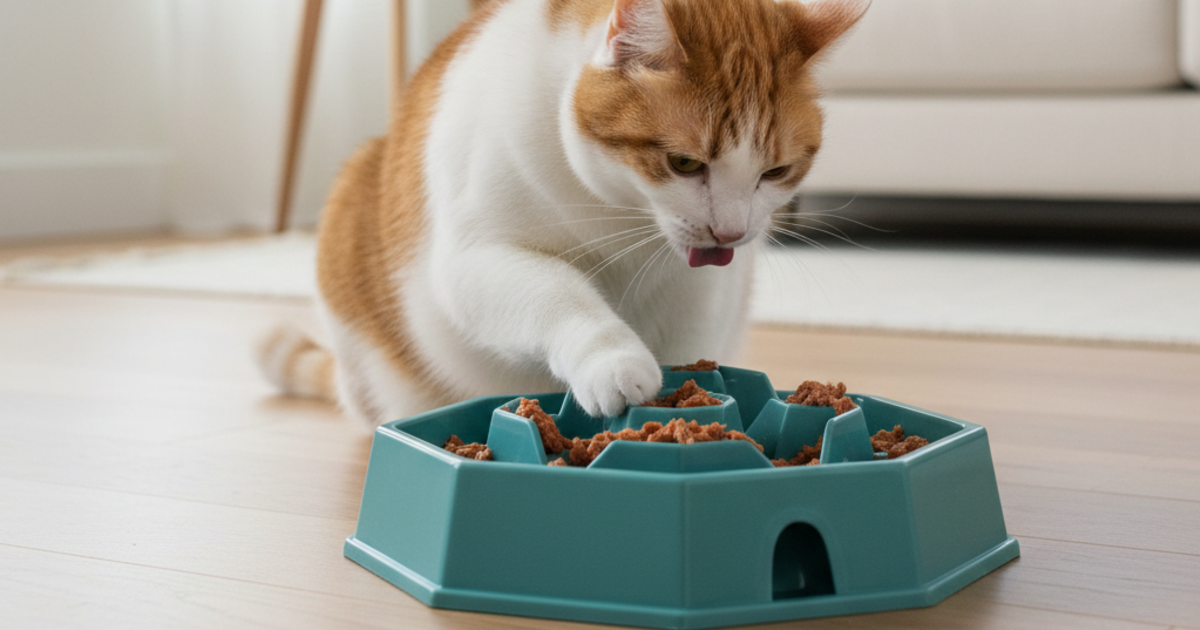
Many sensitive cats do better on wet cat food because it's easier to eat slowly and adds water. Others do well on a digestible dry cat food, especially from a puzzle feeder that slows them down. If your cat "scarf and barfs" dry food, try a slow feeder or switch some meals to wet.
Best Cat Food for a Sensitive Stomach With Vomiting
For cats that vomit shortly after eating, the feeding method often matters more than the brand:
- Smaller meals, more often. 3–4 small meals instead of 1–2 big ones.
- Slow feeders or spreading kibble across a flat plate.
- Separate bowls in multi-cat homes so nobody gulps to compete.
- Hairball support (fiber and regular brushing) for long-haired cats.
Worked example: small-meal portions
A 4 kg (8.8 lb) neutered indoor adult cat, eating wet food with 80 kcal per 3 oz can.
- RER = 70 × 4^0.75 ≈ 198 kcal
- Neutered indoor adult: 198 × 1.2 ≈ 238 kcal/day
- Four meals: 238 ÷ 4 ≈ 60 kcal per meal
- 60 ÷ 80 ≈ ¾ of a 3 oz can per meal
Daily calories by cat weight
| Cat weight | Calories per day (1.0–1.2 × RER) | Per meal (4 meals) |
|---|---|---|
| 3 kg (6.6 lb) | 160–190 kcal | 40–48 kcal |
| 4 kg (8.8 lb) | 200–240 kcal | 50–60 kcal |
| 5 kg (11 lb) | 235–280 kcal | 59–70 kcal |
| 6 kg (13.2 lb) | 270–320 kcal | 67–80 kcal |
Run your own cat's numbers in the cat calorie calculator.
How to Switch Cat Food Safely
Cats can be stubborn about new food, and sudden changes can upset their stomachs. Switch over 7–10 days, or longer if needed:
- Days 1–3: 25% new, 75% old
- Days 4–6: 50% new, 50% old
- Days 7–9: 75% new, 25% old
- Day 10 onward: 100% new
Never let a cat go without eating to "force" them onto a new food. Cats that stop eating for even a couple of days are at risk of hepatic lipidosis (fatty liver disease).
Things to Avoid
- Milk and cream (lactose upsets most adult cats)
- Table scraps, especially fatty or seasoned foods
- Onion, garlic, chives and grapes, which are toxic; check anything unfamiliar in the food safety checker
- Constant food switching, which makes it hard to know what's working
For more on meal timing, read how often you should feed your cat, and for label reading, see how to choose a good dry cat food.
When to Call Your Vet
Call your vet if your cat:
- Vomits more than once a week, or several times in one day
- Has blood in vomit or stool, or black, tarry stools
- Stops eating for more than 24 hours
- Is losing weight, hiding or unusually quiet
- Strains in the litter box or produces no urine (an emergency in male cats)
- Keeps retching without bringing anything up, which can mean a blockage
Chronic vomiting in older cats is often a sign of an underlying disease, so don't put off an exam.
The Bottom Line
A good sensitive stomach cat food is digestible, simple, and built on one main protein, but how you feed it matters just as much. Small, slow meals prevent a lot of vomiting. If your cat still throws up more than once a week, see your vet. Work out per-meal portions with the cat food calculator.
Frequently asked questions
PawCalculator Editorial
We combine veterinary references, published guidelines, and calculator-grade modeling. This article is for education, not a substitute for an exam.
+ Follow on PawTalk