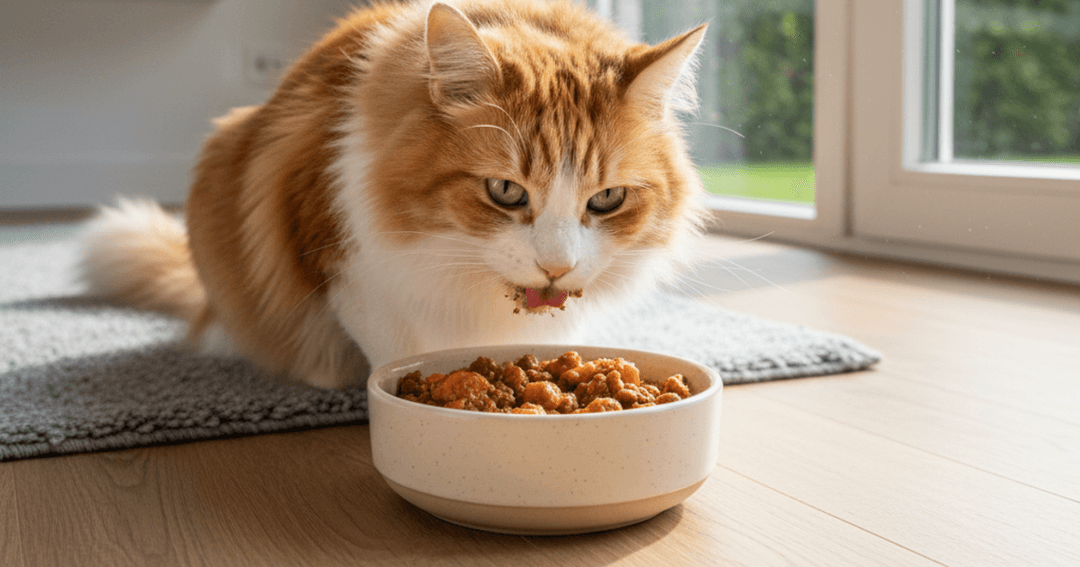
The best dog food for a sensitive stomach is one your dog digests easily: a single, high-quality main protein, moderate fat (roughly 10–15% on a dry matter basis for most dogs), gentle fiber such as pumpkin, beet pulp or prebiotics, and a "complete and balanced" AAFCO statement. There's no one brand that suits every dog. The right food is the one that settles your dog's stools and vomiting over 2–4 weeks, introduced slowly.
Once you've picked a food, the dog food calculator tells you how much to feed so you're not overloading a touchy gut.
Signs Your Dog Has a Sensitive Stomach
- Soft stools or diarrhea that come and go
- Occasional vomiting, especially after meals or new treats
- Lots of gas or loud gut noises
- Grass eating and lip licking
- Picky eating or skipping meals
These signs overlap with parasites, infections, pancreatitis and food allergies, so it's worth a vet check before you assume it's "just a sensitive stomach." A fecal test and exam are inexpensive compared with months of trial and error; the vet cost estimator gives typical prices in your area.
What to Look For in Sensitive Stomach Dog Food
1. One main, digestible protein
Chicken, turkey, lamb, salmon, whitefish or egg as the first ingredient. Fewer protein sources make it easier to spot what agrees with your dog.
2. Moderate fat
Fat is a common trigger for loose stools and vomiting. Many sensitive stomach formulas sit around 10–15% fat on a dry matter basis, compared with 15–20% or more in performance foods. Dogs with a history of pancreatitis often need lower still, under vet guidance.
3. Gentle fiber and prebiotics
Look for pumpkin, beet pulp, psyllium, oatmeal, or prebiotics such as FOS and MOS. These feed healthy gut bacteria and firm up stools.
4. Easily digested carbs
White rice, oatmeal and potato are usually easier on the gut than large amounts of peas or lentils.
5. A complete and balanced statement
The label should say it meets AAFCO nutrient profiles for your dog's life stage. The WSAVA also suggests choosing brands that employ a qualified nutritionist and run feeding trials.
Quick label checklist
| Look for | Be cautious of |
|---|---|
| Single named protein first | Long lists of mixed proteins |
| Fat around 10–15% DM | Very high fat "performance" formulas |
| Pumpkin, beet pulp, prebiotics | Lots of artificial colors |
| Rice, oats, potato | Frequent recipe changes |
| AAFCO "complete and balanced" | "For intermittent or supplemental feeding" |
To compare fat or protein between wet and dry foods, convert to a dry matter basis: divide the percentage by (100 − moisture %) and multiply by 100. The dog protein calculator does this for you.
Sensitive Skin and Stomach Dog Food
Itchy skin, ear infections and paw licking alongside tummy trouble can point to a food allergy. In that case, "sensitive skin and stomach" formulas with omega-3s (fish oil) and a single protein may help, but a true food allergy usually needs a strict elimination diet with a hydrolyzed or novel-protein food for 8–12 weeks. Beef, dairy, chicken and wheat are the most commonly reported food allergens in dogs. We cover that process in our guide to the best dog food for allergies.
How to Switch Dog Food Without Upsetting Their Stomach
Sensitive dogs need a slower changeover than most. Stretch it to 10–14 days if needed.
| Days | Old food | New food |
|---|---|---|
| 1–3 | 75% | 25% |
| 4–6 | 50% | 50% |
| 7–9 | 25% | 75% |
| 10+ | 0% | 100% |
If stools get loose, go back one step for a few days before moving on.
Worked example: portions during the switch
A 15 kg (33 lb) neutered adult dog, new food at 370 kcal per cup.
- RER = 70 × 15^0.75 ≈ 534 kcal
- Neutered adult: 534 × 1.6 ≈ 854 kcal/day
- 854 ÷ 370 ≈ 2.3 cups of the new food per day
- Days 1–3: about 1¾ cups old food + ½ cup new food (adjust the old food by its own calories if they differ)
Overfeeding is a sneaky cause of loose stools, so getting the total right matters. Run your dog's numbers in the dog calorie calculator.
Daily calories by weight (neutered adult)
| Dog weight | Calories per day | Cups at 370 kcal/cup |
|---|---|---|
| 5 kg (11 lb) | ~374 | ~1 |
| 10 kg (22 lb) | ~630 | ~1¾ |
| 15 kg (33 lb) | ~854 | ~2⅓ |
| 20 kg (44 lb) | ~1,060 | ~2¾ |
| 30 kg (66 lb) | ~1,436 | ~3¾ |
Other Ways to Help a Sensitive Stomach
- Split meals. Two or three smaller meals are easier to digest than one big one.
- Cut back treats and table scraps. Keep treats under 10% of daily calories and stick to one type.
- Avoid rich or risky foods. Fatty meat trimmings, bones and many "people foods" cause trouble. Check anything new in the food safety checker.
- Slow down fast eaters with a puzzle bowl.
- Ask your vet about probiotics. Some veterinary probiotics have good evidence for acute diarrhea.
For more on formats, see our comparison of wet vs dry food for dogs.
When to Call Your Vet
Call your vet promptly if your dog has:
- Vomiting or diarrhea lasting more than 24–48 hours, or repeated episodes
- Blood in the stool (red or black, tarry) or in vomit
- A swollen or painful belly, or a "prayer" position
- Lethargy, weakness or pale gums
- Weight loss or a poor appetite that lasts
- Vomiting with unproductive retching (possible bloat, an emergency)
Puppies, seniors and small dogs dehydrate quickly, so call sooner for them.
The Bottom Line
The best dog food for a sensitive stomach is simple: one digestible protein, moderate fat, gentle fiber, and a complete and balanced label. Switch slowly, feed the right amount, and give it 2–4 weeks before judging. If symptoms don't settle, your vet can check for allergies or other causes. Start by working out your dog's daily portion with the dog food calculator.
Frequently asked questions
PawCalculator Editorial
We combine veterinary references, published guidelines, and calculator-grade modeling. This article is for education, not a substitute for an exam.
+ Follow on PawTalk