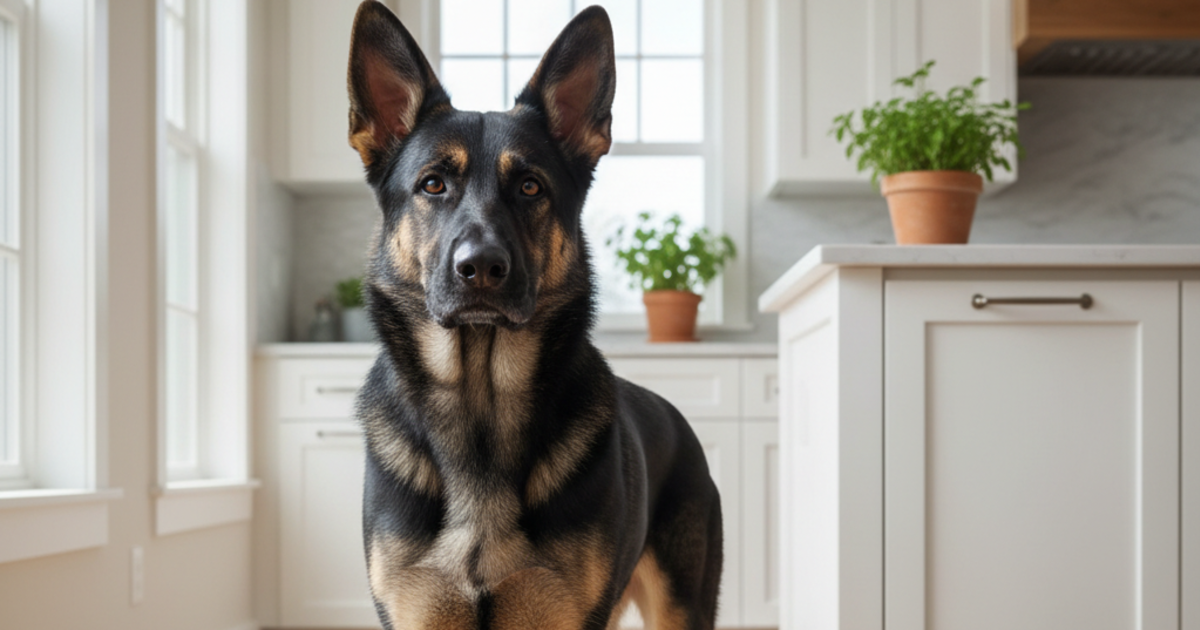
The best dog food for a German Shepherd is a complete-and-balanced diet matched to its life stage, with moderate-to-high quality protein, controlled calories to keep joints lean, omega-3 fatty acids and highly digestible ingredients for a sensitive gut. Puppies need a large-breed growth formula, and all adults should be fed measured meals to reduce bloat and weight risks.
German Shepherds (GSDs) are athletic, intelligent working dogs, but their size and genetics bring specific nutrition challenges: hip and elbow dysplasia, degenerative joint disease, digestive sensitivity, some pancreatic and skin issues and a deep chest that increases bloat risk. This guide explains what to look for in a food for each stage, how many calories a GSD needs, how to support joints and digestion, how to feed to lower bloat risk and what to avoid. Use the dog food calculator for portions.
German Shepherd nutrition at a glance
| Factor | Typical GSD profile |
|---|---|
| Adult weight | About 50-90 lb (22-40 kg); males larger than females |
| Lifespan | Roughly 9-13 years |
| Energy | High, especially working and sport dogs |
| Common issues | Hip and elbow dysplasia, degenerative myelopathy, digestive sensitivity, skin allergies, bloat |
| Key diet goals | Lean body weight, joint support, digestible protein, controlled growth in puppies |
What to look for in a German Shepherd food
- A complete-and-balanced AAFCO statement for your dog's life stage. Large-breed puppies need a food labeled for growth of large breeds.
- Quality protein from named animal sources such as chicken, beef, fish or lamb. Most adult foods land around 22-30% protein on a dry-matter basis, but quality and digestibility matter more than a single number.
- Moderate fat matched to activity level. Too much fat adds calories and can upset sensitive stomachs.
- Omega-3 fatty acids (EPA and DHA) from fish oil to support joints, skin and coat.
- Joint-support ingredients such as glucosamine and chondroitin, which may help some dogs though evidence varies.
- Digestible carbohydrates and fiber to support stool quality.
- Calories listed per cup or kilogram so you can measure portions.
- A manufacturer with qualified nutritionists and quality control.
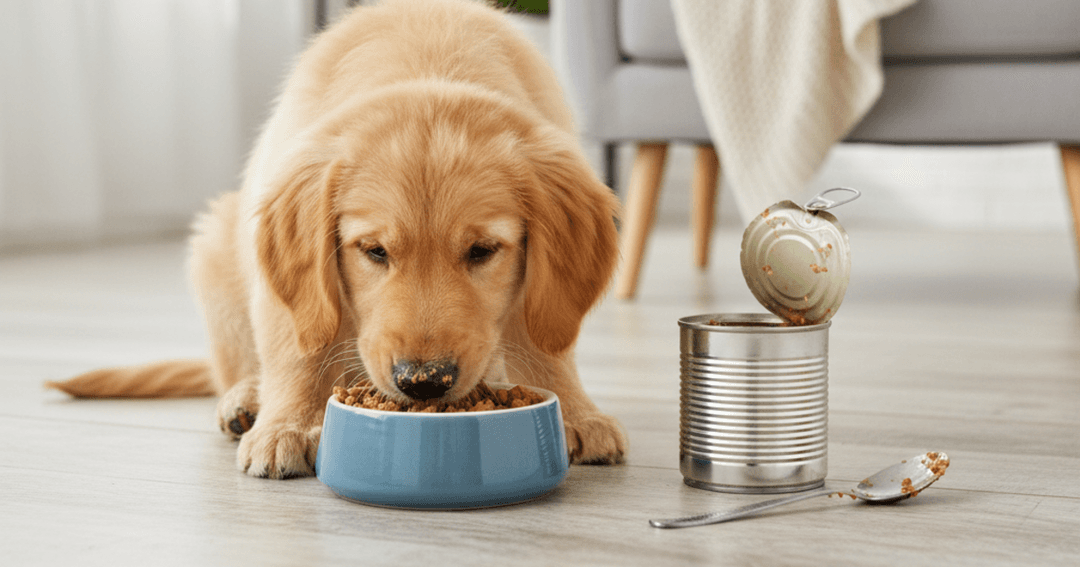
Feeding a German Shepherd puppy
German Shepherd puppies grow quickly, and too-fast growth can increase the risk of developmental joint problems.
- Use a large-breed puppy formula with controlled calcium and calorie levels.
- Avoid over-supplementing calcium. More is not better and can harm bone development.
- Feed measured meals three to four times a day when very young, then reduce to two.
- Keep puppies lean. You should feel the ribs without seeing them.
- Avoid forced exercise, long runs and repetitive jumping while growth plates are open.
- Switch to adult food around 12-18 months, as your vet advises, since large breeds mature more slowly.
Feeding an adult German Shepherd
Adults do best on a measured, consistent diet with enough calories for activity but not so many that they gain weight. Working and sport dogs may need substantially more calories than family pets. Weigh your dog every few weeks and adjust.
Feeding a senior German Shepherd
Older GSDs often slow down, and arthritis is common. Seniors may need fewer calories, more joint support, and possibly higher-quality protein to protect muscle. Ask your vet about senior diets and joint supplements. Do not drastically cut protein unless a vet advises it for a medical condition.
Digestive sensitivity
Many German Shepherds have sensitive stomachs. Signs include loose stools, gas, vomiting or poor appetite. Some GSDs also have exocrine pancreatic insufficiency (EPI), a condition where the pancreas does not produce enough digestive enzymes, which causes weight loss despite a big appetite and greasy stools. If you see these signs, see your vet before changing foods.
Tips for sensitive guts:
- Choose a highly digestible food with a limited number of ingredients.
- Change foods slowly over 7-10 days.
- Avoid frequent treat and table-scrap changes.
- Consider vet-recommended probiotics.
- Keep fat moderate unless your vet recommends otherwise.
Skin and coat
GSDs can be prone to skin allergies and a dull coat. Omega-3 fatty acids, adequate zinc and quality protein support skin health. If your dog has chronic itching, ear infections or paw licking, ask your vet about allergy testing or a food trial.
Bloat: feed to lower the risk
German Shepherds are deep-chested, which raises the risk of gastric dilatation-volvulus (GDV), or bloat, a life-threatening emergency. You cannot eliminate the risk, but these habits may help:
- Feed two or more smaller meals instead of one big meal.
- Avoid vigorous exercise for an hour or so before and after meals.
- Use a slow feeder bowl if your dog gulps food.
- Avoid stress at mealtimes.
- Know the signs: a swollen or tight belly, unproductive retching, drooling, restlessness and pale gums. This is an emergency. Go to a vet immediately.
Worked example
A 35 kg (77 lb) neutered adult German Shepherd with normal activity.
- Resting energy: RER = 70 × 35^0.75 = 70 × 14.38 = about 1,007 kcal.
- Daily need: 1,007 × 1.6 = about 1,611 kcal.
- If the food is 3,600 kcal per kg: 1,611 ÷ 3.6 = about 448 g per day.
- Two meals of about 224 g each.
- Treats: keep to about 10% of calories, or around 160 kcal.
- Weigh every 2-4 weeks and adjust by about 10% to keep an ideal body condition.
A very active working GSD could need a higher multiplier, such as 2.0 or more, so recalculate for your dog's workload.
Foods and ingredients to be cautious with
- Very high-fat diets and fatty table scraps, which can trigger pancreatitis or diarrhea.
- Rawhide and large bones, which can cause blockages or tooth fractures.
- Calcium-heavy supplements for puppies.
- Unbalanced homemade diets without a veterinary nutritionist's recipe.
- Sudden diet changes.
- Toxic foods such as onions, garlic, grapes, raisins, chocolate and xylitol.
Cost-conscious tips
A good GSD food does not have to be the most expensive. Compare cost per 1,000 calories, check for a complete-and-balanced statement and ask your vet which brands they trust. Large dogs eat a lot, so correct portioning saves money.
When to call your vet
Call your vet if your German Shepherd has persistent diarrhea or vomiting, weight loss despite a good appetite, itching, ear infections, limping, difficulty rising or any bloat signs. Bloat is an emergency. For suspected poisoning, call the ASPCA Animal Poison Control Center at 888-426-4435 or the Pet Poison Helpline at 855-764-7661 (fees may apply).
The bottom line
Choose a complete-and-balanced, highly digestible food for your German Shepherd's life stage, keep your dog lean to protect joints, feed measured meals to lower bloat risk and see your vet for digestive or skin problems. Calculate portions with the dog food calculator.
Frequently asked questions
PawCalculator Editorial
We combine veterinary references, published guidelines, and calculator-grade modeling. This article is for education, not a substitute for an exam.
+ Follow on PawTalk