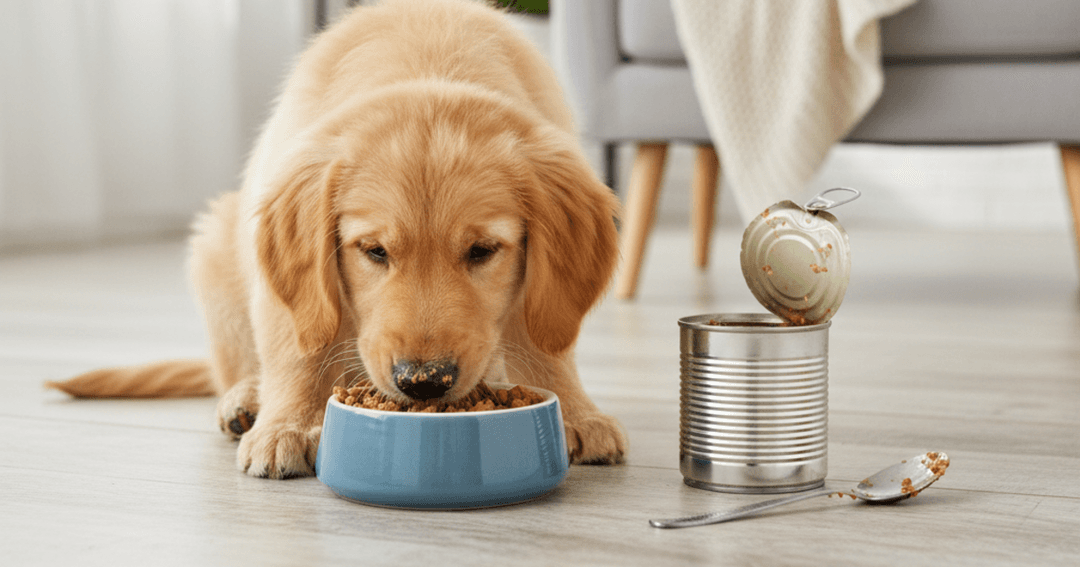
The best dog food for a Golden Retriever is a complete-and-balanced diet for its life stage, with quality protein, controlled calories, omega-3 fatty acids for skin and joints and portions measured to keep the dog lean. Goldens are prone to obesity, joint disease and skin problems, so weight control is the single most important nutrition goal.
Golden Retrievers are friendly, food-motivated dogs, and that enthusiasm at the bowl makes them one of the breeds most likely to become overweight. Extra weight worsens hip and elbow dysplasia, arthritis and other health problems, and Goldens already face higher risks of some cancers and joint conditions. This guide explains what to look for in a Golden's food, how to feed puppies, adults and seniors, how to support skin and joints, how to calculate calories, how to handle treats and what to avoid. Use the dog food calculator to find the right portion.
Golden Retriever nutrition at a glance
| Factor | Typical Golden profile |
|---|---|
| Adult weight | About 55-75 lb (25-34 kg), with males larger |
| Lifespan | Roughly 10-12 years |
| Energy | Moderate to high, with a big appetite |
| Common issues | Obesity, hip and elbow dysplasia, skin allergies and hot spots, ear infections, heart conditions, some cancers |
| Key diet goals | Lean body condition, joint support, healthy skin and coat, controlled puppy growth |
What to look for in a Golden Retriever food
- A complete-and-balanced AAFCO statement for your dog's life stage. Large-breed puppies need a growth formula for large breeds.
- Quality animal protein, such as chicken, fish, lamb or beef, as the first ingredients. Many adult Goldens do well on about 22-28% protein on a dry-matter basis.
- Moderate fat. Too much fat means too many calories, which is a risk for a breed that gains weight easily.
- Omega-3 fatty acids (EPA and DHA) to support skin, coat, joints and heart health.
- Joint support, such as glucosamine and chondroitin, particularly for seniors and heavier dogs.
- Digestible carbohydrates and fiber for stool quality and fullness.
- Calories listed per cup or kilogram so you can measure precisely.
- A manufacturer with qualified nutritionists and quality control.
Feeding a Golden Retriever puppy
Golden puppies grow fast, and growing too fast can contribute to joint problems.
- Use a large-breed puppy formula with controlled calcium and calories.
- Feed measured meals three to four times a day when young, then two meals.
- Keep your puppy lean. Slim puppies often have better joint outcomes than chubby ones.
- Avoid calcium supplements unless your vet recommends them.
- Avoid forced exercise, long runs and repetitive jumping until growth plates close.
- Switch to adult food at about 12-18 months, as your vet advises.
Feeding an adult Golden Retriever
Most adult Goldens do well on two measured meals a day. Because the breed is prone to weight gain, choose a food with moderate calories and avoid free-feeding. Weigh your dog regularly and use the body condition score: you should feel the ribs with light pressure and see a visible waist from above.
Feeding a senior Golden Retriever
Older Goldens often slow down and need fewer calories, but they still need good-quality protein to protect muscle. Joint support, omega-3s and weight control matter even more. Ask your vet about senior diets and any medical needs, such as heart or kidney issues.
Weight control: the main event
Studies in Labrador Retrievers, a closely related breed, found that dogs kept lean lived longer and developed arthritis later than overweight littermates. Goldens share the same tendency to gain weight, so a lean body is probably the best gift you can give your dog.
- Measure every meal with a scale or a measuring cup.
- Count treats. Keep them under 10% of daily calories.
- Use part of the daily kibble as training rewards.
- Substitute low-calorie treats such as green beans or carrots in small amounts.
- Avoid table scraps.
- Weigh your dog monthly and adjust.
- Be firm with friends and family who sneak treats.
Skin, coat and ears
Goldens are prone to hot spots, itching and ear infections. Causes include environmental allergies, food allergies and fleas.
- Omega-3s from fish oil can support skin health.
- Keep up flea prevention.
- Dry the ears after swimming, since Goldens love water.
- See your vet for persistent itching, red skin or ear problems.
- Consider a vet-guided food trial if a food allergy is suspected.
Joint health
Hip and elbow dysplasia and arthritis are common in Goldens. Keep your dog lean, provide regular low-impact exercise such as swimming and walking, avoid repetitive jumping and ask your vet about glucosamine, chondroitin and omega-3 supplements.
Heart health and diet
Some Golden Retrievers have been reported with low taurine levels and diet-associated dilated cardiomyopathy. The FDA has investigated certain grain-free, legume-heavy diets. Choose a complete-and-balanced diet from a reputable manufacturer with qualified nutritionists, and ask your vet whether your dog should have a taurine test, especially if feeding an unusual or boutique diet.
Worked example
A 30 kg (66 lb) neutered adult Golden Retriever.
- Resting energy: RER = 70 × 30^0.75 = 70 × 12.81 = about 897 kcal.
- Typical neutered adult: 897 × 1.6 = about 1,435 kcal per day.
- Weight-prone or less active dog: 897 × 1.4 = about 1,256 kcal per day.
- If the food is 3,600 kcal per kg: 1,256 ÷ 3.6 = about 349 g per day for the weight-prone dog, or 1,435 ÷ 3.6 = about 399 g for the typical dog.
- Two meals of about 175 g each for the weight-prone dog.
- Treat budget: about 126 kcal, or 10% of 1,256.
- Weigh every 2-4 weeks and adjust by about 10% to keep an ideal body condition.
Use the dog calorie calculator to estimate your dog's needs.
Things to be cautious with
- Free-feeding and unmeasured scoops
- Very high-fat foods and fatty scraps, which can cause pancreatitis
- Rawhide, hard bones and chews that can cause blockages or tooth damage
- Unbalanced homemade diets without a veterinary nutritionist's recipe
- Sudden diet changes
- Toxic foods, including grapes, raisins, onions, garlic, chocolate and xylitol
When to call your vet
Contact your vet if your Golden has persistent itching, hot spots, ear infections, limping, difficulty rising, weight gain or loss, coughing, fainting, lumps or bumps, or low energy. Seek urgent care for a swollen belly with retching, collapse or difficulty breathing. For suspected poisoning, call the ASPCA Animal Poison Control Center at 888-426-4435 or the Pet Poison Helpline at 855-764-7661 (fees may apply).
The bottom line
Feed your Golden a complete-and-balanced diet for its life stage, measure portions, count treats and keep your dog lean to protect its joints and health. Calculate the right amount with the dog food calculator.
Frequently asked questions
PawCalculator Editorial
We combine veterinary references, published guidelines, and calculator-grade modeling. This article is for education, not a substitute for an exam.
+ Follow on PawTalk