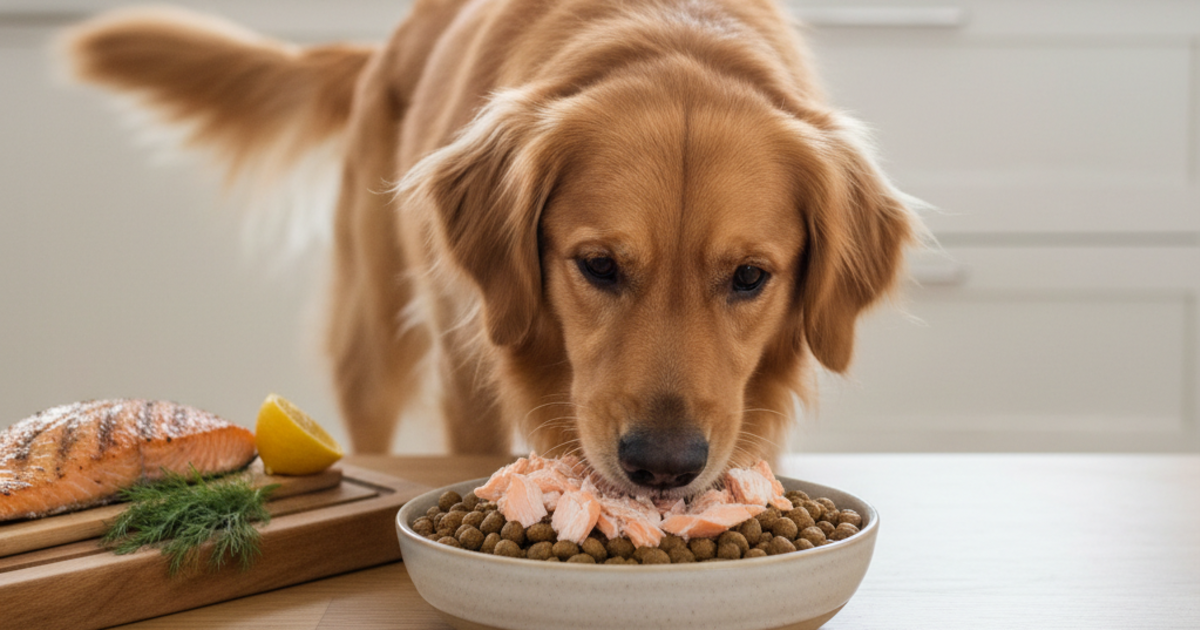
Salmon dog food offers a fish protein plus omega-3 fatty acids (EPA and DHA) that support skin, coat and joints. It can suit dogs that do poorly on chicken or beef, but fish can also be an allergen, so check the label for a complete and balanced statement, introduce it gradually, and never feed raw salmon.
Salmon is one of the most popular alternatives to chicken- and beef-based diets. It's palatable, rich in omega-3s and widely available in kibble, canned and fresh formulas. But it isn't a magic fix for allergies or itchy skin, and a few details about labels, fat and safety matter. This guide covers the benefits, how to read a salmon food label, who it suits, who should be careful, the raw salmon danger, how to portion it and how to switch. Compare protein levels across formulas with the dog protein calculator.
Benefits of salmon in dog food
- Omega-3 fatty acids (EPA and DHA): associated with skin and coat health, joint comfort, heart health and normal brain development in puppies.
- High-quality protein with a good amino acid profile.
- A different protein source for dogs that haven't eaten fish before or that react to chicken or beef.
- Palatability: many dogs like the smell and taste, which helps picky eaters.
- Vitamin D and B vitamins, naturally present in fish.
Keep expectations realistic. Omega-3 levels in a commercial food are usually lower than the doses vets use therapeutically for arthritis or inflammatory skin disease, so a dog with those conditions needs a vet-guided plan, not just a salmon-flavored bag.
Reading the label
- AAFCO statement: "complete and balanced" for your dog's life stage, ideally with feeding trials.
- Named salmon near the top: "salmon" or "salmon meal." Salmon meal is concentrated protein and isn't a bad thing.
- Other proteins: some "salmon" foods also contain chicken fat, poultry meal or other proteins, which matters for dogs with allergies.
- Calories: kcal per cup or per kg, so you can portion accurately.
- Fat level: salmon foods can be moderate to high in fat, which matters for dogs prone to pancreatitis or weight gain.
- Sourcing and quality control: reputable brands test for contaminants such as heavy metals and follow sustainable sourcing practices.
Salmon and sweet potato, salmon and rice
These are common formulas. Sweet potato and rice are carbohydrate sources, and the carbohydrate choice doesn't make a food healthier by itself. Pick based on your dog's tolerance and the nutrition basics above, not the marketing.
Who it may suit
- Dogs that tolerate fish and have had trouble with chicken or beef
- Dogs needing a palatable diet, such as picky eaters
- Dogs that benefit from extra omega-3 in their diet, under vet guidance
- Dogs with dry, flaky skin where diet is one of several factors your vet is reviewing
Who should be careful
- Dogs with fish allergies, which are less common than chicken or beef allergies but possible.
- Dogs prone to pancreatitis, where fat content matters.
- Dogs on prescription diets for kidney, liver, heart or urinary problems.
- Overweight dogs, since salmon formulas can be calorie-dense.
- Puppies, unless the food is labeled for growth or all life stages (and for large breeds, appropriate for large-breed puppies).
Never feed raw salmon
Raw or undercooked Pacific salmon, trout and related fish can carry a parasite that hosts a bacterium causing "salmon poisoning disease" in dogs. It can be fatal without treatment, with signs such as vomiting, fever, swollen lymph nodes, diarrhea and lethargy typically appearing within a couple of weeks. Commercial cooked dog food doesn't carry this risk. If you feed salmon at home, cook it thoroughly and remove all bones.
Worked example
Meet Finn, a neutered 25 kg dog.
- RER: 70 × 25^0.75 = 70 × 11.18 = about 782 kcal.
- Daily calories at 1.6 × RER: about 1,250 kcal.
- A salmon formula at 3,700 kcal per kg: 1,250 ÷ 3.7 = about 338 g a day.
- Convert to cups using your food's own cup weight (often 100-120 g), so about 3-3.4 cups. Always measure on a scale for accuracy.
- Split into two meals of about 170 g each.
Find your dog's calorie need in the dog food calculator.
Switching foods
Mix the new food with the old over 7-10 days. Stop and call your vet if your dog develops vomiting, diarrhea, itching or ear infections.
Fish oil and supplements
Some owners add fish oil to a salmon diet. Extra omega-3 can cause loose stool and add calories, and too much can interfere with blood clotting. Ask your vet before adding supplements, and count the calories.
When to call your vet
Call if your dog has persistent itching, skin or ear infections, vomiting, diarrhea, weight changes, or any reaction after switching foods. If your dog ate raw salmon from a river or the wild and becomes unwell, treat it as urgent. Ask your vet about an elimination diet if you suspect a food allergy.
Frequently asked questions
PawCalculator Editorial
We combine veterinary references, published guidelines, and calculator-grade modeling. This article is for education, not a substitute for an exam.
+ Follow on PawTalk