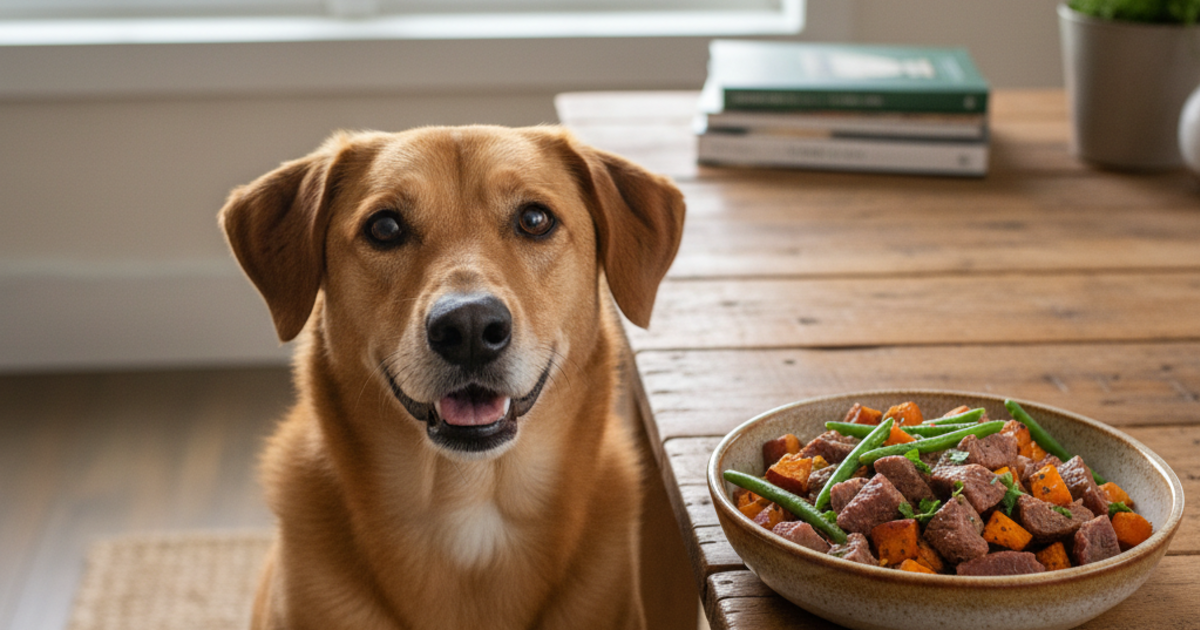
Venison dog food uses deer meat as the main protein and is commonly chosen as a novel protein for dogs that react to chicken, beef or other common allergens. It can work well in a vet-guided food trial if your dog has never eaten venison, but it is not automatically hypoallergenic or better for every dog.
Dogs with itchy skin, ear infections or sensitive stomachs are often moved to "something different," and venison is a popular pick. It is a lean, rich-tasting meat that many dogs enjoy. But the label "novel" depends on your dog's history, and many venison foods are made in facilities that also process other proteins. This guide explains what venison dog food is, how it compares nutritionally, when it can help, how to run a proper trial, what to check on labels, the cost and environmental considerations and how to portion it. Use the dog protein calculator for protein planning.
What is venison dog food?
Venison is the meat of deer, although in pet food it can also include related animals such as elk or other game, depending on the brand. Dog foods use venison as the first ingredient, as meal, or as one of several proteins. Formats include dry kibble, canned food, fresh and freeze-dried recipes and treats.
Nutritional profile
Venison is generally leaner than beef or lamb and is a good source of protein, iron, zinc and B vitamins. Exact values vary by cut and processing, but as a rule it is lower in fat and calories than many red meats, so recipes often add other fats to meet energy needs.
| Protein | Typical fat level | Common allergen? | Notes |
|---|---|---|---|
| Chicken | Moderate | Yes | Very common in diets |
| Beef | Moderate to high | Yes | Common allergen |
| Lamb | Higher | Less common | Often used as an alternative |
| Venison | Lower | Rare, because few dogs have eaten it | Often marketed as novel |
| Salmon or whitefish | Moderate | Less common | Omega-3 source |
A venison food must still be complete and balanced. The meat alone does not provide everything a dog needs, so look for the AAFCO statement and added vitamins and minerals.
When venison can help
- Suspected food allergy to chicken, beef, dairy or grains. A food trial with a novel protein can help identify triggers.
- Dogs who are picky. The strong flavor is appealing to many dogs.
- Dogs who need leaner protein, though not all venison foods are low in calories.
- Rotating proteins, if your vet approves.
When venison may not help
- If your dog has already eaten venison, it is not novel for that dog.
- If the food contains other proteins, such as chicken fat or meal, hidden ingredients can cause reactions.
- If your dog's problem is not food-related, such as fleas or environmental allergies.
- If your dog has a medical condition that needs a prescription diet.
What makes a protein truly novel?
A protein is novel only if your dog has never been exposed to it, including in treats, chews, flavored medications and supplements. Venison may be novel for one dog and not another. Crucially, many over-the-counter venison foods list other animal ingredients or are manufactured on shared lines, which can lead to cross-contamination. For a diagnostic trial, vets often prefer prescription hydrolyzed diets or a carefully selected limited-ingredient venison diet with a clean ingredient list.
Running a food trial
- See your vet to rule out fleas, infections and other causes.
- Review your dog's full diet history, including treats and chews.
- Choose one venison diet with a short, clear ingredient list and no chicken or beef ingredients.
- Feed only that food for 8-12 weeks. No treats, table scraps, flavored meds or chews unless they match the trial diet.
- Track symptoms in a diary: itching, ear problems, stool quality and energy.
- Rechallenge if your vet advises, to confirm the trigger.
Reading the label
- Is venison the first named protein?
- Are there other proteins such as chicken fat, chicken meal, eggs or fish?
- What carbohydrates are used? Sweet potato, peas, potatoes or grains.
- Is there an AAFCO statement for your dog's life stage?
- Are calories listed?
- Is the manufacturer transparent about production lines and cross-contamination?
- Does it say "formulated" or "feeding trial"?
Cost and sustainability
Venison dog food is often more expensive than chicken or beef recipes because supply is smaller. Costs vary by brand and format, so compare cost per 1,000 calories. Some brands source farm-raised venison, while others use wild-caught or imported meat. Ask the manufacturer where the meat comes from and how it is processed.
Worked example
A 12 kg (26 lb) neutered adult dog starting a venison diet.
- Resting energy: RER = 70 × 12^0.75 = 70 × 6.45 = about 452 kcal.
- Daily need: 452 × 1.6 = about 722 kcal.
- If the food is 3,700 kcal per kg: 722 ÷ 3.7 = about 195 g per day.
- Two meals of about 98 g each.
- Transition over 7-10 days, mixing the new food with the old unless your vet advises a faster switch for a strict trial.
- Weigh every 2-4 weeks and adjust by about 10% if weight changes.
Check your food's calories per kilogram, since venison diets vary a lot.
Treats and extras on a venison diet
Choose single-ingredient treats made from venison, or use pieces of the daily kibble as rewards. Keep treats under 10% of daily calories, and avoid chews or flavored pill pockets during a strict trial.
Safety notes
- Buy commercial products. Do not feed raw or wild game scraps from hunting without veterinary guidance, because of parasites and bacteria.
- Handle raw or fresh products hygienically.
- Store food in a cool, dry place and watch best-by dates.
- Check recalls for any brand you choose.
When to call your vet
Contact your vet if your dog has persistent itching, skin infections, ear problems, vomiting, diarrhea or weight loss. Seek urgent care for facial swelling, hives, trouble breathing or collapse. For suspected poisoning, call the ASPCA Animal Poison Control Center at 888-426-4435 or the Pet Poison Helpline at 855-764-7661 (fees may apply).
The bottom line
Venison can be a useful novel protein when your dog has never eaten it and the food is complete, balanced and free from hidden ingredients. Pair it with a vet-guided trial and measure portions. Use the dog protein calculator to plan protein.
Frequently asked questions
PawCalculator Editorial
We combine veterinary references, published guidelines, and calculator-grade modeling. This article is for education, not a substitute for an exam.
+ Follow on PawTalk