The cat food aisle is a masterclass in designed confusion. Bags use words like "premium," "natural," "grain-free," "holistic," and "real meat" in ways that are either legally meaningless or actively misleading. A bag that says "With Real Chicken" on the front may contain 3% chicken. A bag that says "Chicken Cat Food" must contain at least 95%.
Most owners don't know these rules. The pet food industry counts on that.
This guide is about reading the label rather than the packaging. The bag's front panel is marketing. The back is regulated information. Once you know what the back panel is actually telling you - and what it isn't - choosing cat food stops feeling like guesswork.
Why Dry Food Specifically Is Worth Scrutinising
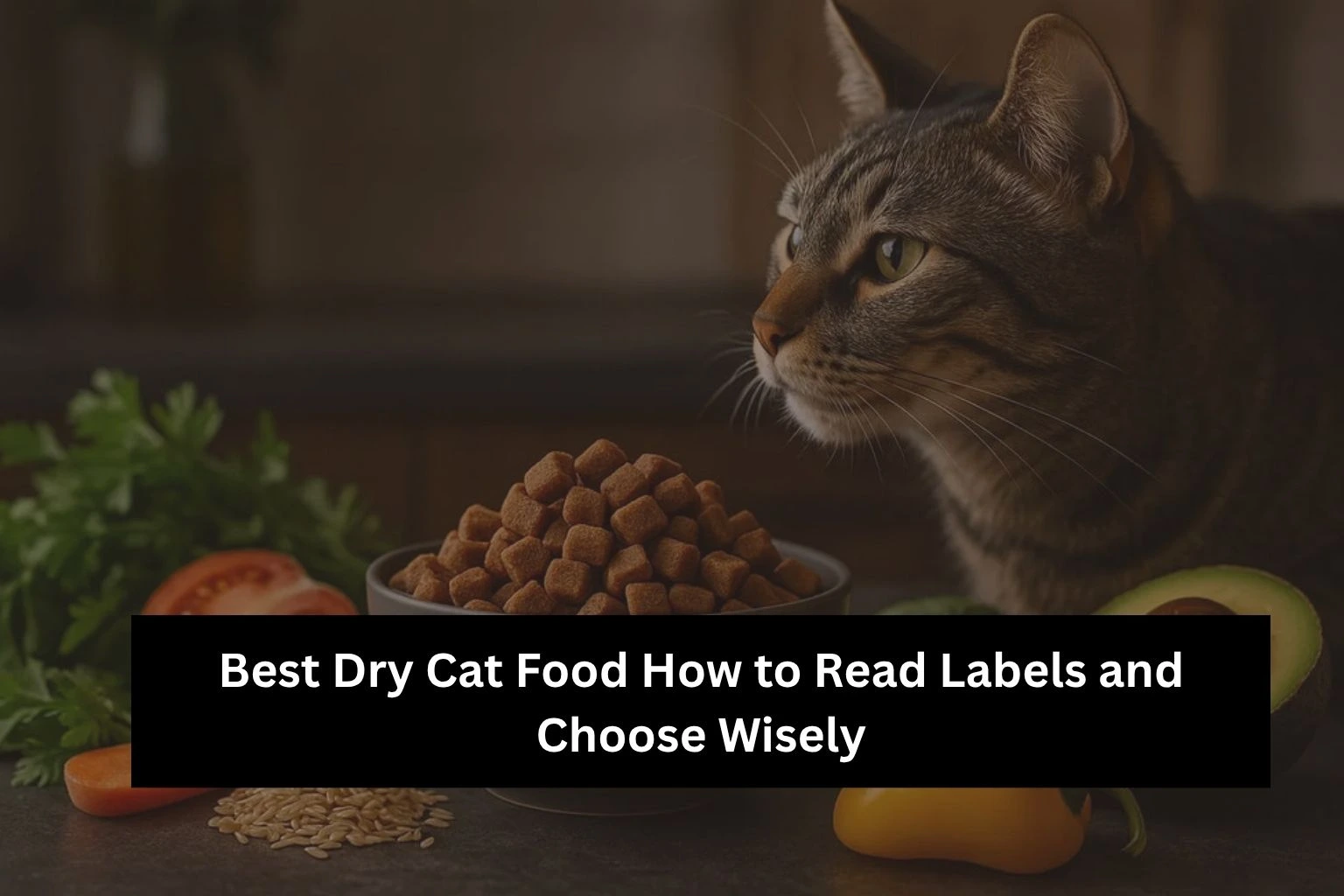
Dry cat food (kibble) is convenient, affordable, and shelf-stable. It's also the format most likely to contain ingredients that cats don't particularly need: starches, grains, and fillers that are there to hold the kibble together and keep manufacturing costs down, not to nourish your cat.
Cats are obligate carnivores. They evolved eating prey animals - mostly rodents and birds. Their digestive systems are built to extract nutrition from protein and fat, not from carbohydrates.
Dry food, by its nature, requires more carbohydrate than wet food to achieve its shelf-stable form. That's not automatically a problem - it depends on how much, from what source, and what else is in the food. But it's the structural reason why reading dry cat food labels matters more than reading wet food labels.
The Ingredient List: What It Shows and What It Hides
Ingredients are listed by pre-cooking weight, heaviest first. This sounds straightforward. It has two non-obvious implications that most owners miss.
The moisture trap in fresh meat. Fresh chicken is approximately 70% water. When listed as the first ingredient, "chicken" sounds excellent - and it can be - but once that moisture is cooked out during kibble production, the actual contribution of that chicken to the finished product is significantly smaller than its position on the list suggests.
Chicken meal isn't inferior - it's dehydrated chicken, which means a higher concentration of actual protein per gram. The issue is with vague meal sources: "poultry meal" or "meat meal."
What to look for:
- Named animal protein as first ingredient
- Named meal sources if meals appear
- At least two of the first five ingredients should be animal-derived
What to treat as a red flag:
- "Corn gluten meal" in the first five ingredients
- Unnamed fat sources
- Multiple starch sources stacked together
The Guaranteed Analysis: What Those Percentages Actually Mean
Every cat food label shows minimum percentages of crude protein and crude fat, and maximum percentages of crude fibre and moisture. This section looks precise. It isn't, for two reasons.
First, these are minimums and maximums, not exact values.
Second, percentages are given "as fed," meaning they include moisture. A wet food showing 10% protein and a dry food showing 32% protein are not meaningfully comparable until you convert both to dry matter basis.
Dry matter conversion examples:
- Wet food dry matter protein: 10% ÷ (100% - 78%) = 45.5%
- Dry food dry matter protein: 32% ÷ (100% - 10%) = 35.5%
For dry food specifically, a crude protein minimum of around 30-35% from named animal sources is a reasonable baseline for many adult cats.
The AAFCO Statement: The One Thing You Cannot Skip
Somewhere on every legitimate cat food is an AAFCO nutritional adequacy statement.
You will typically see one of two forms:
- Formulated to meet AAFCO nutrient profiles
- Substantiated by AAFCO feeding trials
The feeding-trial statement is generally stronger, but both are acceptable complete-diet pathways.
What matters most: the life stage designation.
- Adult maintenance - for adult cats
- Growth/Kitten - for kittens and often pregnant/nursing cats
- All life stages - must meet higher growth standards
- Supplemental/intermittent - not complete as a sole diet
If a food has no AAFCO adequacy statement, do not use it as the primary diet.
Marketing Language: What It Means Legally
| Label says | What it legally means |
|---|
| "Chicken Cat Food" | At least 95% chicken (excluding water) |
| "Chicken Dinner / Entrée / Formula" | 25-94% chicken |
| "Cat Food with Chicken" | At least 3% chicken |
| "Chicken Flavour Cat Food" | No minimum meat percentage requirement |
| "Natural" | AAFCO-defined term, but not equivalent to organic |
| "Holistic" | No legal definition |
| "Grain-free" | No grains, but may still be high in other starches |
| "Real meat" | Marketing phrase, not a strict legal standard |
"Grain-free" is not automatically low-carbohydrate. Always inspect replacement ingredients.
What Good Dry Cat Food Actually Looks Like
Ingredient list:
- Named meat first
- Named meal sources
- Named animal fat source
- Limited starch dominance in top ingredients
- Taurine included as an added nutrient
Guaranteed analysis:
- Protein typically 30%+ for adult dry diets
- Animal-source emphasis confirmed via ingredient list
AAFCO statement:
- Present and life-stage appropriate
- Feeding-trial substantiation preferred when available
Dry Food's Structural Limitation for Cats
Even the best dry cat food is still dry food. Cats generally have a lower thirst drive than many owners expect. Exclusive dry feeding can work, but hydration must be managed intentionally.
If your cat is exclusively dry-fed:
- Provide multiple clean water stations
- Consider a water fountain
- Monitor hydration and urinary health with routine veterinary checks
Use the PawCalculator Cat Calorie Calculator to set practical daily portions based on your cat's actual profile.
Switching Foods: The 10-Day Rule
Switching too quickly often causes digestive upset. Transition over 10 days:
- Days 1-3: 75% old food, 25% new
- Days 4-6: 50/50
- Days 7-9: 25% old, 75% new
- Day 10+: new food only
For food-sensitive cats, extend the transition to 14-21 days.
Is grain-free dry food better for cats?
Not automatically. It depends on what replaced the grain.
Does the first ingredient have to be meat?
Preferably yes, but always assess ingredients 2-5 as well.
What does "by-product" mean? Is it bad?
By-products can include nutrient-dense organ tissue. Named sources are generally preferable to vague ones.
How often should I change my cat's food?
There is no fixed rule, but any transition should be gradual.
My cat has been eating the same food for years. Should I change it?
If health markers are stable, change should be reason-based (life stage, medical, ingredient quality), not trend-based.
Use the Food Safety Checker to verify ingredients, and the Cat Calorie Calculator to set accurate daily portions.