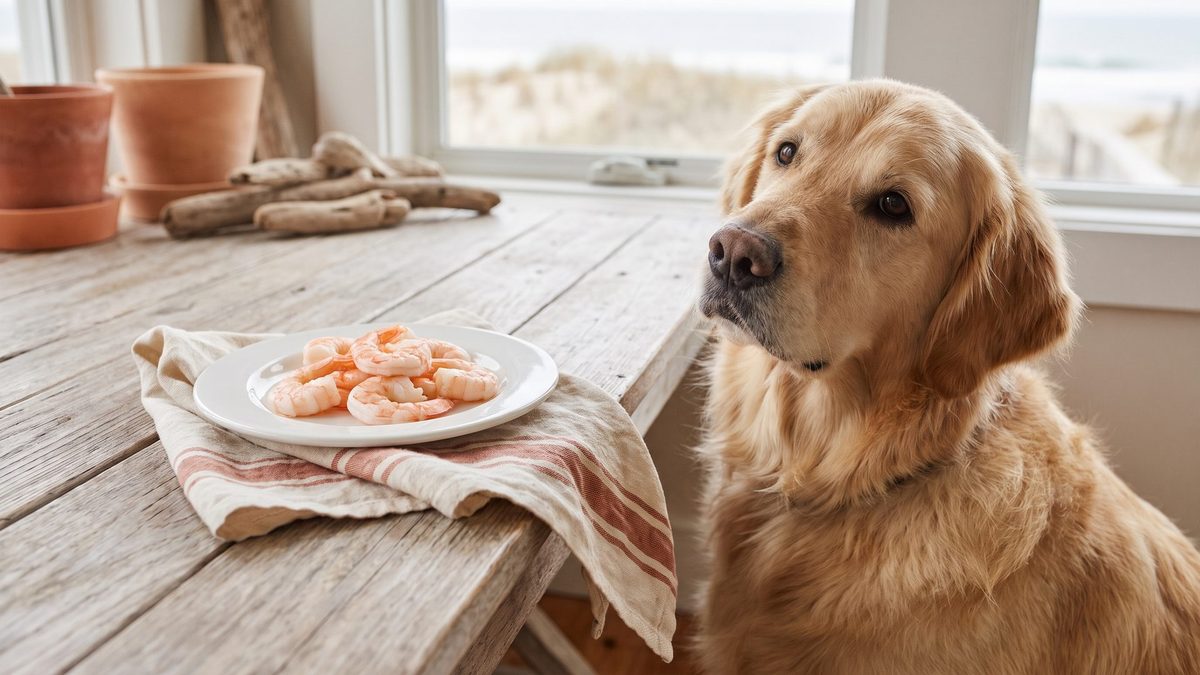
Yes, dogs can eat shrimp. Plain, fully cooked shrimp with the shell, tail and vein removed is safe for most dogs in small amounts and is a lean, low-calorie protein. Shrimp is not toxic, but how it is prepared matters. Raw shrimp, shells and tails, garlic butter, spicy seasoning and breaded or fried shrimp are best avoided.
Shrimp for dogs at a glance
| Form | Verdict | Why |
|---|
| Cooked, peeled, deveined, plain | Safe in small portions | Lean protein, low fat |
| Raw shrimp | Skip | Bacteria and parasites can make dogs sick |
| Shell, tail and legs | Remove | Choking, stomach upset or blockage risk |
| Shrimp cooked in garlic butter | Skip | Garlic is toxic to dogs; fat and salt too |
| Fried, breaded or tempura shrimp | Skip | High fat, salt and grease |
| Shrimp cocktail with sauce | Skip | Sugar, salt, horseradish and sometimes onion |
| Seasoned shrimp (Cajun, spicy, lemon pepper) | Skip | Spices, salt and sometimes garlic or onion powder |
| Canned shrimp | Rare, rinsed | Often packed in salty brine |
| Shrimp chips or crackers | Skip | Salt, grease and flavorings |
Shrimp portions by dog size
Treats and extras should stay around 10 percent of daily calories, a common veterinary rule of thumb. USDA FoodData Central lists cooked shrimp at roughly 100 calories per 100 grams, and it is very lean, but shrimp is also fairly salty on its own, so portions should be small.
| Dog weight | Cooked shrimp per serving (once or twice a week) |
|---|
| Under 10 lb (4.5 kg) | 1 small shrimp |
| 10 to 25 lb (4.5 to 11 kg) | 1 to 2 |
| 25 to 50 lb (11 to 23 kg) | 2 to 3 |
| Over 50 lb (23 kg) | 3 to 5 |
Cut shrimp into pieces for small dogs. Start with a single piece and watch for itching, vomiting or diarrhea over the next day. Use our dog food calculator to see your dog's daily food allowance and the dog calorie calculator for treat calories.
Is shrimp good for dogs?
Shrimp provides protein, vitamin B12, and minerals such as selenium and phosphorus, with very little fat. It is a handy training treat for dogs that need a leaner reward, though it is not a replacement for balanced dog food. Shrimp also contains cholesterol, so ask your vet before using it regularly for dogs with a history of pancreatitis or high blood fats.
Some dogs are allergic to shellfish. Signs include itching, hives, face swelling, vomiting or diarrhea. If you see swelling of the face, trouble breathing or collapse, go to an emergency clinic immediately.
Why raw shrimp, shells and tails are a problem
Raw shrimp can carry bacteria such as Salmonella and Vibrio, and parasites. Cooking thoroughly lowers the risk. Handle raw shellfish carefully and keep it away from dogs.
Shells and tails are hard to digest. They can scratch the throat, cause choking or form a blockage in small dogs. Removing them takes seconds. Our guide to foods dogs should not eat lists other common causes of blockage.
The vein. The dark vein running down the back is not toxic, but it contains grit. Deveining makes shrimp more pleasant and safer to eat.
Garlic, butter and seasoning: the hidden dangers
Restaurant shrimp is often cooked in garlic butter or dusted with onion or garlic powder. Garlic and onion belong to the allium family and can damage a dog's red blood cells. The salt and fat are a problem too. A single plain shrimp that fell on the floor is not an emergency, but a plate of scampi is a different story. Use the onion and garlic toxicity calculator if you need to estimate an exposure, and contact a vet if your dog ate seasoned shrimp.
Cocktail sauce and fried shrimp add sugar, grease and salt. Skip them. Shrimp that is shared from a seafood boil may also contain corn cobs, sausage and shells, all of which can be a hazard.
How to prepare shrimp for your dog
- Buy fresh or thawed shrimp from a reliable source.
- Peel it and remove the tail and vein.
- Boil or steam it in plain water until fully pink and opaque, with no oil, salt, garlic or spices.
- Let it cool completely.
- Cut it into small pieces and serve as a treat.
- Refrigerate leftovers and discard after two days.
Can puppies eat shrimp?
A small piece of plain cooked shrimp is generally fine for a healthy puppy, but puppies have sensitive stomachs and need complete puppy food. It is also a new protein, so offer one tiny piece first. If your puppy has itching, vomiting or loose stool, stop and talk to your vet.
Shrimp and other seafood for dogs
If your dog likes shrimp, fully cooked white fish and plain canned fish packed in water, drained, are other options in small amounts. Raw fish and shellfish can carry parasites and bacteria, and fish skin and bones are hazards. Salmon and other raw fish from certain regions can carry a parasite that is dangerous to dogs, so cook fish thoroughly.
Serve shrimp as a topper rather than a main meal, and rotate treats so your dog is not getting the same protein daily. If you are feeding a limited-ingredient diet for allergies, check with your vet before adding any new protein, since shellfish may trigger a reaction in dogs that already have food sensitivities.
What if my dog ate shells or seasoned shrimp?
If your dog swallowed several shells or tails, or ate shrimp cooked with garlic or onion, watch for vomiting, diarrhea, a painful belly or tiredness and call your vet. If the shrimp was raw, expect possible stomach upset. If you are worried, call your veterinarian, an emergency clinic, the ASPCA Animal Poison Control Center at (888) 426-4435 or the Pet Poison Helpline at (855) 764-7661. A consultation fee may apply. Do not induce vomiting unless a professional tells you to.
Related guides
Swap experiences with other owners on the PawTalk nutrition forum.
This guide is general education from the PawCalculator team, not veterinary advice. Sources: the American Kennel Club, the ASPCA and USDA FoodData Central. If your pet has eaten something harmful or seems unwell, contact a veterinarian or the ASPCA Animal Poison Control Center right away.