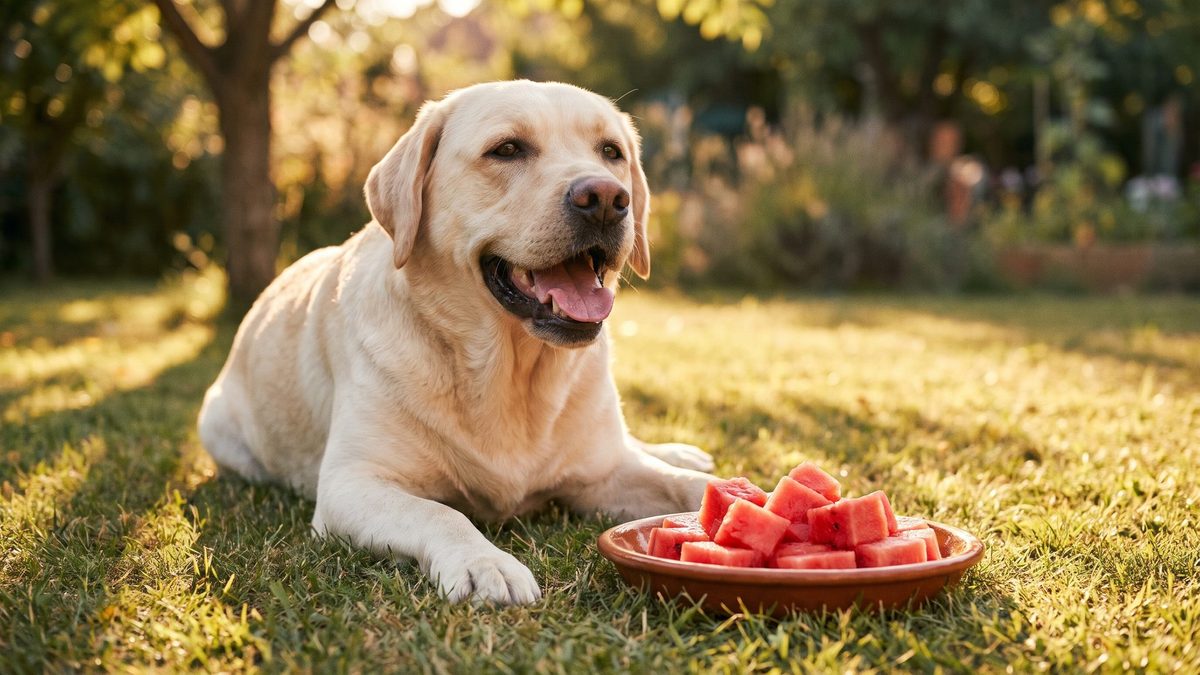
Yes, dogs can eat watermelon. The red flesh is safe, hydrating and low in calories, as long as the seeds and rind are removed. Seedless watermelon is easiest. The flesh is about 92 percent water, so it makes a cool snack in hot weather, but it also contains sugar, so portions should stay small.
Watermelon for dogs at a glance
| Part | Verdict | Why |
|---|
| Red flesh, seedless | Safe in small cubes | Hydrating, low calorie |
| Seeds (many) | Remove | Large amounts may cause blockage, especially in small dogs |
| Rind | Remove | Tough; can cause stomach upset or blockage |
| Watermelon juice | Occasional, plain | Sugar without fiber |
| Frozen watermelon cubes | Safe | Cooling treat; supervise small dogs |
| Watermelon candy or drinks | Never | Sugar and artificial sweeteners, sometimes xylitol |
How much watermelon can a dog eat?
Treats and extras should stay around 10 percent of daily calories, a common veterinary rule of thumb. USDA FoodData Central lists watermelon at roughly 30 calories per 100 grams, so a small cube is only a few calories. Because it is also sugary and high in water, too much can cause loose stools.
| Dog weight | Watermelon cubes per day (about 1 inch / 2.5 cm) |
|---|
| Under 10 lb (4.5 kg) | 1 to 2 |
| 10 to 25 lb (4.5 to 11 kg) | 2 to 4 |
| 25 to 50 lb (11 to 23 kg) | 4 to 6 |
| Over 50 lb (23 kg) | 6 to 10 |
Start with one or two pieces and watch for a few hours. Our dog food calculator shows your dog's daily food allowance so you can fit treats around it.
What about the seeds and rind?
The American Kennel Club notes that a few swallowed seeds are unlikely to cause trouble for a large dog, but many seeds can add up and cause an intestinal blockage, especially in small dogs. Removing seeds takes a minute, and seedless varieties skip the step entirely.
The rind is tougher to digest. Chewed in large pieces, it can cause vomiting, diarrhea or a blockage. If your dog stole a chunk of rind, watch for repeated vomiting, a painful belly, straining to poop or lack of appetite and call your vet if any appear. Our guide to foods that dogs should not eat lists other common blockage risks.
Is watermelon good for dogs?
Watermelon provides water, a little fiber, vitamins A and C and potassium. It is a hydrating treat on a warm day, but it does not replace water and is not a nutritional necessity. Dogs make their own vitamin C. Think of it as a low-calorie reward in place of biscuits.
Because it contains natural sugar, it is not ideal for dogs that are overweight, diabetic or prone to pancreatitis unless the vet approves. If you are managing your dog's weight, check where they stand with our dog BMI calculator.
How to serve watermelon safely
- Choose a ripe, seedless watermelon if possible.
- Cut away all the rind and any white pith near it.
- Remove all seeds, including the pale ones.
- Cut the flesh into bite-size cubes. Smaller for small dogs.
- Serve fresh or frozen. For a cool-down treat, freeze cubes on a tray, then keep them in a freezer bag.
Easy frozen treat: blend a cup of seedless watermelon, pour it into an ice-cube tray and freeze. Do not add sugar, yogurt with sweeteners or anything flavored. If you want to reduce mess, put one cube in a puzzle toy.
Hot weather: watermelon is not a substitute for water
Hot days are about safe temperatures and shade as much as snacks. Dogs can overheat quickly, especially flat-faced breeds and seniors. Our guide to how far to walk your dog by breed and age covers exercise limits, and fresh water should always be available. If your dog is panting heavily, drooling thickly, wobbly or collapsing, that is an emergency. Move them to shade, offer small sips of water and call a veterinarian immediately.
Can puppies eat watermelon?
Yes, in tiny amounts, once they are eating solid food. Remove seeds and rind, serve small pieces, and keep fruit to a few bites. Puppies need most of their calories from complete puppy food.
Watermelon safety around the house and yard
Whole watermelons attract dogs on picnics and barbecues. Leftover rinds in the trash or compost are also tempting. Keep rinds and seeds in a closed bin, and do not leave cut melon on low tables. Moldy or fermented melon can make a dog sick, so throw away any that has been left in the sun or has a sour smell.
If your dog has swallowed a lot of rind, watch their bowel movements and appetite for the next day or two. Vomiting more than once, a painful belly or no stool are all reasons to call a veterinarian. Small dogs are at higher risk of a blockage than large ones, which is why seedless watermelon in small cubes is the best option.
If your dog ate too much
A lot of watermelon can cause loose stool, gas or vomiting because of the sugar and water content. Offer water and watch. Contact your veterinarian if there is repeated vomiting, a painful belly, no bowel movement, or lethargy, especially if your dog ate rind or a lot of seeds. If the watermelon was part of a sweet drink or candy, check the label for xylitol and call the ASPCA Animal Poison Control Center at (888) 426-4435 or the Pet Poison Helpline at (855) 764-7661. A consultation fee may apply.
Related guides
Swap experiences with other owners on the PawTalk nutrition forum.
This guide is general education from the PawCalculator team, not veterinary advice. Sources: the American Kennel Club, the ASPCA and USDA FoodData Central. If your pet has eaten something harmful or seems unwell, contact a veterinarian or the ASPCA Animal Poison Control Center right away.