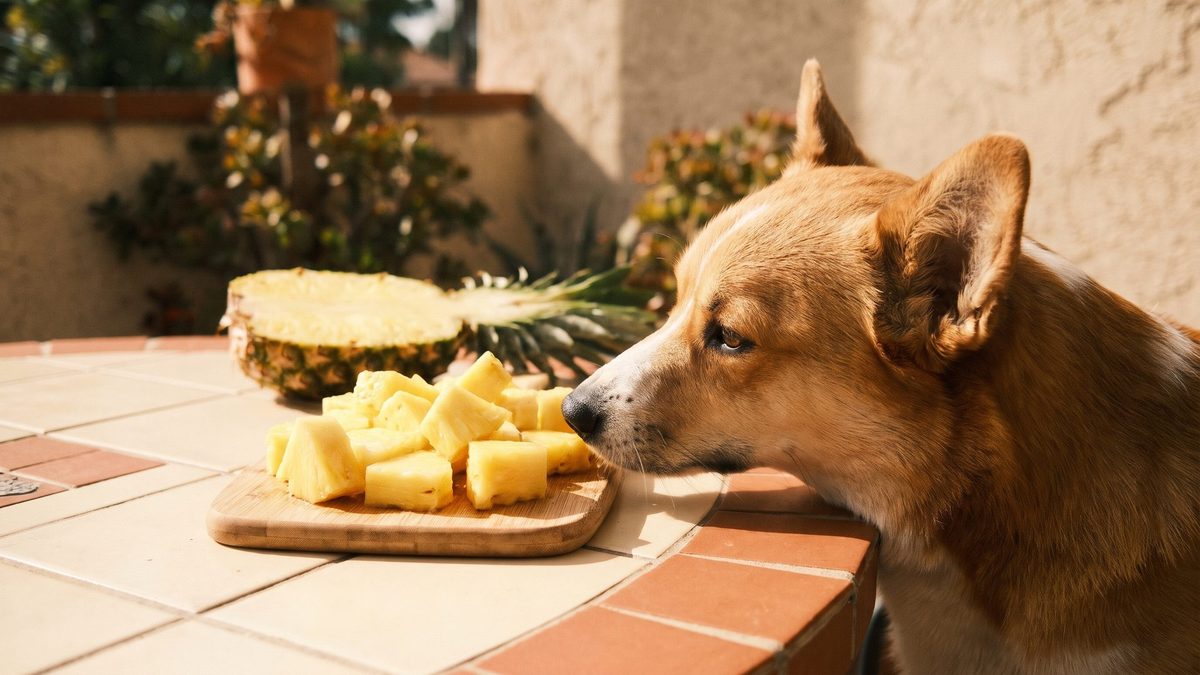
Yes, dogs can eat pineapple. Fresh, peeled pineapple flesh is not toxic and many dogs love it. It should be a small, occasional treat. The spiky skin, the crown and the tough core should be removed, and canned pineapple in syrup is best avoided because of the added sugar.
Pineapple for dogs at a glance
| Form | Verdict | Why |
|---|
| Fresh flesh, in small pieces | Safe | Water, fiber, vitamin C, manganese |
| Skin, crown and leaves | Never | Tough and spiky; choking and blockage risk |
| Core | Skip | Fibrous and hard to digest |
| Canned in juice | Rare, drained | Concentrated sugar |
| Canned in syrup | Skip | Heavy added sugar |
| Dried pineapple | Skip | Very concentrated sugar; often sweetened |
| Pineapple juice | Skip | Sugar without fiber |
| Pineapple cake, tarts and fruit cups | Skip | Sugar, fat and sometimes raisins or xylitol |
Pineapple portions by dog size
Treats and extras should stay around 10 percent of daily calories, a common veterinary rule of thumb. USDA FoodData Central lists raw pineapple at roughly 50 calories and about 10 grams of sugar per 100 grams, which is higher in sugar than blueberries or watermelon. That is why portions should be small.
| Dog weight | Pineapple pieces per day (about 1/2 inch / 1 cm) |
|---|
| Under 10 lb (4.5 kg) | 1 to 2 |
| 10 to 25 lb (4.5 to 11 kg) | 2 to 4 |
| 25 to 50 lb (11 to 23 kg) | 4 to 6 |
| Over 50 lb (23 kg) | 6 to 8 |
Offer once or twice a week, not every day, and start with a single piece to see how your dog reacts. Use our dog food calculator to work out your dog's daily food, and the dog calorie calculator to see how many treat calories fit around it.
Is pineapple good for dogs?
Pineapple contains vitamin C, manganese, fiber and an enzyme called bromelain. Dogs make their own vitamin C, so it is not necessary, and the amount of bromelain in a few chunks is small. Think of pineapple as a hydrating, tasty treat rather than a health food.
You may see pineapple recommended to stop dogs from eating poop. There is no solid scientific evidence it works, and some dogs simply dislike it. Talk to your vet or a behaviorist if this is an ongoing issue.
What to remove: skin, crown, core
The skin and crown are tough, spiky and impossible to digest. They can cause choking, mouth irritation or blockage. The core is also fibrous and easy to swallow in chunks. Always peel and cut pineapple on a surface your dog cannot reach, and put scraps in a closed bin.
Intestinal blockages are an emergency. Signs include repeated vomiting, no appetite, a painful or swollen belly, straining or no stool. If you suspect a blockage, call your vet immediately. Our guide to foods dogs should not eat covers other common causes.
Who should skip pineapple
Dogs with diabetes, obesity or a history of pancreatitis should only have it if their vet agrees, because of the sugar. Dogs with sensitive stomachs may get gas or loose stools from tropical fruit. Small dogs need very small pieces. If your dog is on a prescription diet, do not add extras without approval. For weight concerns, our dog BMI calculator and dog weight-loss calorie guide are useful starting points.
How to serve pineapple safely
- Choose a ripe pineapple.
- Cut off the crown and skin, and cut out the core.
- Dice the flesh into small pieces suited to your dog's size.
- Serve fresh, or freeze pieces on a tray for a cool summer treat.
- Store leftovers in the fridge for a couple of days.
If you use canned pineapple, choose pieces in their own juice (not syrup), drain and rinse them, and keep portions to a piece or two.
Can puppies eat pineapple?
A tiny piece of fresh pineapple is generally fine for a healthy puppy, but their stomachs are sensitive and they need most of their calories from complete puppy food. Offer one small piece, watch for diarrhea, and skip it if your puppy has an upset stomach.
Pineapple and other tropical fruit
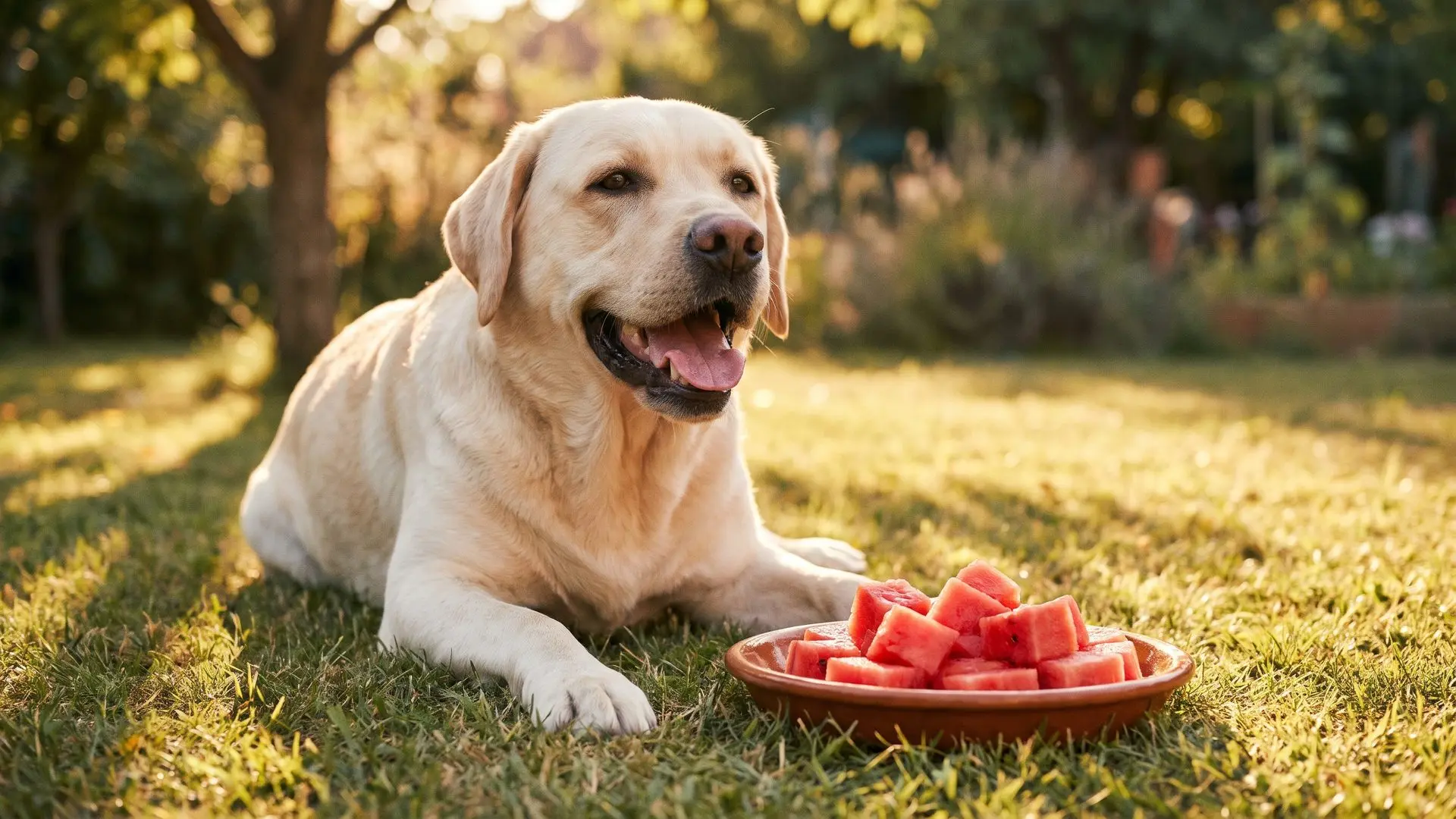
Mango flesh without the pit, banana in small amounts and papaya flesh are other fruit some dogs enjoy, but they carry the same rules as pineapple: remove skin, pits and seeds, keep portions small and watch for stomach upset. Large pits and cores are a bigger blockage risk than the fruit itself. For a summer snack, our guide to seedless watermelon covers a lower-sugar option.
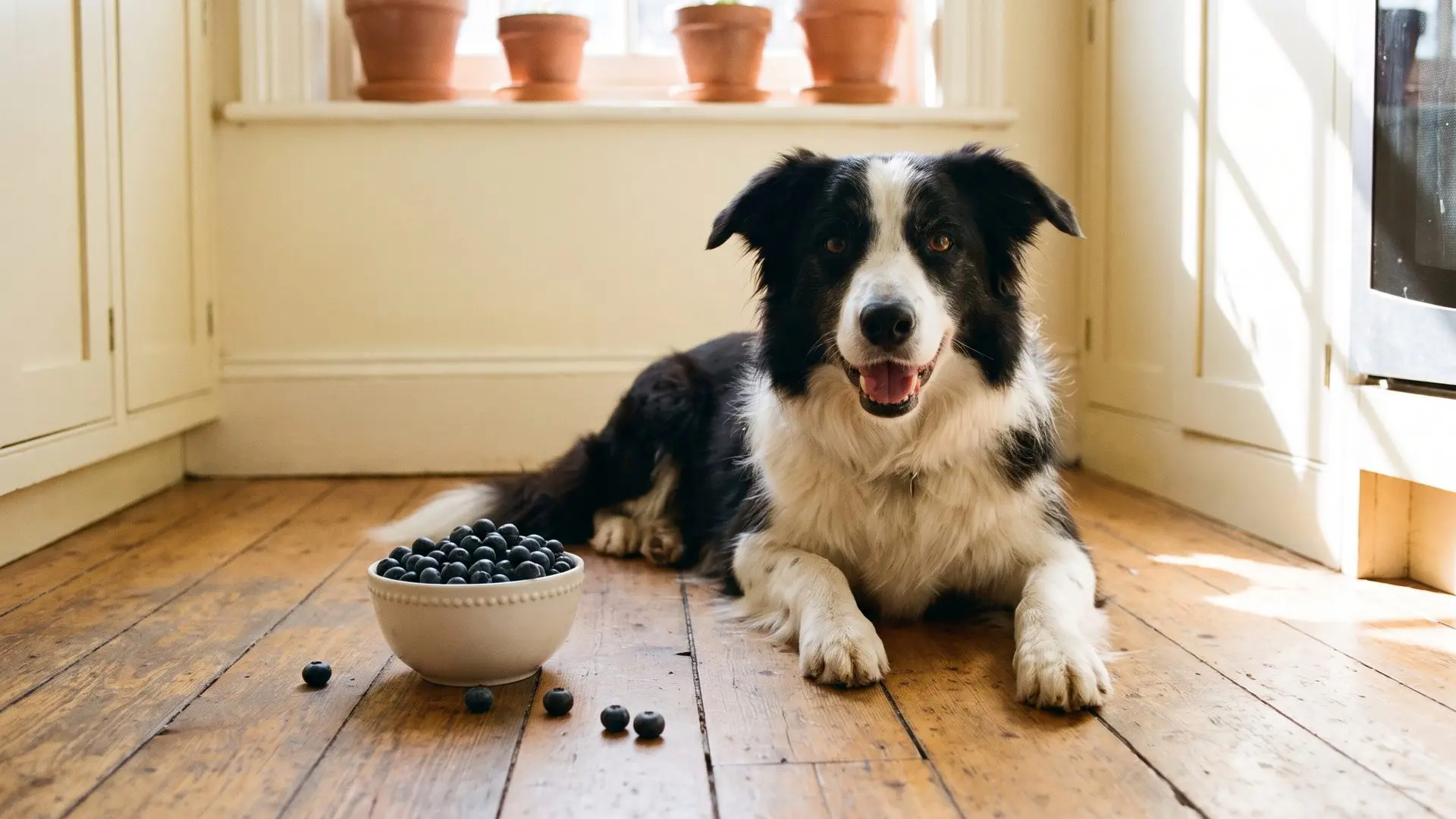
If you give pineapple regularly, rotate it with other low-calorie treats such as blueberries, plain green beans or carrot sticks, and make sure the total treat calories stay near 10 percent of the day. Dogs with sensitive stomachs may handle one or two small pieces better when they are mixed into a meal rather than eaten alone.
If your dog ate too much, or the wrong part
A few extra chunks of flesh may cause gas or loose stool. Call your veterinarian if your dog swallowed the core, a large piece of skin or the crown, or if there is repeated vomiting, a painful belly or no bowel movement. If pineapple was part of a dessert with raisins, chocolate or sugar-free sweeteners, contact the ASPCA Animal Poison Control Center at (888) 426-4435 or the Pet Poison Helpline at (855) 764-7661. A consultation fee may apply.
Related guides
Swap experiences with other owners on the PawTalk nutrition forum.
This guide is general education from the PawCalculator team, not veterinary advice. Sources: the American Kennel Club, the ASPCA and USDA FoodData Central. If your pet has eaten something harmful or seems unwell, contact a veterinarian or the ASPCA Animal Poison Control Center right away.