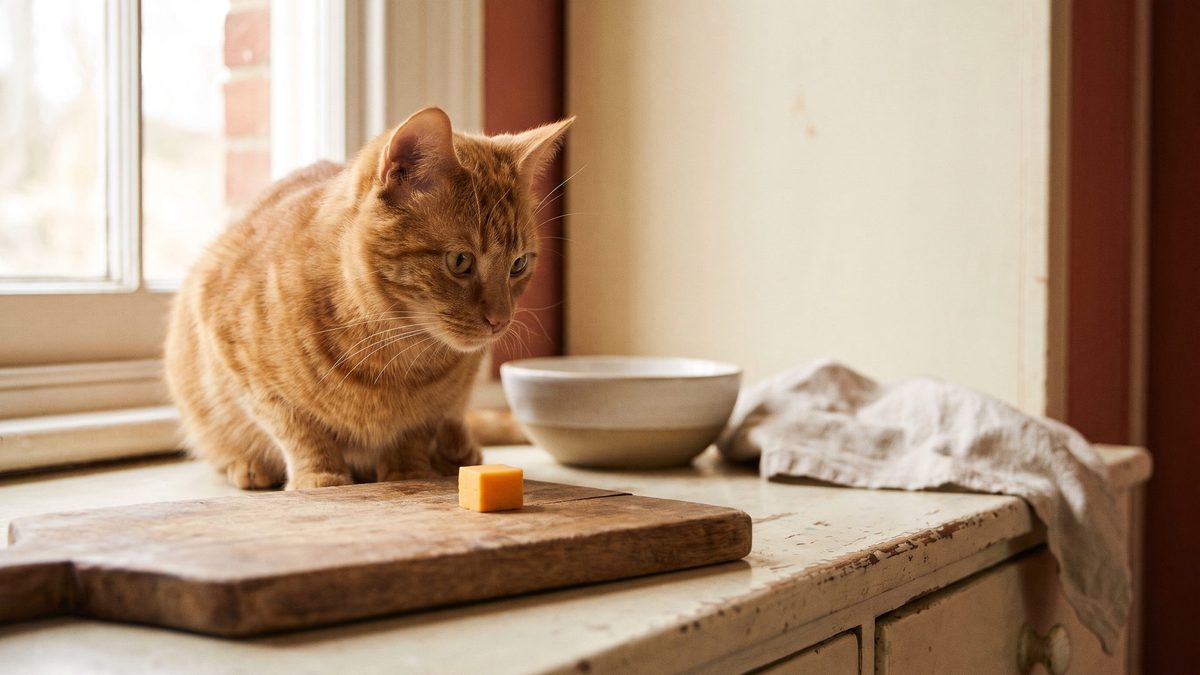
Cats can eat a tiny amount of cheese, but they do not need it and many cats do not digest it well. Cheese is not poisonous to cats, yet it is high in fat and salt, and many adult cats have trouble digesting the lactose in dairy. A pea-sized piece of plain, hard cheese now and then is the most that most cats need, and some cats should skip it altogether.
Cheese for cats at a glance
| Cheese | Verdict | Why |
|---|
| Hard, aged cheese (cheddar, Swiss, Parmesan) | Tiny piece, occasionally | Lower in lactose than soft cheese, but high in fat and salt |
| Mozzarella (plain) | Tiny piece, occasionally | Mild and lower in salt than many cheeses |
| Cottage cheese, plain | A teaspoon, occasionally | Softer but higher in lactose |
| Cream cheese | Skip | High fat and lactose; flavored versions can contain onion or garlic |
| Blue cheese and moldy cheese | Never | Mold compounds can be toxic |
| Cheese with garlic, onion, chives or herbs | Never | Allium vegetables are toxic to cats |
| Processed cheese slices and sprays | Skip | Salt and additives |
| Cheese sauce, pizza, mac and cheese | Skip | Fat, salt and often onion or garlic |
Are cats lactose intolerant?
Kittens produce lactase, the enzyme that digests milk sugar, but many cats produce less as they mature. That means many adult cats cannot digest large amounts of lactose, and dairy can cause gas, diarrhea or vomiting. Cheese contains less lactose than milk, especially aged cheese, but that does not make it a good staple. Cornell Feline Health Center and the ASPCA both advise caution with dairy for cats.
Not every cat reacts. Some cats have no visible problems, but that does not make cheese a good snack. The calories and salt matter, and cheese should never replace a complete and balanced cat food.
How much cheese can a cat eat?
Treats and extras should stay at about 10 percent of daily calories. A typical 10 lb (4.5 kg) indoor adult cat needs roughly 200 to 250 calories per day, so treats get around 20 to 25 calories. According to USDA FoodData Central, cheddar contains about 400 calories per 100 grams, which means:
- A pea-sized piece (about 5 g) is roughly 20 calories, essentially a cat's whole treat allowance.
- A one-inch cube (about 17 g) is around 70 calories, which is about a third of a day's calories for many indoor cats.
For most cats, a pea-sized piece, no more than once or twice a week, is plenty. Use our cat calorie calculator to find your cat's daily calories and our cat food calculator to set meal portions. See our guide on what happens if you overfeed your cat for the long-term effects of extra treats.
Why cheese is risky for some cats
Fat and weight. Cheese is calorie-dense, and extra calories add up quickly in small cats. Obesity increases the risk of diabetes and joint problems.
Salt. Many cheeses are salty, which is not ideal for cats, especially those with heart or kidney disease.
Pancreatitis. Sudden fatty meals can trigger pancreatitis in some cats, which can be hard to spot. Poor appetite, hiding, vomiting or a hunched posture are reasons to call your vet. Our signs your cat is sick guide lists symptoms that should never be ignored.
Allergies. Dairy can be a trigger for food-related itching or digestive trouble in some cats.
Cheese as a pill pocket: is it okay?
Many people use cheese to hide medication. It can work, but it adds calories and dairy, and some medications should not be given with food. A small piece of plain cheese is not harmful in most cases, but ask your vet or pharmacist whether food matters for your cat's medication, and ask about pill pockets or other alternatives. Never hide medication in cheese containing onion, garlic or chives.
Healthier treat ideas for cats
- Small pieces of plain cooked chicken or turkey, no skin or seasoning. See Can cats eat turkey?.
- A few freeze-dried meat treats made for cats.
- Small amounts of cooked egg.
- A small portion of their normal wet food as a reward.
Remember that cats need a complete and balanced diet. Our guide to how often to feed your cat is at How often should you feed your cat.
Cats and other dairy
Milk is a common cat myth. Cats do not need milk after weaning, and many adult cats cannot digest it comfortably. If you want to give your cat a dairy-like treat, lactose-free cat milk made for cats is an option in small amounts, but it adds calories. Plain yogurt contains less lactose than milk, but it is not necessary either.
If your cat is begging for cheese every time you open the fridge, offer a different reward and avoid reinforcing the habit. Cats that gain weight quickly may need a feeding plan reviewed by a vet. For help with meal sizes and what a healthy portion looks like, see how often to feed your cat.
What if my cat ate a lot of cheese?
A larger amount of plain cheese may cause diarrhea or vomiting. Offer water, skip the next treats and watch your cat. Call your veterinarian if there is repeated vomiting, lethargy, a painful belly or loss of appetite. If the cheese contained onion, garlic or chives, or was blue or moldy, call your vet, the ASPCA Animal Poison Control Center at (888) 426-4435 or the Pet Poison Helpline at (855) 764-7661. A consultation fee may apply.
Related guides
Swap experiences with other owners on the PawTalk nutrition forum.
This guide is general education from the PawCalculator team, not veterinary advice. Sources: the ASPCA, Cornell Feline Health Center and USDA FoodData Central. If your pet has eaten something harmful or seems unwell, contact a veterinarian or the ASPCA Animal Poison Control Center right away.