Kittens bite because they're playing, teething or overstimulated, and they learn quickly that biting hands gets a reaction. Stop it by ending play the moment teeth touch skin, redirecting to wand toys, scheduling daily play and never using hands as toys. Most kittens ease off as adult teeth arrive by about 6-7 months.
Play biting is normal kitten behavior: it's how they practice hunting and learn social limits. The problem starts when a kitten learns that human skin is a toy, because a sharp-toothed kitten that's allowed to bite becomes a cat that bites. The goal is to teach gentle play, not to punish. This guide explains why kittens bite, what works, what to avoid, a daily routine, how to handle overstimulation and when biting signals a problem. Track your kitten's stage with the cat age calculator.
Why kittens bite
- Play and hunting practice: hands and feet moving look like prey.
- Teething: gums are sore from about 3-4 months until adult teeth are in at 6-7 months.
- Overstimulation: petting for too long can trigger a bite.
- Boredom or pent-up energy, especially in a single kitten.
- Attention seeking: biting gets a reaction.
- Lack of littermates: kittens without playmates learn bite limits more slowly.
- Fear or pain: a sudden change in behavior may signal a health issue.
What works
- Stop play immediately when teeth touch skin. Stay still, say nothing or a calm "ouch," gently remove your hand, and end the game for a minute. Keep it consistent.
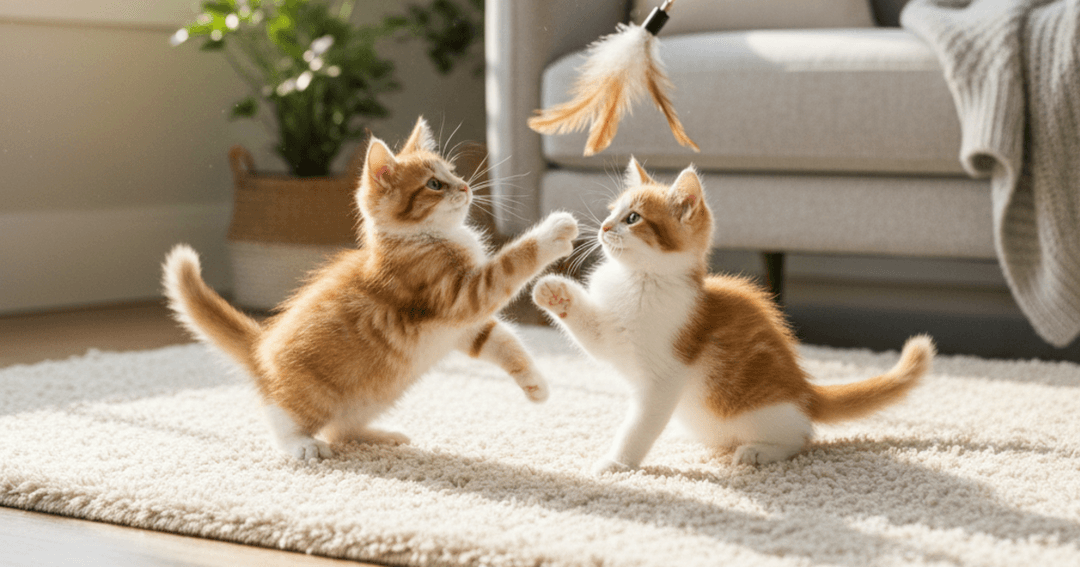
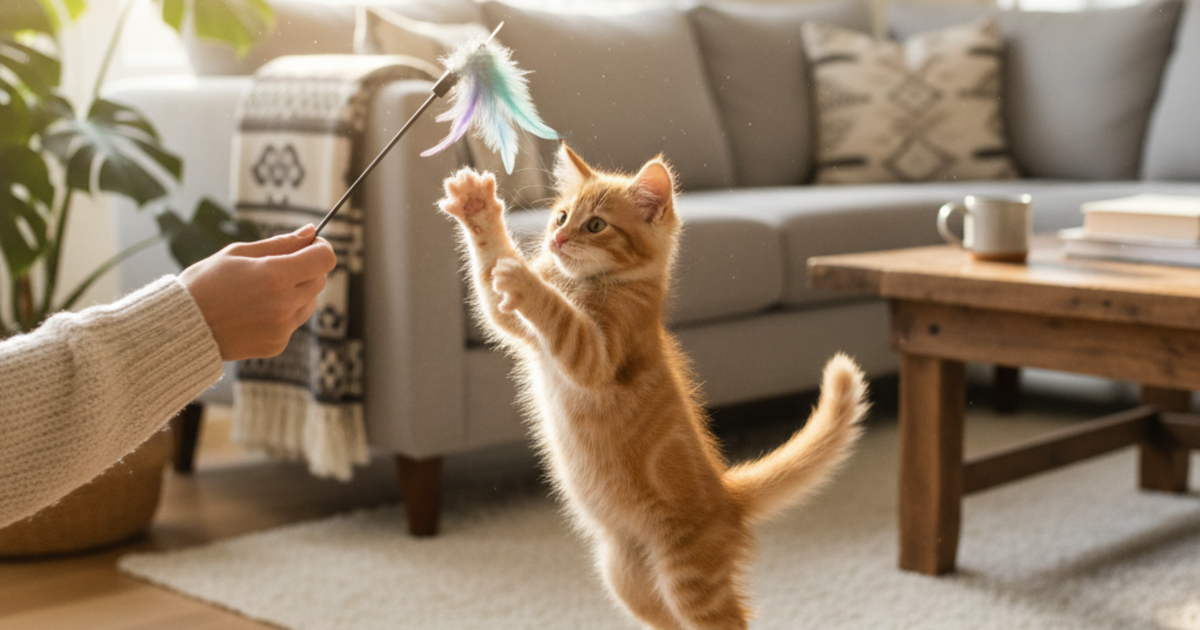
- Redirect to toys. Keep wand toys and kick toys handy, and offer them as soon as your kitten gets excited.
- Never use hands or feet as toys. Even gentle finger wrestling teaches kittens that skin is fair game.
- Schedule daily play. Two or three active sessions of 10-15 minutes, ending with a meal or treat so your kitten "catches" the prey.
- Watch for overstimulation: flattened ears, twitching tail, skin rippling along the back, dilated pupils. Stop petting before the bite.
- Provide outlets: cat trees, puzzle feeders, scratching posts and rotating toys.
- Reward calm behavior with treats and gentle attention.
- Consider a playmate. A second kitten often helps burn energy; see our guide on single kitten syndrome.
What not to do
- Don't hit, flick the nose or yell; it causes fear and may worsen biting.
- Don't spray water or use scare tactics.
- Don't tease with hands, then punish biting.
- Don't hold the kitten's mouth shut.
- Don't pull away quickly when bitten; it triggers more chasing.
- Don't rely on declawing or other drastic steps; they don't solve behavior and cause harm.
Play styles that build good habits
- Wand toys for chase and pounce
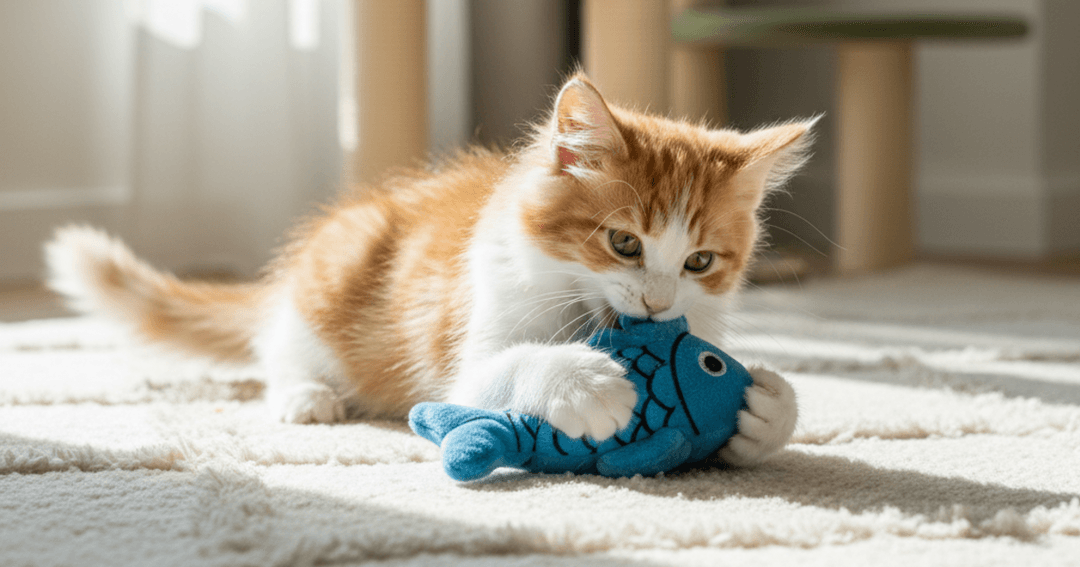
- Kick toys (like a long plush toy) for bunny-kicking without using your hands
- Puzzle feeders for mental work
- Treat trails to hunt for food
- Crinkle balls and tunnels for solo play
Finish each session with a "catch" and a meal, so your kitten feels satisfied and calm.
Worked example: a routine for a 12-week-old kitten
- 7:30 Breakfast
- 8:00 10-minute wand toy session
- 12:00 Puzzle feeder lunch
- 17:30 10-15 minute active play, then dinner
- 21:00 Calm play with a kick toy, then quiet time
Meals and portions for your kitten are on the cat feeding chart. Active play before meals mimics the hunt-eat-groom-sleep cycle and helps kittens settle.
Handling "petting aggression"
Some kittens love petting for a short time and then bite. Watch the warning signs, keep sessions short, and stop before your kitten gets tense. Focus on the head and cheeks, and avoid bellies until your kitten is comfortable.
When biting is a problem
Most biting eases with consistency and age. See a vet if bites are suddenly worse, your kitten seems to be in pain, it bites when touched in certain places, or there's aggression toward people or other pets. A behaviorist can help with severe cases.
When to call your vet
Call if you notice sudden aggression, limping, reluctance to be touched, drooling, bleeding gums or a change in appetite along with biting. Seek medical care for any deep or infected bite wounds on yourself.
Frequently asked questions
PawCalculator Editorial
We combine veterinary references, published guidelines, and calculator-grade modeling. This article is for education, not a substitute for an exam.
+ Follow on PawTalk