Most kittens take to a litter box naturally. Start around 3-4 weeks, use a low-sided box with soft, unscented litter, put it in a quiet spot, place the kitten in it after meals and naps, praise success and clean accidents with an enzyme cleaner. Never punish accidents.
Cats instinctively dig and bury, so litter training is mostly about making the right spot easy and appealing, and then staying consistent. Problems usually come from the wrong box, the wrong litter, a bad location or a health issue, not from a "naughty" kitten. This guide walks through the five steps, a daily schedule, how to handle accidents, how many boxes you need, troubleshooting and when a vet should look. Plan your cleaning schedule with the litter box calculator.
Step 1: Choose the right box
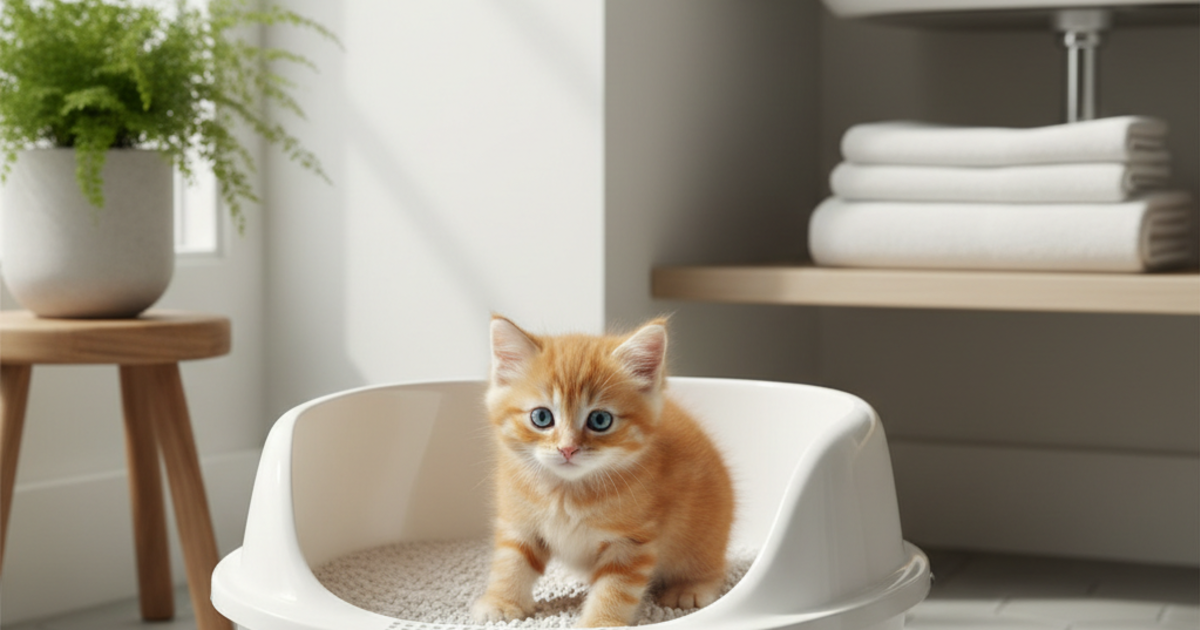
- Low sides (about 2-3 inches / 5-7 cm) so a small kitten can climb in. A shallow baking tray or a low-entry box works for young kittens.
- Big enough to turn around in; upgrade as the kitten grows to a box about 1.5 times the cat's length.
- Uncovered to start with. Some kittens dislike hooded boxes, which trap smells and can feel cramped.
- Stable and non-slip, so it doesn't tip when the kitten scratches.
Step 2: Choose the litter
- Use unscented, soft-textured litter. Fine-grained litter is usually preferred by cats.
- For very young kittens who might eat litter, use non-clumping litter or paper pellets; clumping litter can cause blockages if swallowed in quantity.
- Keep litter about 1-2 inches deep.
- Stick with one type; changing brands abruptly can cause refusal.
- Avoid heavily scented litters and deodorizers, which can put kittens off.
Step 3: Pick the spot
Choose a quiet, easy-to-reach location away from food and water bowls and from noisy appliances such as washing machines. For a new kitten, keep the box in the room where your kitten spends time, and add extra boxes in other areas as their territory grows. A common rule is one box per cat plus one extra.
Step 4: Guide your kitten
- After meals, naps and play, place your kitten in the box.
- Let the kitten sniff and scratch. Gently move the front paws in a scratching motion if needed.
- Praise calmly and offer a treat after success.
- Watch for signs such as sniffing, circling, scratching at the floor or crouching, and carry the kitten to the box.
- Don't move the kitten constantly. Too much handling can stress them.
Step 5: Clean up and stay consistent
- Scoop daily and change the litter regularly.
- Clean accidents with an enzyme cleaner made for pet odors; ammonia-based cleaners can attract repeat accidents.
- Never scold, rub the kitten's nose in it or punish; it causes fear and worsens problems.
- Confine a new kitten to a small, kitten-proofed room with a box, food and bed until litter habits are solid.
- Wash the box with mild, unscented soap every week or two.
Worked example: a daily schedule
For a 10-week-old kitten eating 3 meals a day:
- Place in the box 10-15 minutes after each meal (3 times)
- After each long nap (2-3 times)
- After intense play (1-2 times)
- Before bed (once)
That's about 7-9 chances a day, which quickly builds the habit. Meal portions for your kitten are on the cat feeding chart.
How many boxes do you need?
One per cat plus one extra, in different locations. Kittens who have to travel far will have accidents. Put a box on each floor of the house.
Troubleshooting
- Kitten avoids the box: try a different litter, a lower box or a quieter spot, and clean more often.
- Accidents after a long time of success: rule out urinary tract infection or constipation with your vet.
- Kitten plays in the litter or eats it: switch to paper pellets and check with your vet about anemia or nutritional issues.
- Kitten goes next to the box: the box may be too small, too dirty or uncomfortable.
- Kitten only pees or only poops in the box: check for pain when going and talk to your vet.
When to call your vet
Call if your kitten strains without producing urine (an emergency, especially in males), cries in the box, has blood in urine or stool, constant diarrhea or constipation, or suddenly stops using the box.
Frequently asked questions
PawCalculator Editorial
We combine veterinary references, published guidelines, and calculator-grade modeling. This article is for education, not a substitute for an exam.
+ Follow on PawTalk