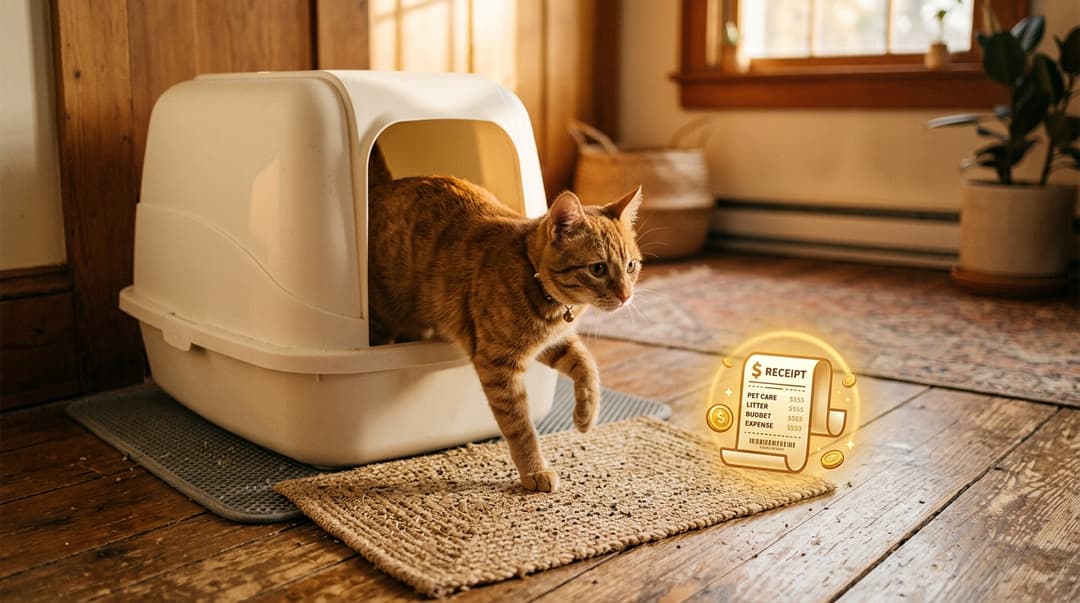
How Much Does Cat Litter Really Cost?
Your inputs
Results update live as you type.
Your results
Live — updates as you change inputs.
Litter cost estimate
$36/mo
Monthly
Annual
$432/yr
Litter boxes
2
Keep going with a related calculator.
How Much Does Cat Litter Really Cost?
Litter cost per cat varies significantly by type — traditional clumping clay is typically the cheapest per pound but needs full-box changes most often, while crystal/silica litters cost more upfront per bag but often last longer between changes, and natural litters (pine, corn, walnut) fall in between with varying odor-control tradeoffs. Cost also scales faster than linearly with cat count for multi-cat households, since the general guideline of one litter box per cat plus one extra means both more boxes and more litter volume per additional cat, not just a proportional increase.
How to use this calculator
Enter number of cats, litter type, and number of boxes. Box count matters as much as cat count here — the standard guideline is one box per cat plus one extra, so a 2-cat household typically needs 3 boxes, not 2, which the calculator factors into total litter volume.
Relative cost by litter type
| Litter type | Upfront cost per bag | Change frequency | Total cost pattern |
|---|---|---|---|
| Clumping clay | Lowest | More frequent full changes | Often close to crystal on a monthly basis despite lower sticker price |
| Crystal/silica | Highest | Less frequent full changes | Can even out over a full month |
| Natural (pine, corn, walnut) | Moderate | Varies by product | Middle ground on both cost and odor control |
Understanding your results
The type-versus-type comparison is closer in real monthly cost than the per-bag price suggests, because cheaper-per-pound litters typically need full-box changes more often — the calculator's total accounts for this rather than just multiplying a bag price by an assumed usage rate. One free lever worth knowing: scooping daily (rather than every few days) meaningfully extends the interval between full changes for most litter types by preventing ammonia buildup across the whole box, which can lower total litter used over a month without switching products at all.
Why box count is a real cost driver, not just a behavior guideline. Beyond the recommended one-per-cat-plus-one guideline being about reducing territorial stress and litter-box aversion, each additional box holds its own volume of litter that needs regular changing — skipping boxes to save money on litter volume tends to backfire as inappropriate elimination, which usually costs more in cleaning and potential vet visits (to rule out a medical cause) than the litter saved.
Litter box liners and mats are a small but real add-on cost. Liners can reduce cleaning time but sometimes get shredded by digging cats, and mats to catch tracked litter add a one-time cost — neither is essential, but worth factoring in if your calculation is meant to cover the full experience, not just litter itself.
Matching litter type to your actual household, not just cost
Cost is only one axis of the litter-type decision, and optimizing purely for the lowest number can backfire if it means switching to a type your cat won't reliably use, since litter box aversion is a common and genuinely costly problem in its own right. Some cats are sensitive to scented litters or to the texture change of switching brands, and a cat that stops using the box due to an unwelcome litter switch can end up costing far more in cleaning, potential furniture or flooring damage, and a vet visit to rule out a medical cause than any litter savings would offset. If you're considering switching litter type primarily for cost reasons, do it gradually — mixing increasing proportions of the new litter into the old over a week or two — and watch for any sign of avoidance (scratching at the box edge without stepping in, eliminating just outside the box) rather than switching all at once and hoping for the best.
Long-term litter box maintenance that protects the investment
Beyond the litter itself, the box's condition affects both cost and cat behavior in ways that are easy to overlook. Plastic litter boxes absorb odor over time even with regular cleaning, and a box that's been in use for a year or more can start smelling noticeably even immediately after a full litter change — replacing boxes every 12-18 months (rather than using the same box indefinitely) is a modest recurring cost that some multi-cat households find pays for itself in reduced litter-avoidance issues. Deep-cleaning boxes periodically with mild soap and water (avoiding harsh chemical cleaners, which can leave a scent cats find aversive) between full litter changes helps extend how pleasant the box stays for your cat between changes, which supports consistent use — and consistent use is ultimately what keeps the practical cost of litter (versus the cost of accidents and cleanup) under control.
When to consult a professional
For health, dosage, or nutrition decisions, always confirm calculator output with your veterinarian. This tool provides reference estimates, not medical advice.
Questions about this calculator
It depends on how you weigh upfront cost versus frequency of full changes — clumping clay has the lowest per-pound cost but often needs more frequent full-box changes than crystal litter, so total monthly cost can end up closer than the per-bag price suggests.
The math, openly documented.
Inputs
Enter the details that affect your estimate.
weight · age · breed
Normalize
Validate ranges and convert units when needed.
lbs ↔ kg
Calculate
Veterinary or industry-standard formulas applied.
result = f(inputs)
Results
Clear outputs with context and disclaimers.
display + notes
More from Lifestyle

What Does Your Multi-Pet Household Really Cost?
unvalidated — genuine concept extension combining existing tools: Combine food, vet care, litter, and grooming estimates
Open tool
What Size Crate for My Dog?
what size crate for my dog: What size crate does your dog need? Enter measurements to get a home crate size and an IATA
Open tool
Cost of Owning a Dog: Monthly, Yearly & Lifetime
Estimate the cost of owning a dog per month, per year and over its lifetime, by size and life stage. Covers food, vet ca
Open toolArticles from Insights



Got an edge case the calculator can't handle?
247 active threads about dog nutrition right now. Verified vets and experienced owners answer within hours.