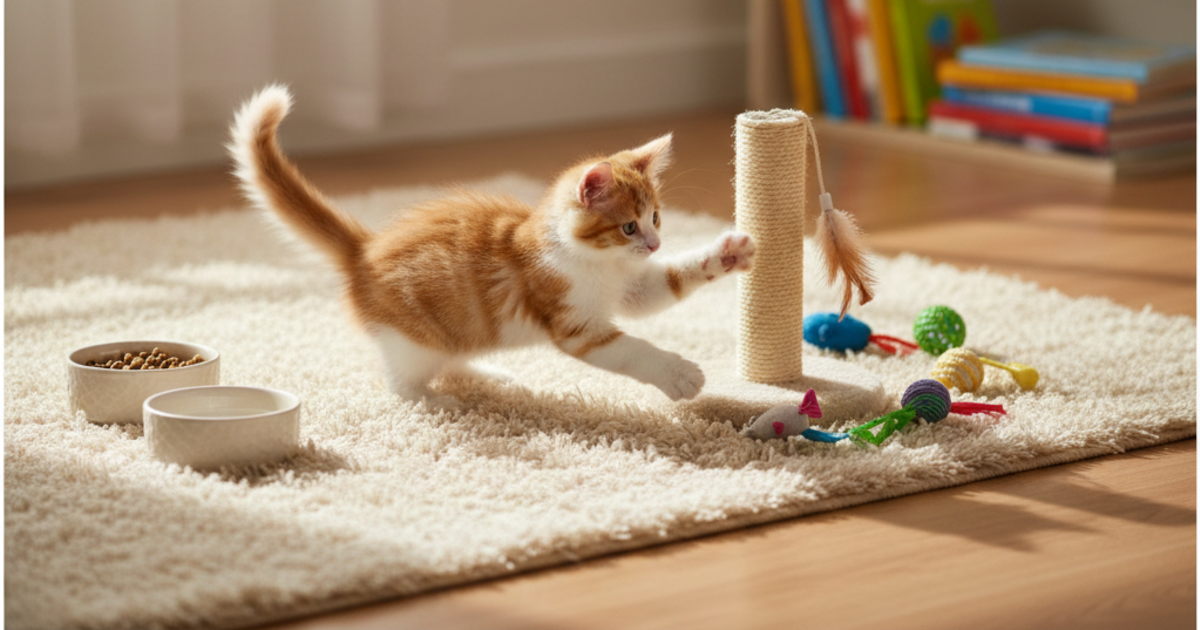
To take care of a kitten, provide a warm safe space, kitten food in small frequent meals, a clean litter box, vet visits for vaccines, deworming and spay or neuter, daily play and gentle socialization. Kitten-proof your home, keep toxic items out of reach and watch for signs of illness, because kittens decline quickly.
Bringing home a kitten is exciting and a little overwhelming. Kittens grow from tiny, fragile babies into confident adolescents in about a year, and what you do in that window shapes their health and behavior for life. This guide gives you a practical first-year plan: what to buy, how to set up your home, feeding, litter training, vet care, socialization, play, grooming, safety and costs. Use the cat cost calculator to plan your budget.
Before the kitten comes home: shopping list
- Kitten food (wet and dry) labeled complete and balanced for growth
- Shallow food and water bowls, ideally ceramic or stainless steel
- Litter box with low sides, and unscented litter
- Scratching posts or pads
- Cozy bed and blankets
- Safe toys, such as wand toys, balls and puzzle feeders
- Carrier for vet visits
- Brush and nail clippers
- Collar with breakaway clasp and ID tag, if you choose, and plan to microchip
- Cleaning supplies, including an enzymatic cleaner
- Cat tree or window perch
Set up a safe space
For the first few days, keep your kitten in one small, quiet room with food, water, litter, a bed and toys. This prevents overwhelm and makes it easy to monitor eating and litter habits. Expand access gradually as your kitten gains confidence.
Kitten-proof your home
- Hide or secure electrical cords and blind cords.
- Remove toxic plants, especially lilies, which are extremely toxic to cats.
- Store medications, cleaners and chemicals in closed cabinets.
- Secure windows and balconies.
- Keep small objects, string, hair ties and rubber bands out of reach. Swallowed string can be an emergency.
- Check washers, dryers and recliners before using them.
- Use childproof latches on cabinets.
- Keep human foods such as chocolate, onions, garlic, grapes and xylitol out of reach.
Feeding a kitten
Kittens need more calories, protein and fat than adult cats. Choose a food labeled complete and balanced for growth or all life stages.
| Age | Meals per day | Notes |
|---|---|---|
| 4-8 weeks | 4 | Wet or softened food, transitioning from mother's milk or formula |
| 8-12 weeks | 3-4 | Wet and dry kitten food |
| 3-6 months | 3 | Gradually fewer meals |
| 6-12 months | 2-3 | Continue kitten food, plan transition near 12 months |
Provide fresh water at all times. Do not feed cow's milk, which can cause diarrhea. Keep treats to under 10% of daily calories.
Worked example: a 10 week old kitten
A 1.2 kg (2.6 lb) kitten.
- Resting energy: RER = 70 × 1.2^0.75 = 70 × 1.15 = about 80 kcal.
- Daily need: 80 × 2.5 = about 200 kcal.
- If feeding wet food at 80 kcal per can: 200 ÷ 80 = about 2.5 cans per day.
- Four small meals of about 50 kcal each, or roughly 0.6 can per meal.
- Weigh weekly and recalculate as your kitten grows.
- Check label calories because brands vary.
Use the cat feeding chart to match meals to your kitten's weight.
Litter training
Most kittens already know what a litter box is. Show them the box after meals, naps and play, and praise success.
- Use a low-sided box and unscented litter.
- Keep it clean. Scoop daily.
- Place it in a quiet, accessible spot away from food and water.
- Provide one box per cat plus one extra as your household grows.
- Never punish accidents. Clean with an enzymatic cleaner and review box placement, cleanliness and health.
Vet care and vaccines
Schedule a vet visit within the first few days to check health, test for parasites and plan vaccines.
| Age | Typical care |
|---|---|
| 6-8 weeks | First FVRCP vaccine, deworming, exam |
| 10-12 weeks | FVRCP booster, FeLV vaccine if recommended |
| 12-16 weeks | Final FVRCP booster, rabies |
| 4-6 months | Spay or neuter, microchip |
| 1 year | Annual exam and boosters |
Ask your vet about flea, tick and parasite prevention that is safe for kittens, since many products have age and weight limits. Keep new kittens separate from resident cats until a vet clears them.
Socialization and play
Between about 2 and 9 weeks of age, kittens are most open to new experiences, and socialization continues for months.
- Handle your kitten gently every day, including paws, ears and mouth.
- Introduce new people, sounds and surfaces gradually, with treats and play.
- Get your kitten used to the carrier by leaving it open with treats inside.
- Play several times a day with wand toys, balls and puzzle feeders.
- Use toys, not hands, for play to avoid teaching biting.
- Provide scratching posts near sleeping and play areas.
- Reward calm behavior with treats and praise.
Sleep
Kittens sleep 16-20 hours a day. Give them a warm, quiet place to rest, and let them nap undisturbed.
Grooming
- Brush short coats weekly and long coats several times a week.
- Trim nails every couple of weeks.
- Start tooth brushing early with cat toothpaste.
- Clean eyes and ears only if needed, using vet-approved products.
- Bathe rarely, since most cats groom themselves.
Spay or neuter
Many vets recommend spaying or neutering at about 4-6 months, and some shelters do it earlier at about 8 weeks and 2 lb. It prevents unwanted litters, reduces spraying and roaming and has health benefits. Calories needs often drop after surgery, so monitor weight.
Introducing other pets
Go slowly. Keep the kitten in a separate room at first, swap scents with bedding, then allow short supervised visits through a barrier. Never force interactions. Keep supplies separate to start, and give each pet a safe retreat.
First-year cost example
Illustrative costs, which vary by location.
| Item | Estimated cost |
|---|---|
| Adoption fee | $100 |
| Vaccines and exams | $200 |
| Spay or neuter | $150 |
| Microchip | $40 |
| Food | $300 |
| Litter | $180 |
| Supplies (bed, carrier, posts, bowls) | $200 |
| Toys and enrichment | $60 |
| Parasite prevention | $120 |
| Total | $1,350 |
Plan your own budget with the cat cost calculator.
First-year timeline
- Week 1: safe room, vet check, food and litter routine
- Weeks 2-4: vaccines, deworming, play and socialization
- Months 2-3: vaccine series, expand home access, start tooth brushing
- Months 4-6: spay or neuter, microchip, adult teeth coming in
- Months 6-12: continue kitten food, plan the switch to adult food, annual exam
Warning signs
Kittens can deteriorate fast. Watch for:
- Not eating for more than a few hours in a young kitten
- Lethargy or weakness
- Vomiting or diarrhea
- Sneezing with eye or nose discharge
- Breathing difficulty
- Straining in the litter box
- Cold body or pale gums
- Fleas, worms or a swollen belly
When to call your vet
Call your vet promptly for any of these signs, and go to an emergency clinic for trouble breathing, collapse, repeated vomiting, a swallowed string or toxin or a male kitten straining to urinate. For suspected poisoning, call the ASPCA Animal Poison Control Center at 888-426-4435 or the Pet Poison Helpline at 855-764-7661 (fees may apply).
The bottom line
Kitten care comes down to safety, nutrition, vet care, socialization and play. Set up a safe space, feed small frequent meals, keep up with vaccines and spay or neuter and enjoy your kitten's growth. Budget with the cat cost calculator.
Frequently asked questions
PawCalculator Editorial
We combine veterinary references, published guidelines, and calculator-grade modeling. This article is for education, not a substitute for an exam.
+ Follow on PawTalk