An 8 week old kitten should be eating kitten food three to four times a day, using a litter box and ready for a first vet visit with vaccines and deworming. A 1.5 kg (3.3 lb) kitten needs roughly 190-240 kcal a day, about 2-2.5 times its resting energy requirement.
Eight weeks is the usual age for adoption, and it's one of the busiest weeks of a kitten's life: new home, new routines, first vaccines. Setting up good habits now makes the whole first year easier. This guide covers typical size and development, what and how much to feed, the first vet visit, litter training, kitten-proofing, socialization and sleep, and the signs that need a vet. Use the cat feeding chart for portions by weight.
Typical size and development
- Weight: roughly 1.5-2.5 lb (0.7-1.1 kg) is common at 8 weeks, though some kittens are heavier, and size varies by breed, sex and litter.
- Fully weaned, with most baby teeth in (around 26 by 8 weeks).
- Playful and curious, learning social rules from littermates and people.
- Sleeps a lot: often 16-20 hours a day, in bursts between play.
- Coordinated: running, climbing and pouncing well.
- Eyes settling into their adult color over the coming weeks.
What and how much to feed
Feed a food labeled for growth or all life stages. Kitten calorie needs are about 2-2.5 × RER, where RER = 70 × (weight in kg)^0.75.
| Kitten weight | RER | Daily kcal (×2 to ×2.5) |
|---|---|---|
| 1 kg / 2.2 lb | 70 | 140-175 |
| 1.5 kg / 3.3 lb | 95 | 190-237 |
| 2 kg / 4.4 lb | 118 | 235-295 |
Offer 3-4 meals a day. Canned food is about 70-100 kcal per 3 oz can, so check the label. Weigh weekly on a kitchen scale and adjust portions if your kitten is gaining too fast or too slowly. Include some wet food for moisture, and keep fresh water available. Don't feed cow's milk.
First vet visit
Schedule a check-up within the first days of bringing your kitten home. Ask about:
- Vaccines: core FVRCP typically starts around 6-8 weeks, with boosters every 3-4 weeks until about 16 weeks. Rabies timing follows local law.
- Deworming: repeated at intervals per your vet.
- Flea control: only kitten-safe products.
- FeLV/FIV testing and a fecal test.
- Microchipping and spay/neuter timing.
- Insurance and costs: see the vet cost estimator and the vaccination schedule.
Keep a new kitten away from unvaccinated cats until the vet clears it.
Litter training
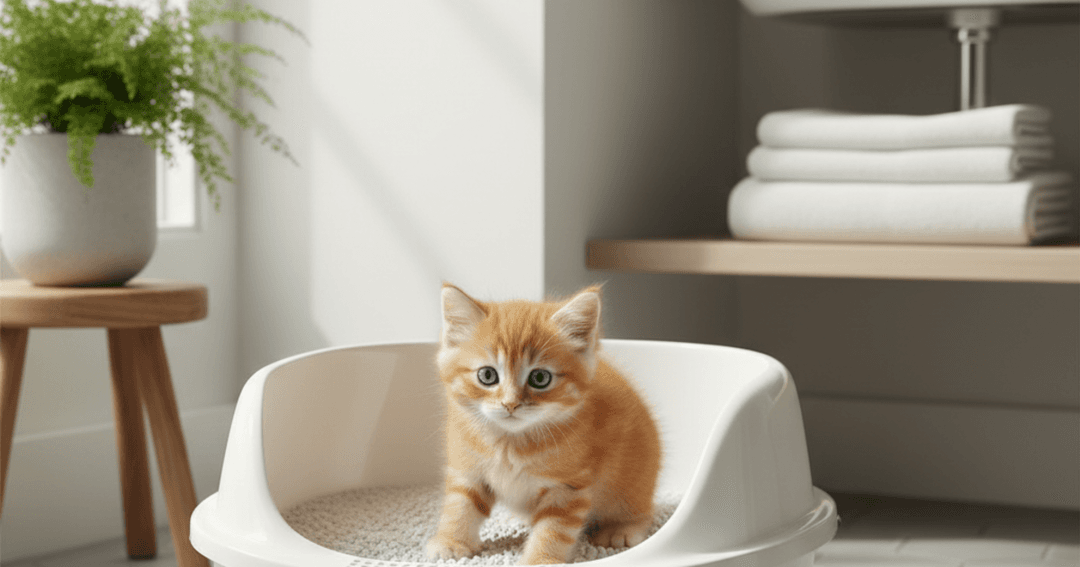
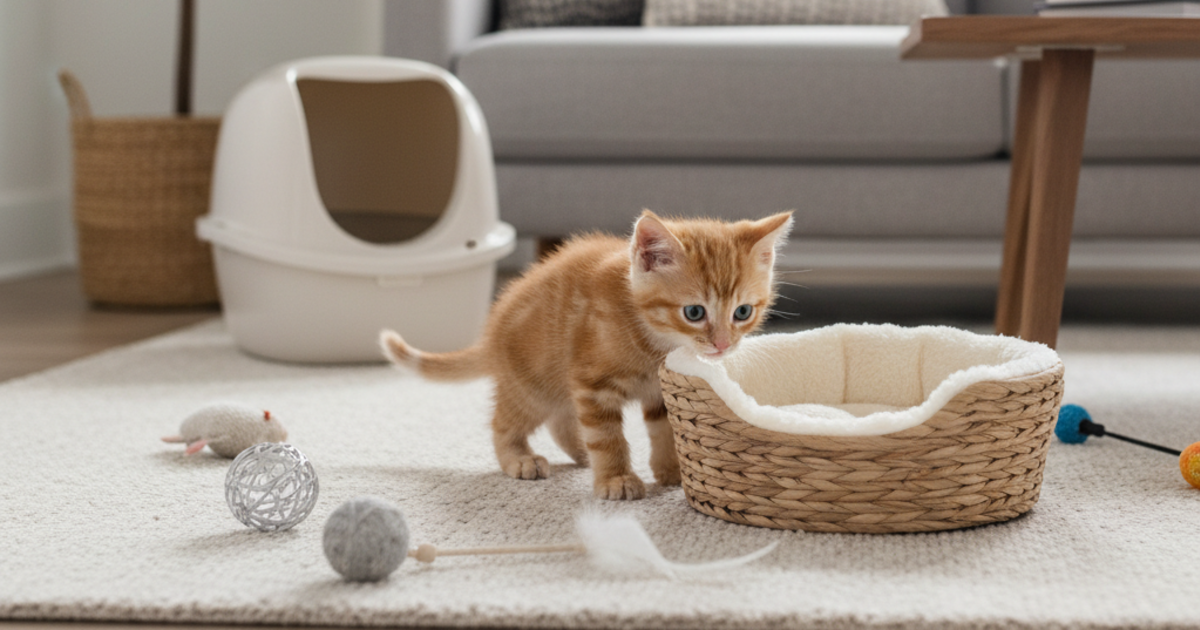
Show the kitten the box after meals and naps. Use a low-sided box and an unscented litter the kitten likes. Keep it away from food and water, and scoop daily. Start the kitten in one room with a box, food, water and a bed, then expand their territory as habits settle.
Kitten-proofing checklist
- Hide electrical cords and blind cords, and secure windows and balcony doors.
- Remove toxic plants; lilies are extremely dangerous to cats.
- Keep string, hair ties, rubber bands and small items out of reach.
- Block gaps behind appliances and in cabinets.
- Keep human medicines and cleaning products locked away.
- Close toilet lids, and check the washing machine and dryer before starting.
- Provide scratching posts so claws go there instead of furniture.
Worked example
Mochi weighs 1.5 kg (3.3 lb).
- RER: 70 × 1.5^0.75 = 70 × 1.355 = about 95 kcal.
- Daily need at 2.25 × RER: about 213 kcal.
- On an 85 kcal can: 213 ÷ 85 = about 2.5 cans a day across 3-4 meals.
- Weigh weekly. A healthy kitten typically gains about 2-4 oz (55-110 g) a week at this age. If Mochi stops gaining, ask the vet.
Adjust with your vet based on body condition.
Training and socialization
Short play sessions with wand toys, gentle handling of paws and ears, and calm introductions to new people and sounds help your kitten grow into a confident cat. Redirect biting to toys, never hands. Introduce other pets slowly and with supervision.
Sleep and nights
Expect a wakeful kitten at first. A play session and a meal before bed, a warm sleeping spot and a ticking clock or soft toy can help. Don't reward night-time crying with attention.
When to call your vet
Call if your kitten has diarrhea, vomiting, sneezing with eye discharge, poor appetite, lethargy, a swollen belly, hiding, or isn't gaining weight. Any kitten that refuses food for more than a day needs a vet check.
Frequently asked questions
PawCalculator Editorial
We combine veterinary references, published guidelines, and calculator-grade modeling. This article is for education, not a substitute for an exam.
+ Follow on PawTalk