A 5 week old kitten without its mother can eat kitten wet food four or more times a day, with kitten milk replacer as a supplement if it isn't eating enough. Offer fresh water, a litter box, and begin gentle socialization.
By five weeks, most kittens are well into weaning: they walk and run, play with littermates and show strong interest in solid food. It's a critical window for development, since socialization is easiest between roughly 2 and 7 weeks. This guide covers milestones, what to feed without mom, how often and how much, the wet-food transition, litter box habits, socialization, health checks and warning signs. Portions scale with weight, so check the cat feeding chart.
Milestones at 5 weeks
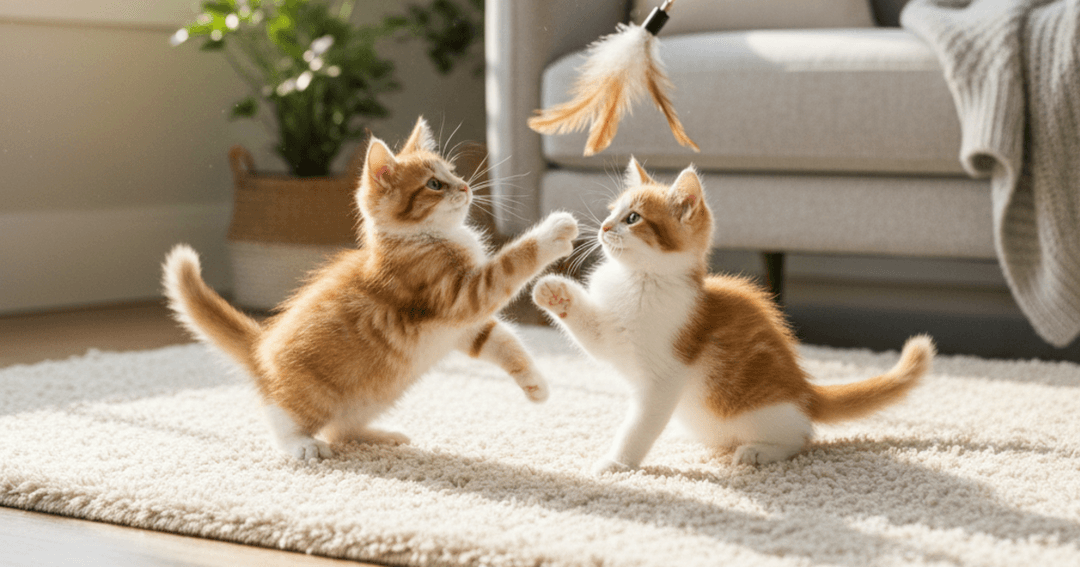
- Running, pouncing and wrestling with littermates
- Better vision and hearing, with eye color beginning to shift
- Baby teeth mostly in (around 26 by 6-8 weeks)
- Using a litter box more reliably
- Grooming themselves and others
- Weight: often around 1-1.5 lb (about 450-700 g), varying by kitten
- Personality starting to show: bold, shy, cuddly or adventurous
What to feed without mom
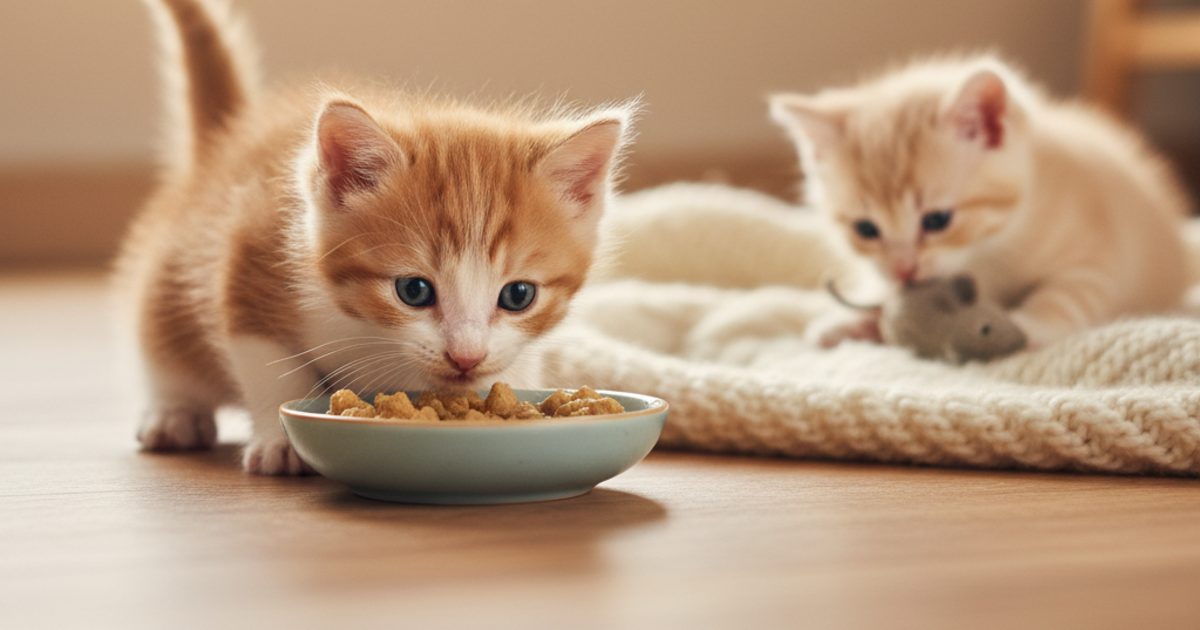
- Kitten wet food (pâté) as the base, made into a thin gruel with kitten milk replacer at first, then served plain as the kitten gets used to it.
- Kitten milk replacer in a bottle or dish as a supplement if the kitten isn't eating enough solids.
- Dry kitten kibble softened with warm water can be added gradually.
- Fresh water in a shallow, stable dish.
Do not give cow's milk. Learn more in our kitten milk replacer guide.
The wet-food transition
- Week 4-5: start with gruel, mostly formula with a little wet food.
- Week 5-6: make the gruel thicker, then offer plain pâté.
- Week 6-7: add softened kibble, then dry kibble.
- Week 8: most kittens are eating solid food well and no longer need milk.
Move at your kitten's pace: if the kitten refuses or has loose stool, slow the transition and call your vet if diarrhea continues.
How often and how much
Offer meals 4-5 times a day at this age. Kitten calorie needs are about 2-2.5 × RER, where RER = 70 × (weight in kg)^0.75. Weigh daily or every other day at first, because steady gain is the best sign of adequate intake.
Worked example
Olive weighs 600 g (0.6 kg).
- RER: 70 × 0.6^0.75 = about 48 kcal.
- Daily need at 2.25 × RER: about 107 kcal.
- A 3 oz kitten can with about 85 kcal: roughly 1.25 cans a day, split into 4-5 meals.
- Fill any gap with milk replacer if she isn't finishing her meals.
- Expect a gain of about 10-15 g a day and adjust portions as she grows.
Litter box and hygiene
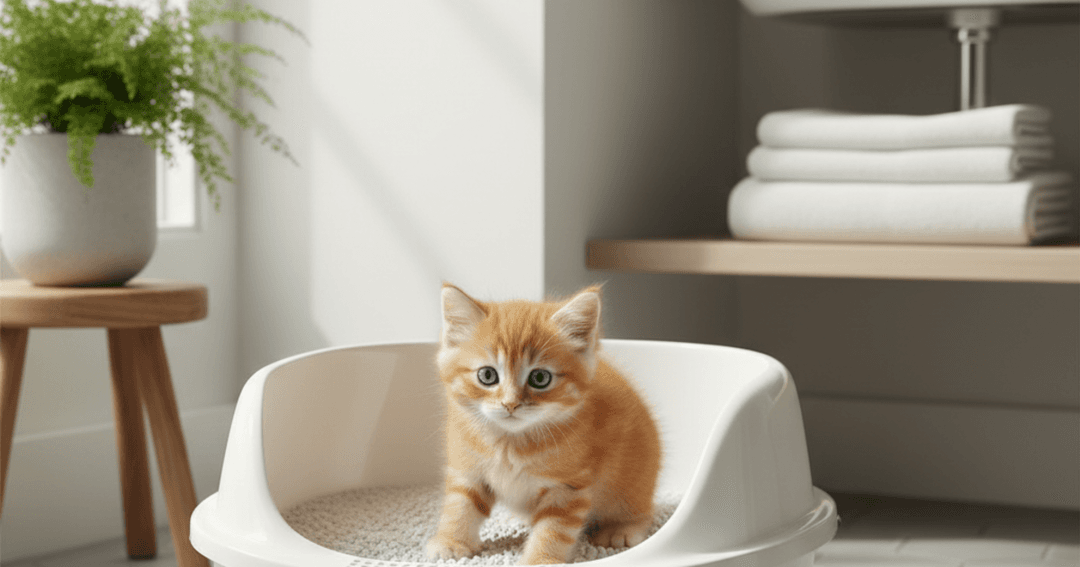
Use a shallow box with non-clumping litter, since clumping litter can be risky if swallowed. Place the kitten in after meals and naps, scoop daily and wash hands after handling. Keep the box away from food and water.
Socialization window
Kittens between roughly 2 and 7 weeks are most open to new experiences. Handle them gently for short sessions, introduce different people, sounds and textures, and provide safe toys. Kittens handled kindly now tend to be friendlier, calmer adults.
Warmth and safety
Keep the room comfortably warm, around 70-75°F (21-24°C) at this age, with a cozy bed. Kitten-proof: hide cords, block gaps, avoid toxic plants and keep small items out of reach.
Health checks
Ask your vet about:
- Deworming, usually repeated every 2 weeks
- Flea control that's safe for kittens
- First vaccines, around 6-8 weeks
- Testing for FeLV and FIV
When to call your vet
Call if your kitten has diarrhea, vomiting, sneezing, eye discharge, a swollen belly, lethargy, refuses food or isn't gaining weight. Orphaned kittens that are cold or weak need urgent care.
Frequently asked questions
PawCalculator Editorial
We combine veterinary references, published guidelines, and calculator-grade modeling. This article is for education, not a substitute for an exam.
+ Follow on PawTalk