A 3 week old kitten without its mother needs kitten milk replacer about every 3-4 hours, help staying warm and, if it doesn't go on its own, gentle stimulation to pee and poop after meals. Offer a shallow litter box, and get a vet check for deworming and overall health.
Three weeks is a turning point: eyes are open, baby teeth are starting to show and the kitten is getting steadier on its feet. It's also a fragile age for orphans, since they still depend on milk, warmth and help with toileting. If you're caring for an orphan, contact a vet or an experienced rescue right away. This guide covers milestones, bottle feeding, toileting, warmth, hygiene, the first steps toward solid food and warning signs. Portion guidance scales with weight; see the cat feeding chart.
Milestones at 3 weeks
- Eyes open, often still blue; hearing and vision improving
- Ears upright and moving toward sounds
- Baby teeth starting to erupt: incisors first
- Wobbly walking and first exploring, with lots of tumbles
- Beginning to groom and respond to litter
- Weight: usually around 10-14 oz (about 280-400 g), varying by kitten
- Still sleeping most of the day, waking for feeds and short bursts of play
Bottle feeding
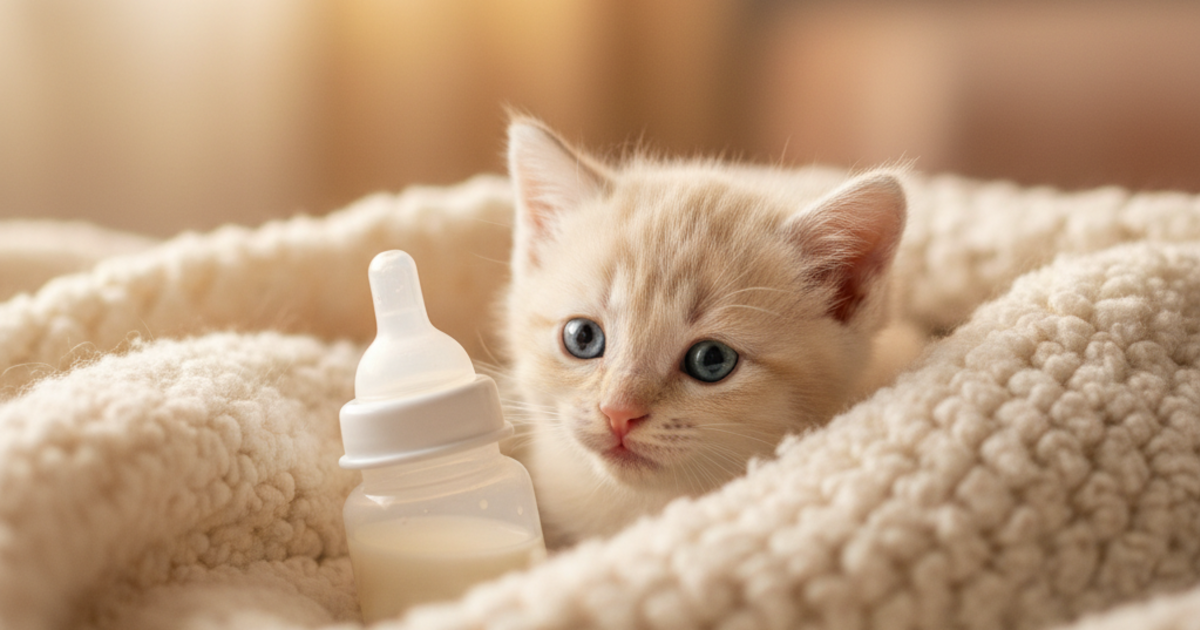
Use commercial kitten milk replacer, never cow's milk. Full instructions are in our guide to kitten milk replacer. The basics:
- Mix formula exactly as the label says, and warm to about body temperature.
- Feed with the kitten on its belly, head level, never on its back.
- Let the kitten suck at its own pace; don't squeeze the bottle.
- Stop if milk comes from the nose, and call your vet.
- Burp after feeding, and keep bottles clean and sterilized.
How much and how often
Follow the formula label. A common veterinary reference is roughly 8 mL of formula per ounce of body weight per day, divided across feedings. At three weeks, that's usually every 3-4 hours, and you may still need a night feed for the first days.
Toileting
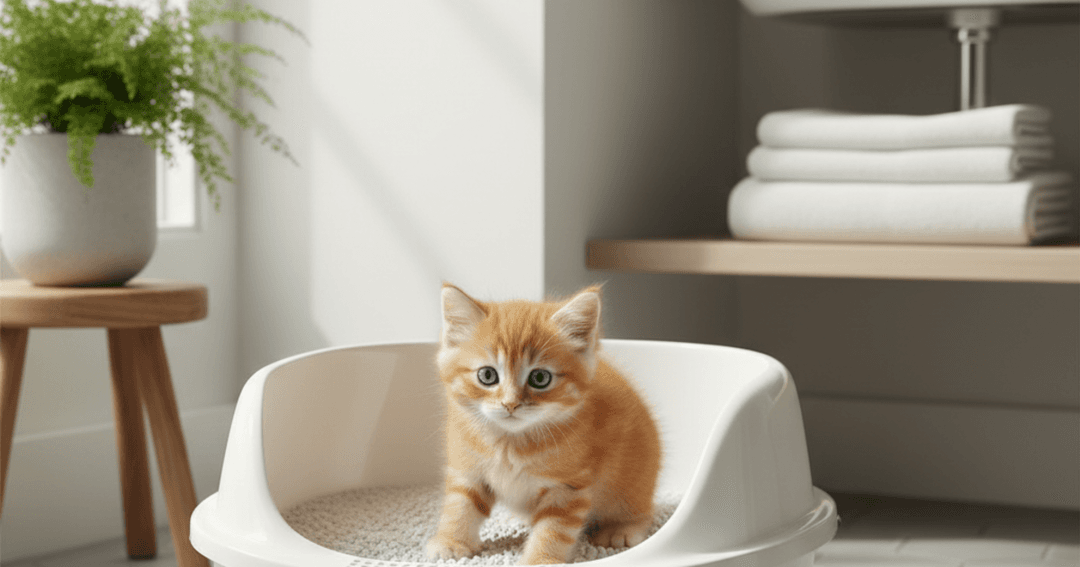
At 3 weeks, many kittens still need stimulation after meals. Gently wipe the genital and anal area with a warm, damp cotton ball or cloth until they go, then dry the area. Gradually add a shallow litter box with non-clumping litter or paper pellets, and place the kitten in after meals. Most kittens start using the box on their own between 3 and 4 weeks.
Warmth and hygiene
- Keep the nest warm: around 80-85°F (27-29°C) is a common target at this age, with a heat source the kitten can move away from.
- Keep bedding clean and dry, and wash it often.
- Wipe faces clean after feeding.
- Wash hands before and after handling to protect both of you.
- Avoid baths unless a vet advises, because chilling is dangerous.
Worked example
Bean weighs 340 g (12 oz).
- Daily formula: 12 oz × 8 mL = about 96 mL.
- Fed every 4 hours (6 feedings): about 16 mL per feeding.
- Weigh daily, and expect a gain of roughly 10-15 g a day.
- Check the label. Products vary in calories, so confirm the amount with your vet.
Introducing gruel
Around 3.5-4 weeks, offer a dish of kitten wet food mixed with formula. See our 4 week old kitten guide for the weaning process.
Vet care
Ask about:
- First deworming, usually repeated every two weeks
- Flea control that's safe for kittens
- Testing for common infections
- Vaccines, which usually start around 6-8 weeks
Socialization
Gentle handling for short sessions helps kittens grow into friendly cats. Keep sessions calm, support the whole body and let the kitten rest whenever it wants.
When to call your vet
Call promptly if your kitten is cold, limp, refuses the bottle, has diarrhea, a swollen belly, breathing trouble, eye or nose discharge, or doesn't gain weight every day.
Frequently asked questions
PawCalculator Editorial
We combine veterinary references, published guidelines, and calculator-grade modeling. This article is for education, not a substitute for an exam.
+ Follow on PawTalk