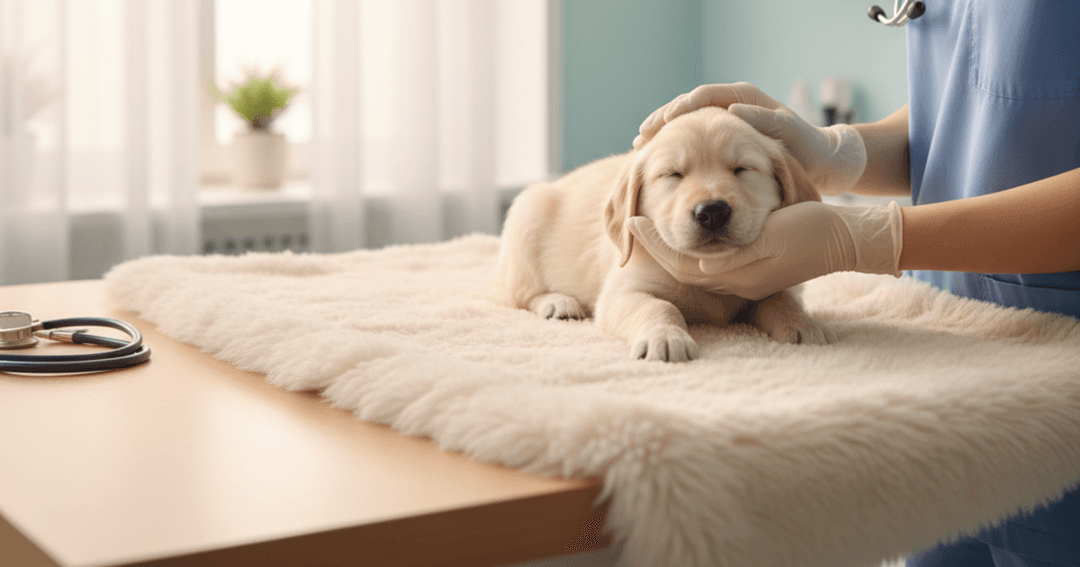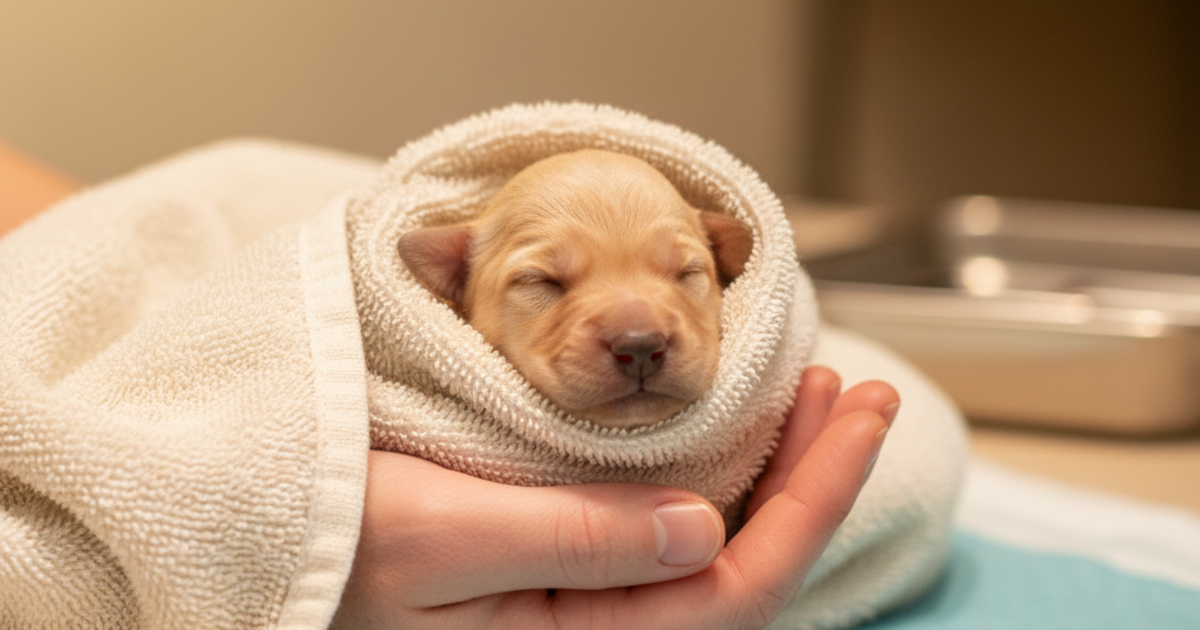
Fading puppy syndrome describes newborn puppies (usually under 2-3 weeks old) that fail to thrive and decline quickly. Causes include low birth weight, chilling, infection, low blood sugar and maternal problems. It's an emergency: warm the puppy gradually, don't feed a cold puppy, and get to a vet immediately.
If a newborn puppy is weak, cold or not nursing, contact a vet or emergency clinic now. Newborn puppies can't regulate body temperature, have tiny energy reserves and can crash within hours. This guide explains what fading puppy syndrome is, the causes, the warning signs, what to do while you get help, how weight tracking spots trouble early, what the vet may do, the outlook and how to lower the risk for future litters.
What is fading puppy syndrome?
"Fading puppy syndrome" isn't a single disease. It's a pattern in which a puppy that appeared healthy at birth becomes weak, stops nursing, loses weight and dies, often within the first 2 weeks, though it can occur up to about 8-12 weeks in some cases. Some puppies are born weak, and others decline after a few days.
What causes it?
Fading is a pattern with many contributors, which often overlap:
- Low birth weight or being a runt: small puppies compete poorly for milk and lose heat quickly.
- Hypothermia: chilled puppies can't nurse or digest, and their gut slows down.
- Hypoglycemia and dehydration: tiny reserves run out fast.
- Infections: bacterial (sepsis, often from the umbilicus or uterus), viral (canine herpesvirus is a notable cause in puppies under 3 weeks) or parasitic (hookworms, fleas).
- Birth problems: prolonged labor, oxygen deprivation, cleft palate and other birth defects.
- Maternal issues: poor milk supply, mastitis, neglect, illness or stress in the mother.
- Environmental problems: cold, damp or dirty whelping areas.
- Blood type or immune issues in some litters.
Warning signs
- Weak or no nursing; a weak cry or constant crying
- Cold to the touch; shivering or limp
- Isolated from the litter or pushed away
- Weight loss or no gain (a newborn should gain daily)
- Pale or blue gums, labored breathing
- Diarrhea, vomiting, a bloated or distended belly
- Dehydration (skin stays tented when gently pinched)
- Discharge from the eyes, nose or umbilicus
Emergency steps while heading to the vet
- Warm slowly. Wrap the puppy in a soft towel and place it near a gentle heat source (a heating pad on low under part of a box, or a wrapped warm water bottle) so it can move away. Avoid hot water and direct heat.
- Don't feed a cold puppy. Warm the body first, since a cold puppy can't swallow or digest safely.
- Call your vet and follow their instructions, including whether to bring the puppy in now.
- Weigh the puppy on a kitchen scale and note the time.
- Keep the puppy dry and draft-free.
- Keep the rest of the litter and the mother warm and close, and watch for similar signs in other puppies.
Don't: give cow's milk, force liquid into the mouth, use human medications or hot water.
Feeding after warming
If your vet says to bottle-feed, use a commercial puppy milk replacer; see our guide to puppy milk replacer.
What the vet may do
- Warm the puppy safely and check its temperature
- Check blood sugar and give glucose if needed
- Give fluids and treat dehydration
- Test for and treat infection
- Advise on supplemental feeding
- Check the mother and the rest of the litter
Worked example: daily weight tracking
A healthy newborn puppy typically gains about 5-10% of its birth weight each day and doubles its birth weight in roughly 10-14 days.
- Birth weight: 400 g.
- Expected day 3 weight at about 5-10% a day: 400 × 1.05^3 ≈ 463 g up to 400 × 1.10^3 ≈ 532 g.
- If the puppy is 390 g on day 3, it has lost weight and needs a vet check the same day.
- Log every weight with the time and whether the puppy nursed.
Track weights in the puppy weight calculator and compare to littermates.
Outlook
Some puppies recover with prompt warming, feeding support and treatment, especially when the cause is chilling or a treatable infection. Others, particularly those with severe birth defects or overwhelming infection, don't survive despite care. Acting fast improves the odds.
Prevention
- Keep the whelping area warm (around 85-90°F / 29-32°C in week 1, per common veterinary guidance), clean and draft-free.
- Get the mother checked before and after birth.
- Weigh puppies at birth and daily.
- Make sure every puppy latches and nurses within the first hours.
- Separate sick puppies.
- Keep the mother well-fed with a high-quality diet; see our guide to caring for a pregnant dog.
When to call your vet
Immediately for any newborn puppy that is cold, weak, not nursing, losing weight or struggling to breathe.
Frequently asked questions
PawCalculator Editorial
We combine veterinary references, published guidelines, and calculator-grade modeling. This article is for education, not a substitute for an exam.
+ Follow on PawTalk