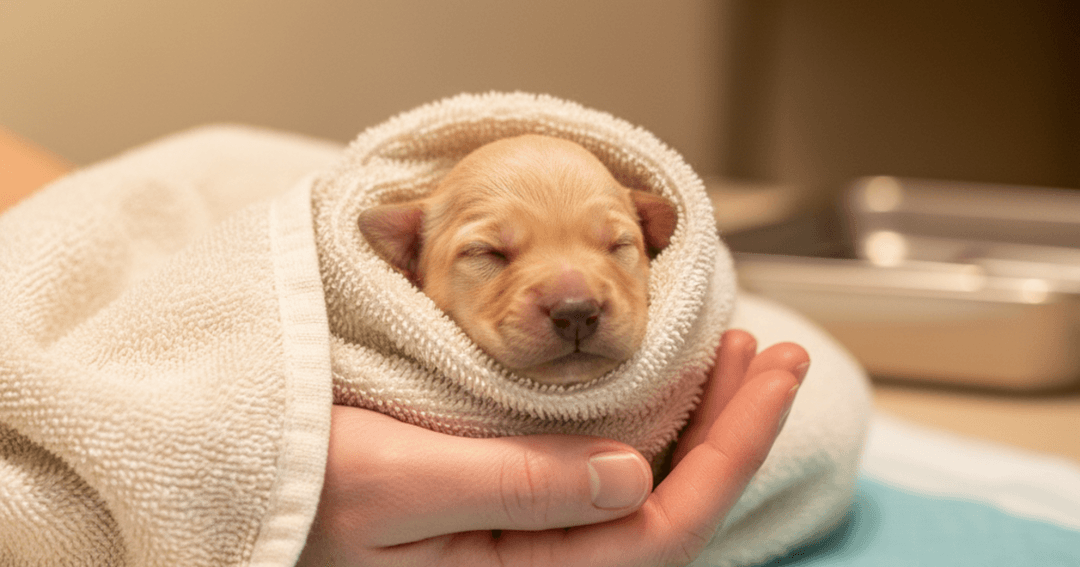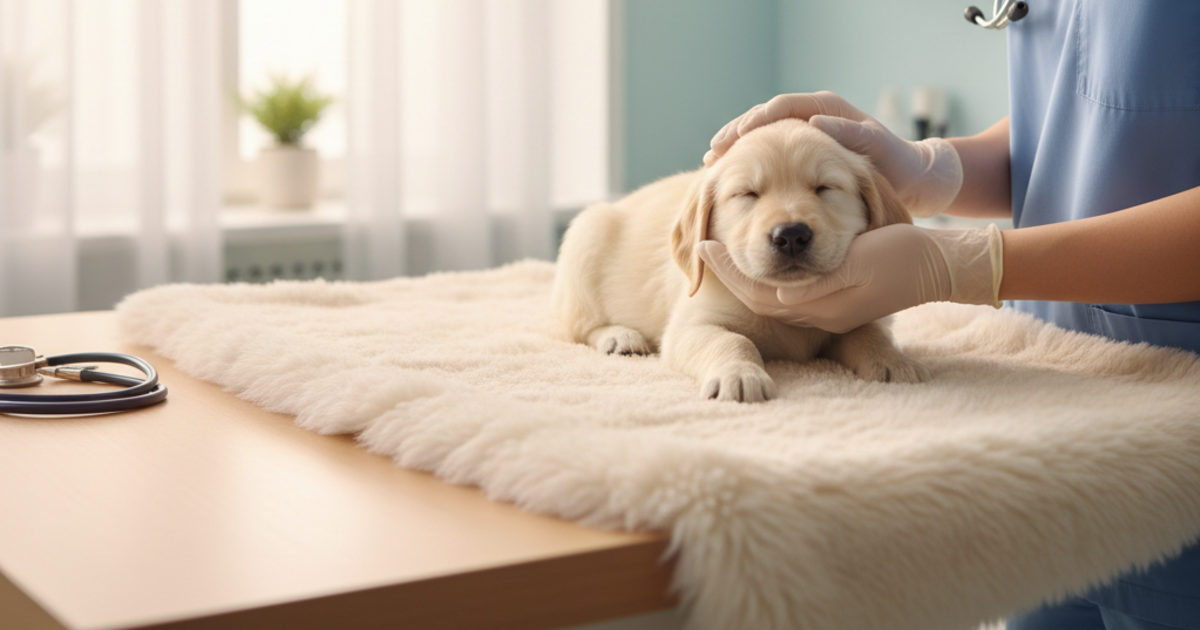
Shaking puppy syndrome (hypomyelination) is a rare, often inherited disorder in which puppies have full-body tremors from a few weeks old. The tremors get worse with activity or excitement and ease at rest or asleep. Many affected puppies improve as they mature, but some keep mild tremors for life. Other causes of shaking need a vet to rule out.
If your puppy is trembling, don't assume it's this syndrome. Low blood sugar, chilling, toxins, pain, infections and other neurological conditions can all cause shaking, and several are more urgent. A vet exam comes first. This guide explains what shaking puppy syndrome is, the signs, which breeds are affected, how it's diagnosed, the outlook, how to care for a shaky puppy, breeding considerations and when tremors need urgent help. Plan for a visit with the vet cost estimator.
What is it?
Shaking puppy syndrome, medically called hypomyelination or dysmyelination, happens when the nerves in the brain and spinal cord don't develop enough myelin, the fatty coating that insulates nerve fibers. Without proper insulation, electrical signals misfire, causing tremors and poor coordination. Puppies are born with the problem, and signs typically become noticeable in the first weeks of life, often from about 2 weeks old when puppies start to walk.
Signs
- Whole-body tremors that look like shivering, often noticeable from about 2 weeks of age
- Worse with movement, stress or excitement, and milder or absent during sleep
- Wobbly or "bunny-hopping" walking and poor coordination
- Difficulty nursing or standing in severe cases
- Head bobbing or eye flickering in some puppies
- Falling or crossing the legs when trying to walk
- Normal alertness and appetite in most puppies, which helps distinguish it from illness
Which breeds are affected?
It's been reported in several breeds, including Springer Spaniels (an X-linked form that mainly affects males), Chow Chows, Samoyeds, Weimaraners, Bernese Mountain Dogs, Dalmatians, Lurchers and some terrier breeds, and it can appear in other dogs too. Because it's often inherited, affected puppies often come from the same parents, and sometimes several puppies in a litter are affected.
Other causes of shaking to rule out
Shaking isn't always hypomyelination. A vet needs to consider:
- Low blood sugar (hypoglycemia), especially in toy breeds and young puppies
- Being cold, or hypothermia
- Toxins, such as certain plants, chemicals or human medications
- Infections, including canine distemper, which can cause tremors
- Pain from injury
- Other neurological diseases
- Excitement or fear
Low blood sugar and toxins can be emergencies, which is why any tremoring puppy needs a same-day check.
How it's diagnosed
Your vet starts by ruling out other causes of tremors with a thorough history and physical exam, blood glucose check and other tests as needed. A neurological exam, blood tests and sometimes MRI or other imaging help. A definitive diagnosis may require specialist evaluation or examination of nervous tissue. The breed, age of onset and family history are important clues.
Treatment and outlook
There's no cure, but the outlook varies by type and breed:
- Some breeds improve substantially as myelin develops, with tremors fading by about 3-4 months of age or later.
- Some dogs keep mild tremors throughout life but live normally.
- Severe cases, such as the X-linked Springer Spaniel form in males, may have persistent, severe signs and a guarded outlook.
Treatment is supportive: good nutrition, warmth, safe surfaces and help with feeding if needed. Your vet may adjust care based on how your puppy is coping.
Caring for a shaky puppy
- Keep the environment calm and warm.
- Use non-slip surfaces and pad hard floors with rugs or mats.
- Help with feeding if the puppy struggles to reach the bowl or nurse, and use shallow dishes.
- Prevent falls from furniture and stairs.
- Keep excitement low, with short, gentle play.
- Weigh regularly to track growth; see the puppy weight calculator.
- Give food at regular times, using a complete puppy diet. Use the dog food calculator by weight and age for portions.
Breeding considerations
Because the condition is often inherited, affected dogs and their parents shouldn't be bred. Tell the breeder, and ask your vet about genetic counseling.
Worked example: tracking progress
Juno is a Chow puppy with tremors at 3 weeks. Her owner keeps a simple log of the date, tremor severity on a 0-5 scale, weight and mobility:
- 3 weeks: severity 4, walking is difficult.
- 8 weeks: severity 3, walking better.
- 14 weeks: severity 1, mild tremors only with excitement.
That steady decline matches the improvement seen in many affected puppies, but her vet should confirm the plan at each recheck.
When to call your vet
Call the same day for any puppy with tremors, since low blood sugar, toxins and infections can look similar and progress fast. Emergency signs include seizures, collapse, inability to stand or nurse, pale gums, vomiting or unresponsiveness.
Frequently asked questions
PawCalculator Editorial
We combine veterinary references, published guidelines, and calculator-grade modeling. This article is for education, not a substitute for an exam.
+ Follow on PawTalk