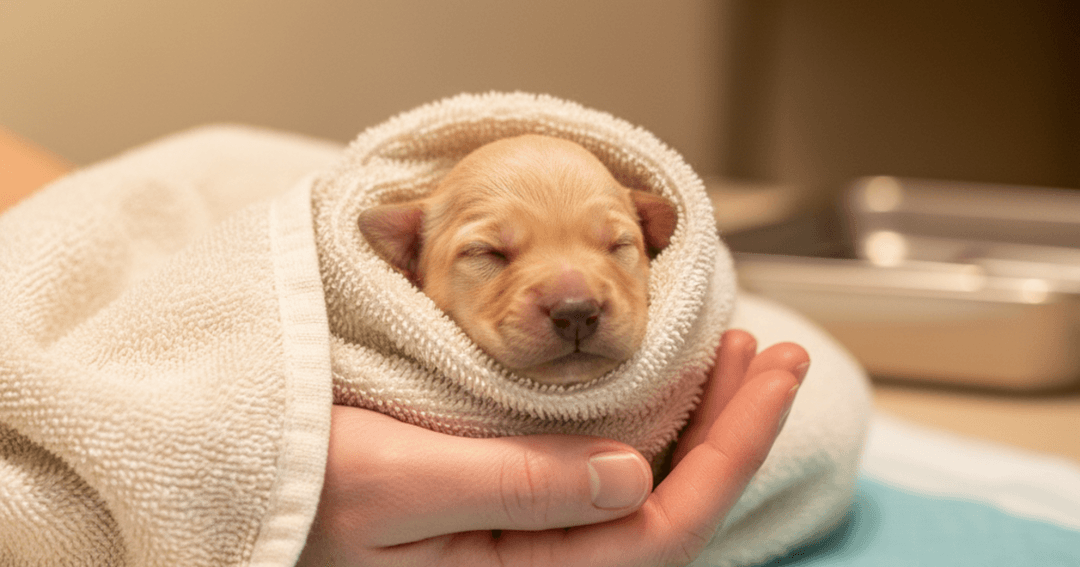
Puppy strangles (also called juvenile cellulitis, or juvenile sterile granulomatous dermatitis and lymphadenitis) is an immune-mediated condition in young puppies, typically 3 weeks to 4 months old. It causes sudden face swelling, pustules and swollen lymph nodes. It needs prompt veterinary treatment, usually with immune-suppressing medication, and most puppies recover well.
It's not caused by poor care, it isn't contagious, and the name comes from the swollen glands under the jaw and throat. Because it can look like an infection, mange or an allergic reaction, a vet exam is essential, and early treatment reduces scarring. This guide covers the signs, what causes it, how it's diagnosed, how it's treated, home care, the outlook and what it costs. To budget for treatment, see the vet cost estimator.
What is puppy strangles?
Juvenile cellulitis is a rare inflammatory disease of the skin and lymph nodes in puppies. The immune system attacks the puppy's own tissue, producing swelling, pus-filled bumps and tender glands. It often appears suddenly: a puppy that was fine yesterday wakes up with a puffy face.
Signs to watch for
- Sudden swelling of the muzzle, lips, eyelids and ears
- Pustules, crusts and open sores on the face, ears and muzzle, sometimes spreading to the belly or groin
- Swollen lymph nodes under the jaw and in the neck, which may feel like lumps
- Fever, lethargy and reduced appetite
- Painful, stiff joints or a reluctance to move in some puppies
- Hair loss and scabbing around the eyes and mouth
- Ear canals that swell and discharge pus, which can look like a severe ear infection
- Drooling or pain when eating, because the mouth is sore
Sometimes only one or two puppies in a litter are affected; other times several show signs.
What causes it?
The exact cause isn't known, but it appears to be an immune system malfunction. Factors that may play a role:
- Genetics: it tends to run in litters and bloodlines. Breeds reported more often include Golden Retrievers, Dachshunds, Gordon Setters, Labrador Retrievers, Lhasa Apsos, Beagles and Pointers, though any puppy can be affected.
- Immune triggers: vaccines and infections have been suggested as possible triggers, but this hasn't been proven, and vaccines aren't considered the cause.
- Age: a young, still-developing immune system.
How vets diagnose it
Your vet will examine your puppy and may recommend:
- Skin scrapings to rule out demodex mange
- Cytology (looking at cells from pustules under a microscope)
- Bacterial culture and sensitivity testing
- Fungal tests to rule out ringworm
- Blood tests to check for infection and inflammation
- Biopsy of affected skin or lymph nodes if the diagnosis is uncertain
The aim is to rule out infections and allergic reactions, which need different treatment and could be made worse by the drugs used for strangles.
Treatment
Treatment usually involves immune-suppressing drugs such as corticosteroids, often for several weeks, with a gradual taper guided by your vet. Antibiotics may be added if a secondary infection is present. Pain relief and supportive care are common.
Your vet chooses the drug, dose and schedule based on your puppy's weight and condition. Please don't give steroids, leftover antibiotics or human medicines yourself, and don't stop medication early, because the disease can flare again. See our dog medication dosage hub for how vets think about dosing, and always follow your own vet's instructions.
Care at home
- Give medication exactly as prescribed, at the same times each day.
- Keep your puppy comfortable and warm, with soft bedding.
- Clean crusts gently only as your vet advises.
- Prevent scratching and rubbing with a cone or soft recovery collar if recommended.
- Offer soft, tasty food in a shallow bowl, since chewing can hurt.
- Keep fresh water available.
- Attend all recheck appointments, so the vet can taper medication at the right pace.
- Ask about vaccine timing, since some vets prefer to hold vaccines until the puppy has recovered.
Outlook
Most puppies improve within days of starting treatment and recover fully, often within a few weeks. Some develop scarring, especially on the face, and a minority relapse when medication is reduced. Steroid side effects such as increased thirst, appetite and panting are common during treatment and usually fade after stopping. Puppies that get treatment early tend to have less scarring.
Breeding considerations
Because the condition may have a genetic component, affected puppies and their parents are often not recommended for breeding. If you bought a puppy from a breeder, tell them so they can advise their other buyers.
Worked example
Beans, a 10-week-old Golden puppy weighing 4 kg, wakes with a swollen muzzle, crusted pustules and a low fever. The vet:
- Examines her and finds swollen jaw lymph nodes.
- Takes skin cytology and a culture to rule out mange and bacterial infection.
- Starts a corticosteroid course with a tapering schedule over about 4-6 weeks, plus an antibiotic for a secondary infection.
- Schedules rechecks at about 1 week and 3 weeks.
A typical budget includes the exam, tests, medication and two or three rechecks. Costs depend on your region and clinic, so ask for an estimate and use the vet cost estimator to plan.
When to call your vet
Call the same day if your puppy has facial swelling, pustules, fever, refuses food, seems in pain or can't open their eyes. Swelling around the mouth and throat with trouble breathing is an emergency.
Frequently asked questions
PawCalculator Editorial
We combine veterinary references, published guidelines, and calculator-grade modeling. This article is for education, not a substitute for an exam.
+ Follow on PawTalk