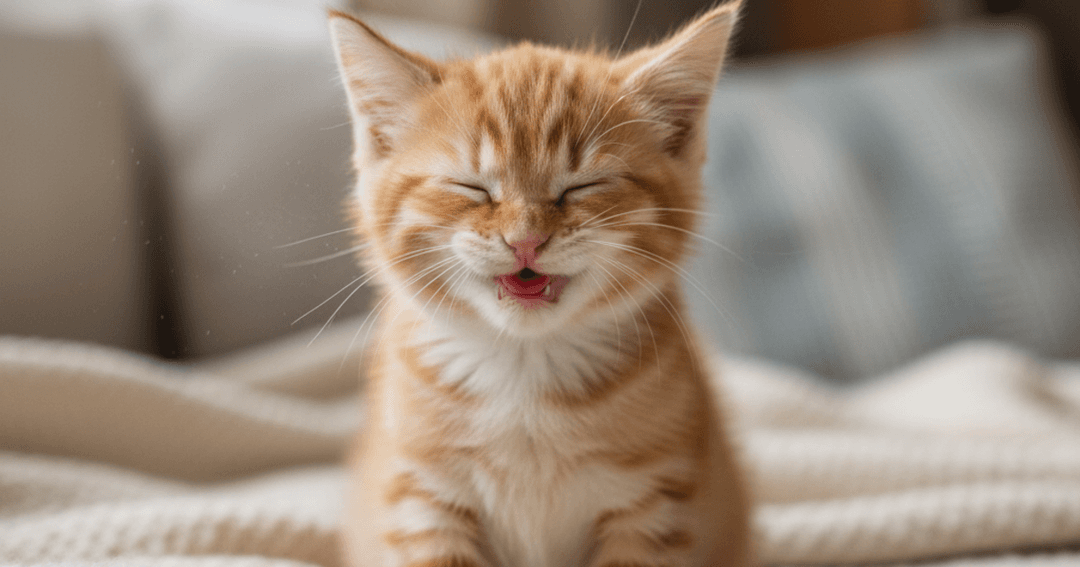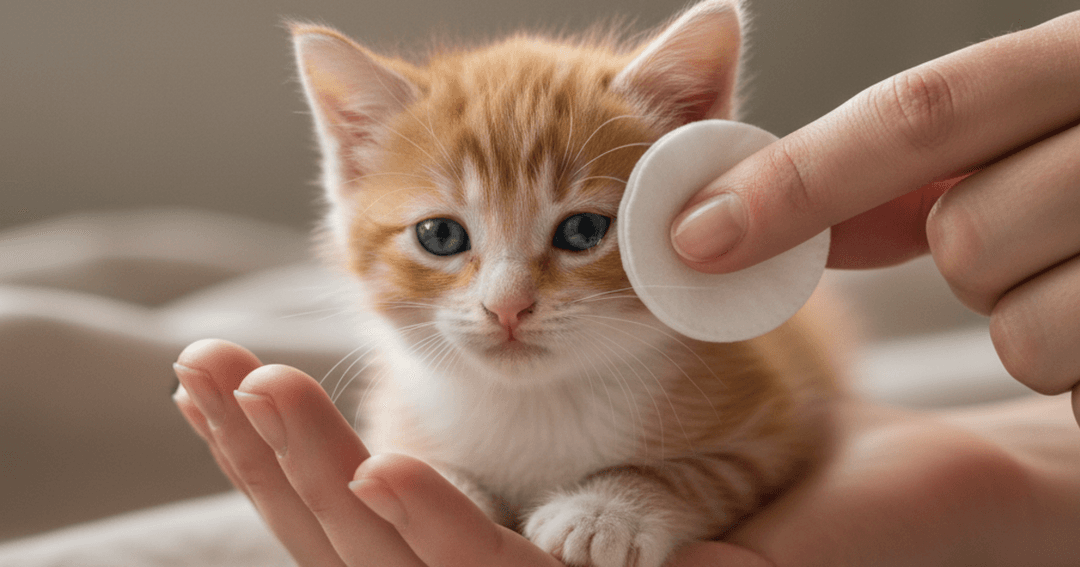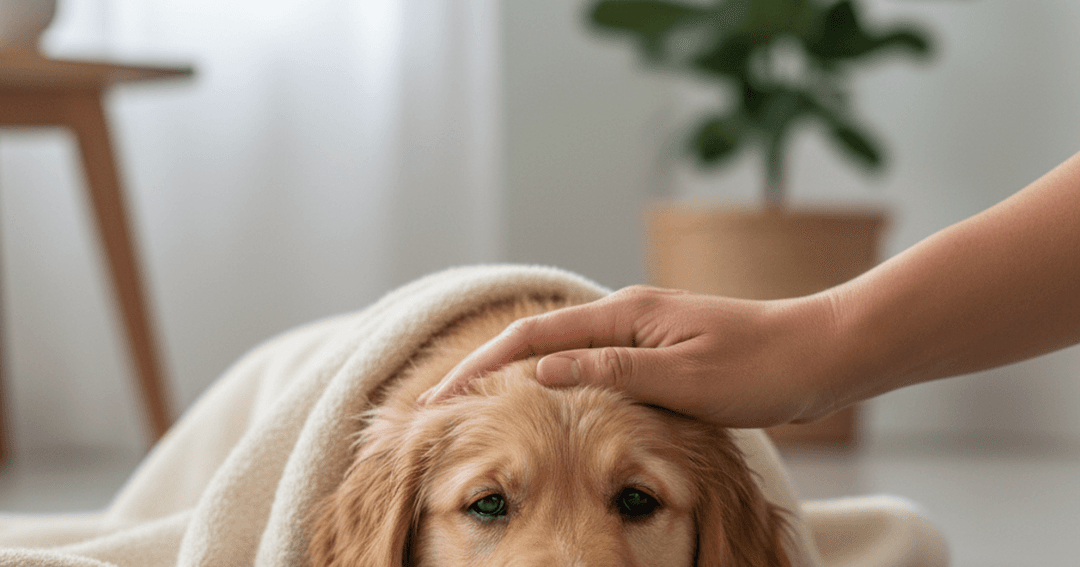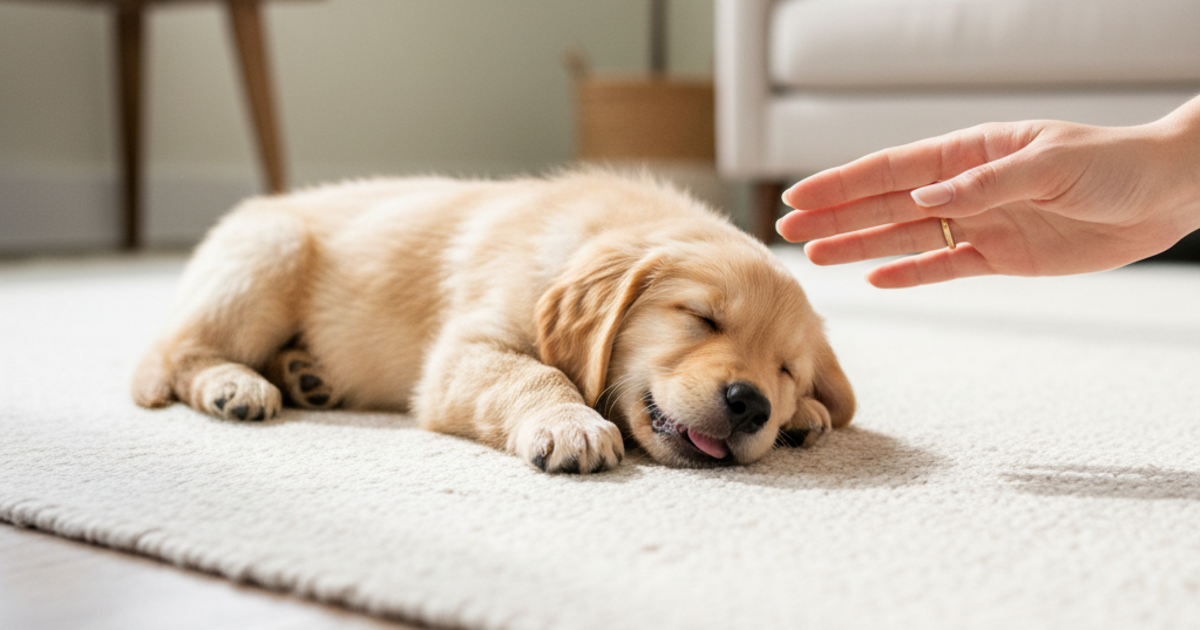
Puppies often breathe faster than adult dogs, especially after play or during dream (REM) sleep, and that can be normal. Fast breathing that continues at rest, looks labored, comes with pale or blue gums, coughing or lethargy needs a vet right away.
Watching your puppy's belly rise and fall at what feels like double speed can be alarming. The good news is that quick, shallow breathing during sleep is common. The key is knowing how to measure the rate, what is typical and which signs separate normal from urgent. This guide covers normal puppy breathing, harmless causes, medical causes, how to count breaths, what to do at home, how vets investigate the problem and when to call your vet. If you want to plan for unexpected visits, the vet cost estimator can help you prepare.
What is a normal breathing rate for a puppy?
A resting adult dog typically takes roughly 15-30 breaths per minute, and many vets treat a sleeping or relaxed rate persistently above about 30-40 as worth a call. Puppies, with small bodies and fast metabolisms, often run higher, and their rate climbs quickly with excitement, warmth or play. During REM sleep, breathing can become fast and irregular, with twitching paws and whimpering. That is usually normal.
| Situation | What you may see | Usually normal? |
|---|---|---|
| Asleep, twitching, then settles | Brief fast, uneven breaths | Yes |
| Just after play or a walk | Panting, fast breaths settling in minutes | Yes |
| Warm room or car | Panting | Yes, if relief is quick |
| Resting, awake and calm | Persistently fast breaths | Check with vet |
| Any time | Gasping, open-mouth effort, blue gums | Emergency |
How to count your puppy's breathing rate
- Wait until your puppy is calm or asleep and has not played for at least 10-15 minutes.
- Watch the chest or belly. One rise and fall is one breath.
- Count for 30 seconds and double it.
- Repeat two or three times and record the numbers.
- Show your vet the log, or a short video.
Worked example: your puppy is asleep and you count 14 breaths in 30 seconds. 14 × 2 = 28 breaths per minute, which is generally comfortable. If you repeatedly count 20 or more in 30 seconds (40+ per minute) while fully relaxed, call your vet.
Count at the same time each day for a few days if you are worried, because a trend tells your vet more than a single number. A rate that is creeping upward over days, even at rest, can be an early sign of heart or lung problems.
Normal reasons for fast breathing
- Dream sleep: REM sleep can cause quick, irregular breaths.
- Excitement and play: puppies run hard and recover fast.
- Heat: panting helps dogs cool down. Move to a cooler spot and offer water.
- Stress or fear: car rides and vet visits can make a puppy pant.
- Recent meal or drink: a very full belly can make breathing look quicker.
- Hiccups or sneezing fits: these can briefly change the breathing pattern.
Medical reasons for fast breathing
- Respiratory infections such as kennel cough or pneumonia, often with coughing, nasal discharge or fever.
- Heart conditions, including congenital defects, which may also cause fatigue or fainting.
- Anemia, often from fleas, hookworms or other parasites, with pale gums and weakness.
- Pain or fever.
- Poisoning, such as ingesting toxic foods or chemicals.
- Heatstroke, an emergency with heavy panting, drooling, vomiting and collapse.
- Breed anatomy: flat-faced breeds such as Bulldogs, Pugs and French Bulldogs breathe noisily and can overheat quickly.
- Fluid in the chest or airway obstruction, which may cause distress, gagging or blue gums.
- Aspiration: inhaling food, water or vomit, which can cause pneumonia.
Breathing patterns to describe to your vet
| Pattern | What it may suggest |
|---|---|
| Fast and shallow at rest | Pain, fever, anemia, heart or lung disease |
| Slow, deep, labored effort | Airway blockage or chest disease |
| Noisy, snorting breaths | Flat-faced airway anatomy or upper airway problems |
| Breathing with coughing | Kennel cough, pneumonia or heart disease |
| Belly heaving | Difficulty moving air in or out |
| Fast breathing with pale gums | Anemia or shock |
Red flags that need urgent care
Go to a vet or emergency clinic immediately if you see:
- Gums that are pale, gray or blue
- Open-mouth breathing at rest or stretched-out neck while gasping
- Belly heaving with each breath
- Collapse, weakness or fainting
- Coughing or gagging with distress
- Fast breathing after possible poison exposure or heat
- A resting rate that stays very high with no improvement
What to do at home while you decide
- Stay calm and keep the environment quiet and cool.
- Offer water in small amounts if your puppy is alert.
- Check gum color by gently lifting the lip. Healthy gums are usually pink.
- Record a video of the breathing for your vet.
- Call your vet or emergency clinic if you are unsure. Do not wait overnight if breathing seems labored.
- Do not give human medication. Many are toxic to dogs.
How a vet investigates fast breathing
- Exam, listening to the heart and lungs and checking gum color and temperature
- Pulse oximetry to measure oxygen levels
- Chest X-rays to look at the heart, lungs and airways
- Bloodwork to check for anemia and infection
- Fecal test for parasites
- Echocardiogram if a heart problem is suspected
- Oxygen therapy and hospitalization for puppies in distress
Cost to plan for
An exam is usually a lot cheaper than an emergency admission, so early calls pay off. The vet cost estimator helps you budget for exams, diagnostics and emergency care. Pet insurance, if bought early, can also help with unexpected costs.
Prevention
- Keep up with vaccines and deworming on the schedule your vet sets.
- Keep puppies cool and never leave them in a parked car.
- Use a harness for flat-faced breeds, and avoid hard exercise in heat.
- Keep toxins such as xylitol, chocolate, grapes and medications out of reach.
- Avoid overfeeding, since extra weight stresses the heart and lungs.
- Supervise play with small objects that could cause choking.
When to call your vet
Call promptly if breathing is persistently fast at rest, if your puppy coughs, has a fever, is lethargic or refuses food. For suspected poisoning, call the ASPCA Animal Poison Control Center at 888-426-4435 or the Pet Poison Helpline at 855-764-7661 (fees may apply).
The bottom line
Fast, uneven breathing during dream sleep is usually normal. Persistent fast breathing at rest, effort, blue or pale gums or collapse is not. Count the rate, record a video and call your vet when in doubt. Plan for care costs with the vet cost estimator.
Frequently asked questions
PawCalculator Editorial
We combine veterinary references, published guidelines, and calculator-grade modeling. This article is for education, not a substitute for an exam.
+ Follow on PawTalk