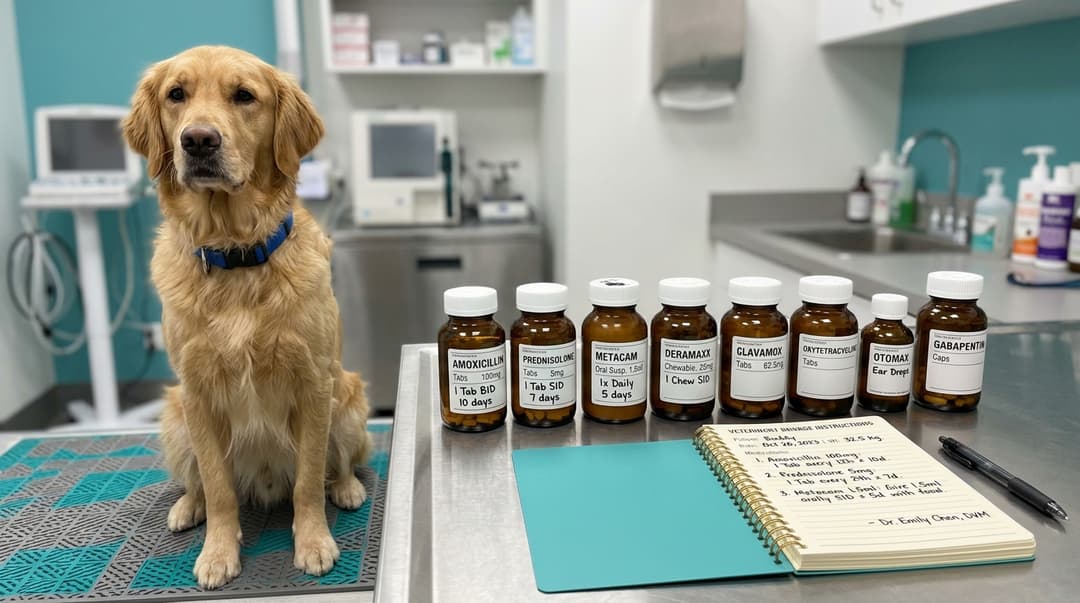
Dog Medication Dosage Reference Hub
This page exists to catch broad "dog medication dosage" searches and route them to the specific medication reference the person actually needs — Benadryl, meloxicam, trazodone, prednisone, gabapentin, and diazepam each have meaningfully different dosing logic, common uses, and safety considerations, so a single generic chart covering all of them would necessarily be too shallow to be useful. Given that several of these individual medication searches (trazodone: ~9,800/mo, gabapentin: ~6,500/mo, Benadryl: ~4,100/mo) dramatically outsize this hub page's own search volume, its primary job is internal linking and topical authority rather than ranking for the umbrella term itself.
Benadryl Dosage
Diphenhydramine reference for dogs
Meloxicam Dosage
NSAID reference dosing
Trazodone Dosage
Situational anxiety reference
Prednisone Dosage
Anti-inflammatory reference
Gabapentin Dosage
Pain & anxiety reference
Diazepam Info
Controlled substance guidance
Carprofen (Rimadyl)
NSAID label-dose reference
Cephalexin
Antibiotic label vs guideline range
Apoquel
Oclacitinib label range by weight
Tramadol (check only)
Prescription checker vs Merck range
Keep going with a related calculator.
Dog Medication Dosage Reference Hub
This page exists to catch broad "dog medication dosage" searches and route them to the specific medication reference the person actually needs — Benadryl, meloxicam, trazodone, prednisone, gabapentin, and diazepam each have meaningfully different dosing logic, common uses, and safety considerations, so a single generic chart covering all of them would necessarily be too shallow to be useful. Given that several of these individual medication searches (trazodone: ~9,800/mo, gabapentin: ~6,500/mo, Benadryl: ~4,100/mo) dramatically outsize this hub page's own search volume, its primary job is internal linking and topical authority rather than ranking for the umbrella term itself.
Choose the right reference page
| Medication | Common use | Key thing to know |
|---|---|---|
| Benadryl (diphenhydramine) | Mild allergies, insect stings, travel sedation | ~1 mg/lb, plain formula only — no decongestants |
| Meloxicam | Pain, inflammation (NSAID) | Loading dose day one, then lower maintenance |
| Gabapentin | Nerve pain, situational anxiety | Cleared renally — kidney function affects dosing |
| Trazodone | Situational anxiety, post-surgical calm | Individually titrated, wide dose range |
| Prednisone | Anti-inflammatory or immunosuppressive | Requires a taper — never stop abruptly |
| Diazepam | Acute seizure control | Controlled substance — vet-individualized only |
| Tylenol (acetaminophen) | Not generally recommended | Narrow safety margin — see alternatives |
Understanding why this hub doesn't have its own chart
Each medication above works through a different mechanism, is dosed on a different scale, and carries different warning signs to watch for — an NSAID's loading-dose logic doesn't transfer to a controlled substance like diazepam, and gabapentin's kidney-clearance consideration doesn't apply to a topical antihistamine. Collapsing all of that into one generic chart would flatten exactly the nuance that makes each page useful, so this hub exists to route you to the specific medication your vet has prescribed or is discussing, rather than to approximate all of them at once.
How to talk to your vet about a medication decision
Whichever specific reference page brought you here, the conversation with your vet gets more productive when you arrive with a few things clear in your own head first. Know your dog's current, accurate weight — not a number from six months ago, since nearly every dosing decision below scales to current body weight and a stale number introduces error before the vet even factors in anything else. List every other medication and supplement your dog is currently taking, including anything over-the-counter or herbal, since interaction risk (particularly with sedatives, NSAIDs, and steroids) is one of the most common reasons a seemingly standard dose needs adjusting for a specific dog. If your dog has any known liver or kidney concerns, mention this proactively rather than waiting to be asked — several of the medications referenced above (gabapentin especially, given renal clearance) require meaningfully different dosing in a dog with reduced organ function, and this is exactly the kind of detail that's easy to forget to mention in a routine appointment.
Why generic online dosing charts carry real risk
It's worth being direct about why this hub routes to individual reference pages rather than offering a single universal chart: canine medication dosing genuinely isn't one-size-fits-all math, and a chart stripped of the nuance covered on each dedicated page can produce a number that's technically weight-appropriate but wrong for that specific dog's situation. A dose that's correct for a healthy adult dog can be meaningfully wrong for a puppy, a senior with reduced organ function, a dog on an interacting medication, or a dog with a breed-specific sensitivity (herding breeds and the MDR1 gene mutation affecting certain drug sensitivities is a well-known example). Every page linked from this hub is written to explain the reasoning behind a dose — the mechanism, the safety margin, the reason a taper or loading dose exists — specifically so that reasoning, not a bare number, is what you walk away with.
When to consult a professional
For health, dosage, or nutrition decisions, always confirm calculator output with your veterinarian. This tool provides reference estimates, not medical advice.
Questions about this calculator
Each medication has different dosing logic, units, and safety considerations — combining them into one generic chart would sacrifice the accuracy and nuance that makes each individual page actually useful.
The math, openly documented.
Inputs
Weight, use case, and product strength where relevant.
weight · tablet_mg · use
Formula
Published veterinary reference dosing math.
dose = f(weight_kg)
Output
Reference range with safety notes.
mg · tablets · frequency
Disclaimer
Not a prescription — vet confirmation required.
reference only
More from Health

Benadryl Dosage for Dogs, By Weight
Weight-based diphenhydramine reference with tablet conversion.
Open tool
Understanding Meloxicam Dosing for Dogs
NSAID loading and maintenance dose reference.
Open tool
Trazodone Dosage for Dogs, By Weight
Situational anxiety dose range by weight.
Open toolArticles from Insights



Got an edge case the calculator can't handle?
247 active threads about dog nutrition right now. Verified vets and experienced owners answer within hours.