Keep a pregnant dog on her normal food and exercise for the first 4–5 weeks, then raise her food gradually over the last third of pregnancy (often switching to a puppy or all-life-stages diet), keep walks gentle, and plan vet checks to confirm the pregnancy and prepare for whelping.
Good dog pregnancy care is mostly about timing. Early on, the best thing you can do is very little: stay calm and keep her routine. The changes come later, when the puppies grow fast and she needs more fuel. To see how many calories she needs as she progresses, use our canine calorie calculator.
Pregnant dog care at a glance
| Weeks | Days | What to do |
|---|---|---|
| 1–4 | 1–28 | Normal food and exercise. Book a vet visit to confirm pregnancy (about day 25–30) |
| 5–6 | 29–42 | Keep routines. Start planning the whelping area. Ask your vet about diet |
| 7 | 43–49 | Start increasing food gradually. Consider an X-ray around day 45 to count puppies |
| 8 | 50–56 | Bigger appetite. Smaller, more frequent meals. Gentle walks only. Set up the whelping box |
| 9 | 57–63 | Temperature checks from about day 58. Stay near her. Keep vet and emergency numbers handy |
Use our dog pregnancy calculator to turn this into real dates. For the signs and milestones in each week, see dog pregnancy week by week, and for due dates, see how long dogs are pregnant.
Feeding a pregnant dog: when and how much to increase (worked calorie example)
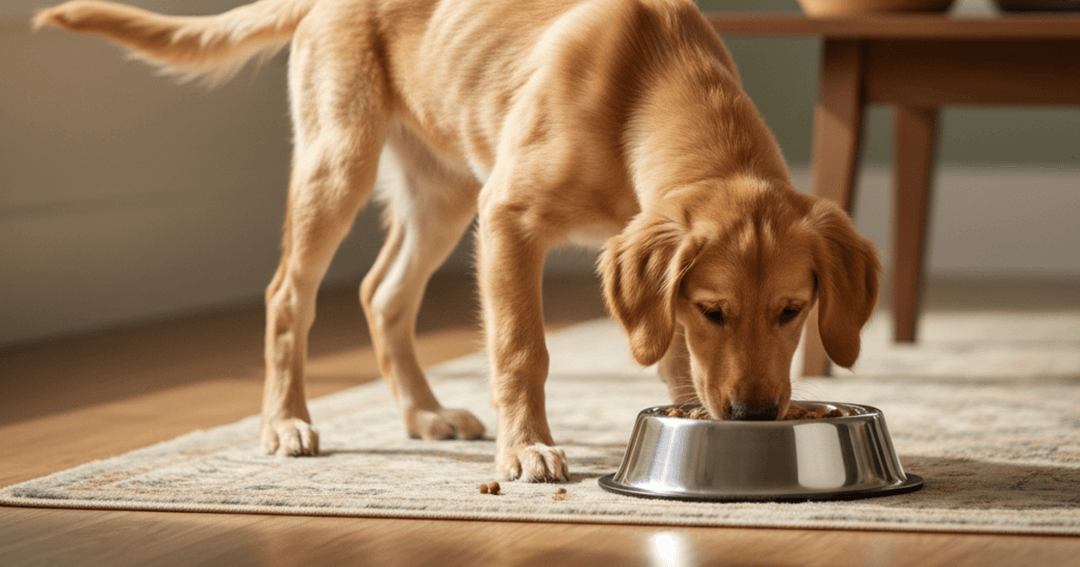
First two-thirds of pregnancy (about days 1–42). Feed her normal amount of her normal food. Puppies are tiny early on, so she doesn't need extra.
Last third (about day 43 to whelping). Her calorie needs climb because the puppies grow fast. Increase her food gradually, in small steps each week, so that by the end she's eating roughly 25–50% more than her usual amount. The exact figure depends on her size, litter size and body condition, so ask your vet. Many vets also recommend switching to a puppy or high-quality all-life-stages food, since those are more calorie- and nutrient-dense.
As her belly fills, big meals get uncomfortable. Split her food into 3–4 smaller meals.
Worked example. Meet Luna, a 20 kg (44 lb) dog.
- RER. 70 × 20^0.75. That's 70 × 9.46 = about 662 kcal.
- Normal daily food. Say Luna normally eats about 1.6 × RER = about 1,060 kcal a day. (Check your own dog's real intake, since it may differ.)
- Days 1–42: stay at about 1,060 kcal.
- Week 7 (days 43–49): about 15% more = about 1,220 kcal.
- Week 8 (days 50–56): about 30% more = about 1,380 kcal.
- Week 9 (days 57–63): about 40–50% more = about 1,480–1,590 kcal, in 3–4 meals. Appetite often drops just before labor, so don't force it.
Weigh her every week or two. A healthy pregnant dog typically gains around 15–25% of her pre-pregnancy weight by the end, and most of it comes in the last three weeks. Try your own dog's numbers in the dog calorie calculator, and convert calories to cups with the dog food calculator.
One important warning: don't add calcium supplements unless your vet specifically tells you to. Too much calcium in pregnancy can raise the risk of low blood calcium (eclampsia) after whelping.
Exercise and rest by trimester
- Weeks 1–5: Normal walks and play. No need to slow her down.
- Weeks 6–7: Keep up moderate walks. Skip rough play, long hikes and high jumps.
- Weeks 8–9: Short, gentle walks on a leash. Let her rest whenever she wants. Avoid stairs if she struggles.
Also avoid dog parks and contact with unfamiliar dogs in the last few weeks. Infections can be a real risk for her and the puppies.
If she's panting hard, reluctant to move or limping, stop and call the vet.
Vet visits, vaccines, deworming and meds to avoid (no doses)
Plan on these vet touchpoints:
- Before breeding, if possible. A check-up, brucellosis screening (ask your vet), and vaccines up to date. Some vaccines shouldn't be given during pregnancy, so timing matters.
- Day 25–30. An ultrasound (or relaxin blood test) to confirm. See our dog pregnancy ultrasound guide.
- Day 45 or later. An X-ray to count puppies, which helps you know when labor is finished.
- Before whelping. Ask your vet about the plan, emergency contacts and what counts as a problem.
Deworming, flea and tick control: Ask your vet which products are safe in pregnancy and when to use them. Some aren't, and some are recommended to protect the puppies. Don't choose one on your own.
Medicines to avoid without a vet's OK: Many common drugs can harm developing puppies, including some painkillers, steroids, certain antibiotics and some dewormers. That includes human over-the-counter medicines and herbal supplements. Never give any medicine, supplement or remedy without asking your vet, and don't use doses from charts. Our dog medication dosage calculator can help you prepare questions for your vet, and never replaces their instructions.
If she swallows anything she shouldn't, call the ASPCA Animal Poison Control Center (888-426-4435) or the Pet Poison Helpline (855-764-7661) right away.
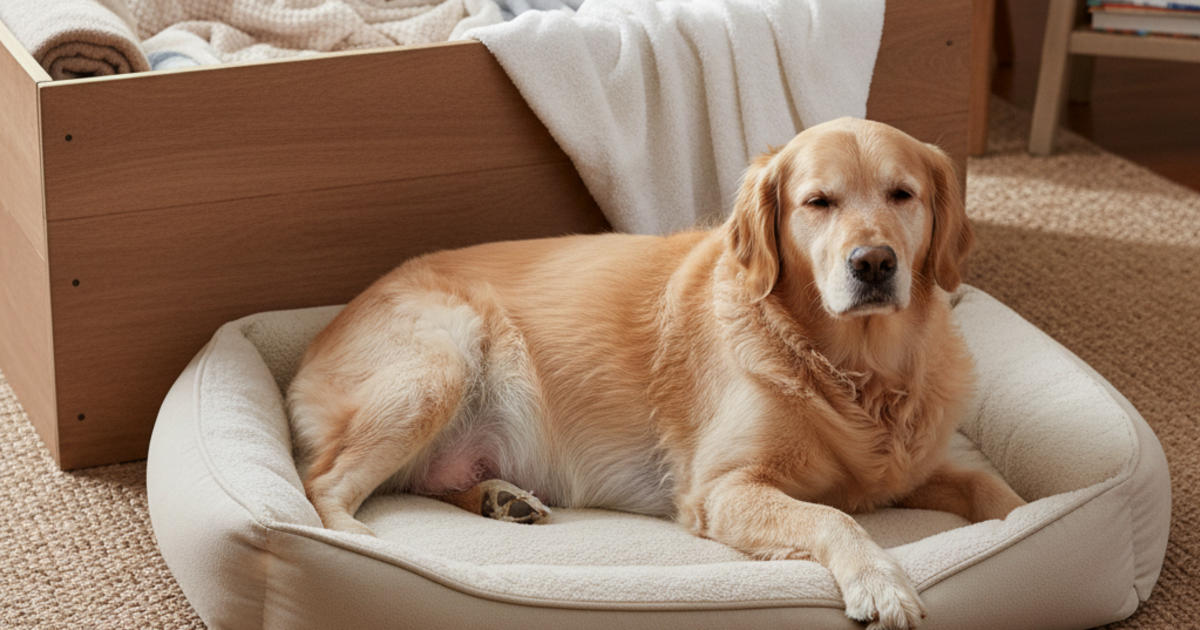
Preparing a whelping area
Set it up by about day 55, and let her get used to it. Dogs often pick their own spot, so be flexible.
- A whelping box large enough for her to stretch out, with sides low enough for her to step over but high enough to keep newborns in.
- A quiet, warm, draft-free spot away from foot traffic and other pets.
- Clean, washable bedding, plus lots of towels and waterproof pads.
- A digital thermometer for her temperature checks, and a small kitchen scale to weigh newborns.
- Your vet's number and the nearest 24-hour emergency clinic, saved in your phone.
- A phone or camera so you can watch without hovering.
Take her rectal temperature twice a day from about day 58. A drop below about 99°F (37.2°C) usually means labor within 12–24 hours.
When to call your vet
Call your vet (or an emergency clinic) right away if you see:
- Bloody, green, black or foul-smelling discharge before whelping.
- Not eating for 24–48 hours, vomiting or diarrhea.
- Fever, collapse, pale gums or severe lethargy.
- Seizures, tremors or stiff, wobbly walking (possible low calcium).
- Strong, steady straining for 30 minutes with no puppy.
- More than 2 hours between puppies while she's still in labor.
- No labor by day 68 from breeding.
- Temperature drop with no labor after 24 hours.
Frequently asked questions
PawCalculator Editorial
We combine veterinary references, published guidelines, and calculator-grade modeling. This article is for education, not a substitute for an exam.
+ Follow on PawTalk