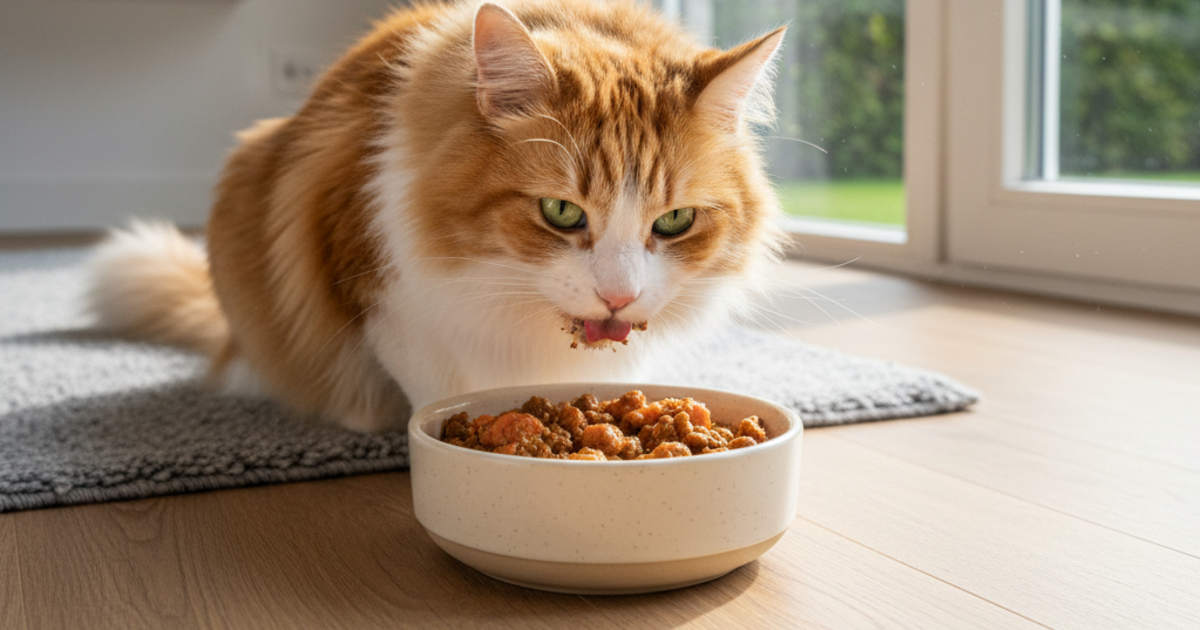
Wet cat food is a great fit for most cats. It's about 75–80% water, which helps cats that don't drink much, and it's usually higher in protein and lower in carbohydrates than dry food, closer to what cats evolved to eat. It's also lower in calories per bite, which makes weight control easier. The best wet cat food is one that's complete and balanced for your cat's life stage and that your cat eats reliably, fed in the right amount.
Calories vary a lot between cans, so portioning matters. The cat food calculator turns your can's calorie count into a daily serving.
Benefits of Wet Cat Food
- Hydration. Cats have a weak thirst drive. Extra water in food supports urinary tract and kidney health, and vets often recommend wet food for cats prone to bladder crystals or stones.
- Weight control. Wet food has fewer calories per gram, so cats feel full on fewer calories.
- Protein-rich, lower carb. Most wet foods are higher in protein and lower in carbs on a dry matter basis, which suits obligate carnivores and can help diabetic cats.
- Easier to eat for seniors, cats with dental problems and kittens.
- Palatability. Picky or unwell cats often eat wet food more readily.
The downsides: it costs more per calorie, it spoils after a few hours in the bowl, and it doesn't clean teeth (neither does most kibble, despite the myth).
Wet vs Dry Cat Food on a Dry Matter Basis
Labels list nutrients "as fed," including water. Converting to dry matter shows what's really in the food:
Dry matter % = as-fed % ÷ (100 − moisture %) × 100
| Wet cat food | Dry cat food | |
|---|---|---|
| Protein (as fed) | 11% | 32% |
| Moisture | 78% | 10% |
| Protein (dry matter) | 11 ÷ 22 × 100 = 50% | 32 ÷ 90 × 100 ≈ 35.6% |
That "11% protein" can actually has more protein than the "32% protein" kibble once you remove the water.
How to Choose the Best Wet Cat Food
- AAFCO statement: "complete and balanced" for growth (kittens), adult maintenance, or all life stages. Some cans are labeled "for intermittent or supplemental feeding" — these are toppers, not meals.
- Named animal protein first: chicken, turkey, fish, beef, rabbit.
- Calories per can: usually printed as kcal/kg and kcal per can. You need this to portion correctly.
- Texture your cat likes: pâté, minced, shreds, chunks in gravy. Gravy-heavy foods can have more carbs from thickeners.
- A maker with nutrition expertise: WSAVA suggests choosing companies that employ a qualified nutritionist and run quality control.
Best wet cat food for indoor cats
Indoor cats usually burn fewer calories. Look for:
- Moderate calories per can (many "indoor" formulas are around 70–85 kcal per 3 oz)
- High protein to maintain muscle
- A little fiber for hairball control
What about grain-free wet cat food?
Most wet cat food is already low in grains. "Grain-free" doesn't mean low-carb, since some grain-free foods use potatoes or peas instead. Grain allergies are uncommon in cats; beef, fish and chicken are more frequently reported food allergens. Pick grain-free if your cat does well on it, not because it's automatically healthier.
Healthiest wet cat food
There isn't one brand that's healthiest for every cat. The healthiest wet cat food is complete and balanced, made by a reputable company, suits your cat's age and health, and keeps them at a lean body condition.
How Much Wet Cat Food to Serve: Worked Example
A 5 kg (11 lb) neutered, fairly inactive indoor cat, eating a 5.5 oz (156 g) can with 170 kcal.
- RER = 70 × 5^0.75 ≈ 234 kcal
- Inactive indoor adult: 1.0 × RER ≈ 234 kcal/day
- 234 ÷ 170 ≈ 1⅓ cans per day, split into 2–3 meals
- A more active cat at 1.2 × RER (≈ 281 kcal) would need about 1⅔ cans
Wet cat food per day by weight
| Cat weight | Calories/day (1.0–1.2 × RER) | 3 oz cans at 80 kcal | 5.5 oz cans at 170 kcal |
|---|---|---|---|
| 3 kg (6.6 lb) | 160–190 | 2–2½ | ~1–1⅛ |
| 4 kg (8.8 lb) | 200–240 | 2½–3 | ~1¼–1⅖ |
| 5 kg (11 lb) | 235–280 | 3–3½ | ~1⅓–1⅔ |
| 6 kg (13.2 lb) | 270–320 | 3⅓–4 | ~1⅗–1⅞ |
Kittens, pregnant cats and very active cats need more; overweight cats should be fed for their ideal weight. Get a precise target from the cat calorie calculator, and see side-by-side wet and dry amounts in the cat feeding chart.
Serving and Storing Wet Cat Food
- Serve at room temperature; many cats refuse cold food straight from the fridge.
- Remove uneaten food after about 4 hours (sooner in warm weather).
- Cover and refrigerate opened cans for up to 3 days.
- Wash bowls daily.
- Mixing wet and dry? Split the daily calories, don't add a full portion of each.
For label reading on the dry side, see how to choose a good dry cat food, and for meal timing, how often to feed your cat.
When to Call Your Vet
Call your vet if your cat:
- Stops eating for more than 24 hours (cats can develop fatty liver disease quickly)
- Vomits more than once a week or has ongoing diarrhea after a food change
- Loses or gains weight unexpectedly
- Drinks or pees much more than usual
- Strains in the litter box or can't pee (an emergency, especially in male cats)
Cats with kidney disease, diabetes, urinary stones or allergies may need a specific prescription wet diet, so check with your vet before switching.
The Bottom Line
Wet cat food adds water, delivers more protein per calorie and makes weight control easier, which is why vets often recommend it. Choose a complete and balanced food your cat enjoys, check the calories per can, and serve the right amount. Work out your cat's daily cans with the cat food calculator.
Frequently asked questions
PawCalculator Editorial
We combine veterinary references, published guidelines, and calculator-grade modeling. This article is for education, not a substitute for an exam.
+ Follow on PawTalk