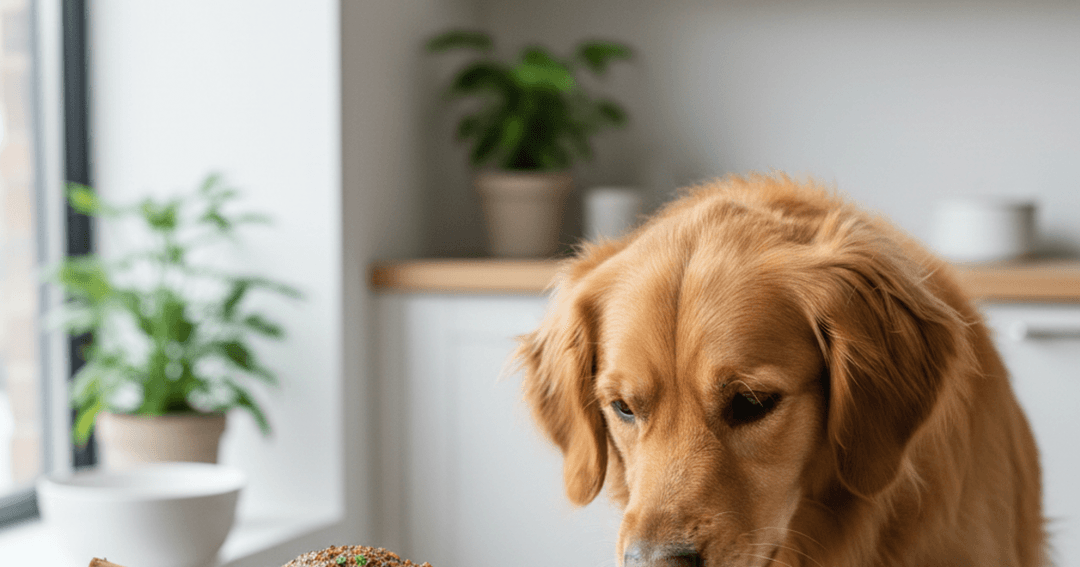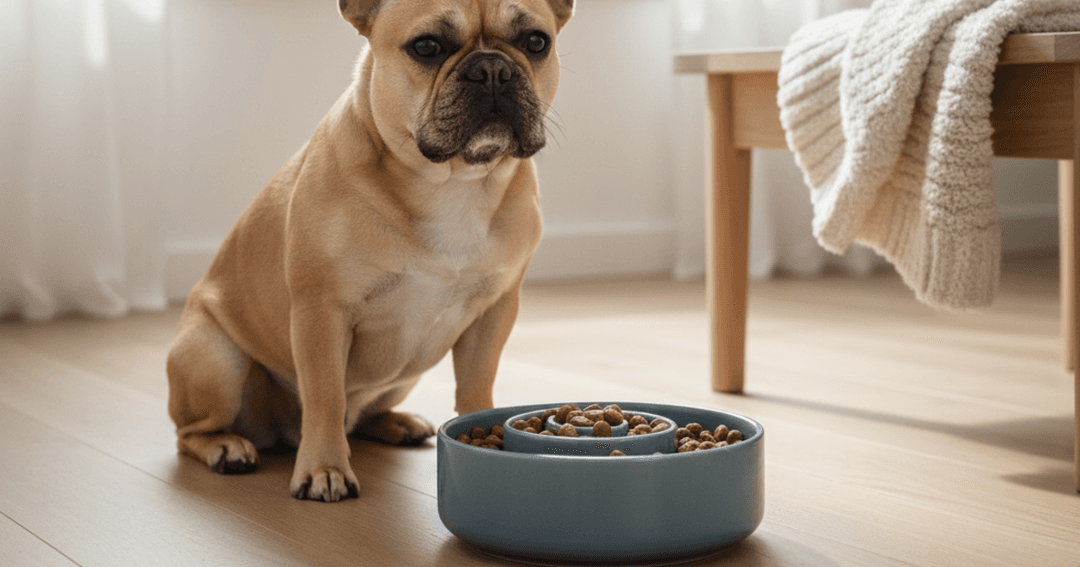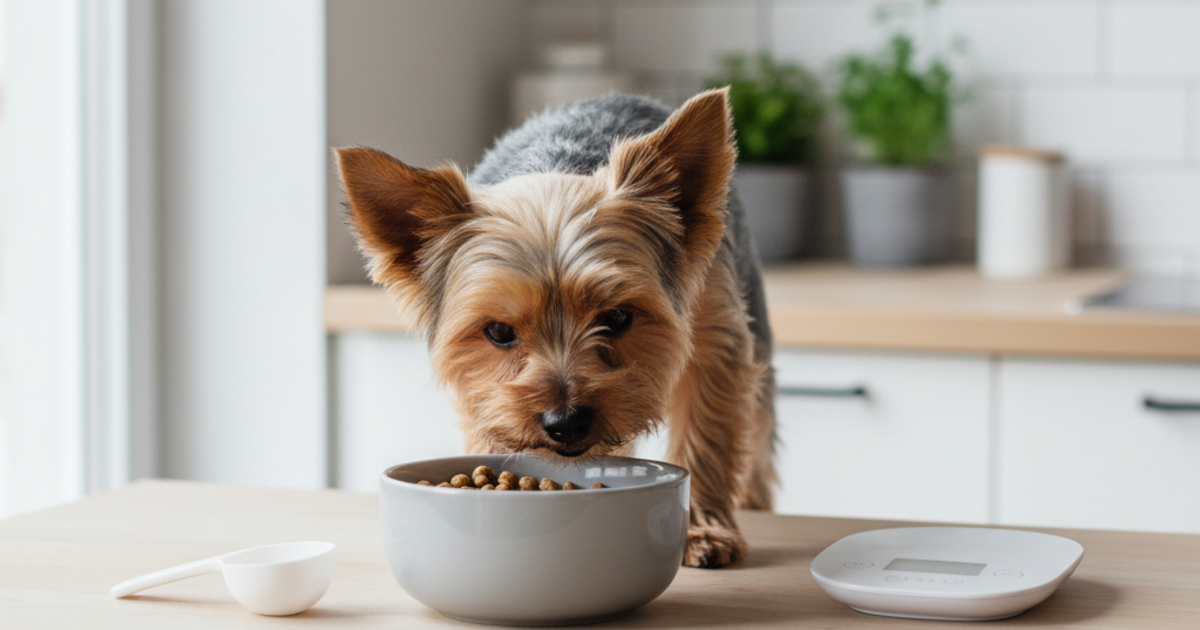
Small breed dog food is usually more calorie-dense with smaller kibble, because small dogs burn more energy per pound and have tiny mouths. It can help, but what matters most is a complete and balanced food fed in the right amount for your dog's weight.
Small dogs (roughly under 20-25 lb / 9-11 kg) have faster metabolisms than large dogs, live longer on average and are prone to dental disease and, in toy breeds, low blood sugar. That changes what they need from a food. This guide explains why small dogs are different, what to look for on the label, whether they really need a small-breed formula, how many calories they need, feeding tips and what to watch for. Find your dog's daily portion with the dog food calculator.
Why small dogs are different
- Higher energy needs per pound. Energy needs scale with body weight to the 0.75 power, not linearly, so a 5 lb dog needs far more calories per pound than a 50 lb dog.
- Small mouths and crowded teeth. Large kibble can be hard to pick up and chew, and small dogs have more dental disease.
- Hypoglycemia risk in toy breeds and puppies if meals are missed.
- Longer lives, so nutrition choices add up over many years.
- Smaller stomachs, which can't hold big meals, so calorie density matters.
- Pickiness: some small dogs are fussy and need palatable food.
What to look for
- AAFCO statement for the right life stage (growth, adult or all life stages).
- Calorie density listed in kcal per cup or per kg.
- Kibble size and shape that your dog can pick up and chew.
- Dental design: some kibble is shaped to reduce tartar, but it isn't a substitute for brushing.
- Quality control and nutrition expertise from the maker.
- Toy-breed puppies often need formulas with enough fat and calories for small stomachs.
- Sensible fat levels: very high-fat foods can trigger pancreatitis in susceptible small breeds such as Miniature Schnauzers and Yorkies.
Do small dogs need a "small breed" formula?
Not always. A well-formulated regular adult food in a small-kibble size may suit some small dogs. But many small-breed formulas offer higher calories and smaller bites, which helps dogs with tiny stomachs eat enough. See our guide to breed-specific dog food calculators for portioning rather than relying on marketing.
Worked example: calories per pound
Compare two adults with a moderate activity factor of about 1.6.
| Dog | RER | Daily kcal (×1.6) | kcal per lb |
|---|---|---|---|
| 5 kg (11 lb) | 234 | 374 | 34 |
| 25 kg (55 lb) | 782 | 1,251 | 23 |
The small dog needs about 50% more calories per pound. On a food with 400 kcal per cup, the 5 kg dog gets about 0.94 cup a day (about 1 cup), divided into 2-3 small meals. A 10% overfeed in a 5 lb dog is a visible weight change within weeks.
Try your own dog's numbers in the dog calorie calculator.
Feeding tips
- Measure meals with a scale; small errors matter in tiny dogs. A kitchen scale is more accurate than a cup.
- Feed 2-3 small meals a day, especially for toy breeds and puppies, to avoid low blood sugar.
- Keep treats under 10% of calories; a single biscuit can be a big chunk.
- Brush teeth and ask your vet about dental checks.
- Don't free-feed if your dog gains weight.
- Offer fresh water in a shallow bowl.
Common small-dog diet issues
- Obesity: a few extra ounces matter. Use the dog BMI calculator to check body condition.
- Dental disease: most small dogs need regular dental care.
- Picky eating: rule out medical causes before changing foods repeatedly.
- Hypoglycemia in toy puppies: signs include weakness, shaking and collapse; this needs urgent care.
When to call your vet
Call if your dog loses weight, refuses meals for over a day (sooner in toy breeds or puppies), becomes weak or shaky, has vomiting or diarrhea, or has bad breath or drooling. A toy-breed puppy that is weak, shaking or unresponsive needs urgent care.
Frequently asked questions
PawCalculator Editorial
We combine veterinary references, published guidelines, and calculator-grade modeling. This article is for education, not a substitute for an exam.
+ Follow on PawTalk