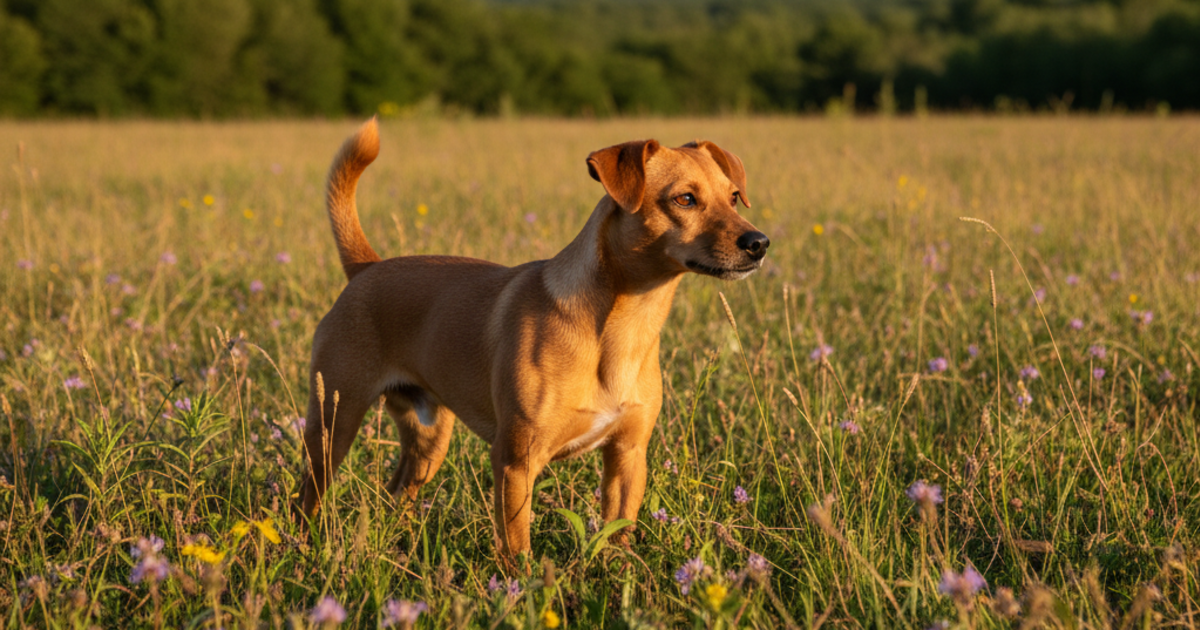
The feist is a small, athletic American hunting dog, typically 12-30 lb and 10-18 inches tall, bred in the rural South to tree squirrels and other small game. Feists are bright, tireless, vocal and affectionate, and they need daily exercise, secure fencing and early training. Expect a lifespan of roughly 12-16 years.
"Feist" describes a type of small hunting dog rather than a single tightly defined breed, with the Mountain Feist and Treeing Feist the best-known varieties. They are working dogs that came from practical breeding for ability, not looks, so individuals vary. This guide explains the history of the feist, size and appearance, temperament, exercise and training needs, health, grooming, feeding and how feists compare with Jack Russell Terriers. It also covers who they suit. Use the breed selector to compare breeds.
Feist at a glance
| Trait | Typical range |
|---|---|
| Height | About 10-18 inches |
| Weight | About 12-30 lb (5.5-14 kg) |
| Lifespan | Roughly 12-16 years |
| Coat | Short, smooth, close-lying |
| Colors | Many, including tan, black and tan, white, brindle and pied |
| Energy | Very high |
| Trainability | Smart and quick, but independent |
| Origin | Rural American South and Appalachia |
History
Feists developed from small hunting dogs kept by rural families in the American South, used to hunt squirrels, raccoons and other small game and also to protect farms from vermin. They were selected for treeing ability, speed, stamina and a loud bark that signals the location of game. Several registries recognize the Mountain Feist and the Treeing Feist as distinct types, while many working feists are not registered at all. Their ancestry includes terriers and hounds.
Mountain Feist vs Treeing Feist
The two names overlap, and breeders differ on exact standards. In general:
- Mountain Feist: often a bit smaller and lighter, with a strong reputation for hunting squirrels in rough terrain.
- Treeing Feist: often a little taller and leggier, valued for speed and staying power.
Both are lean, quick and driven, and both bark or "tree" when they locate game.
Appearance
Feists are lean and athletic, with a short coat, a long muzzle, expressive eyes and either a natural or docked tail. Ears can be semi-erect or folded, and colors vary widely. Because they come from working stock, appearance varies more than in show breeds.
Temperament
- Energetic and driven. They are happiest with a job.
- Affectionate with family. Many bond closely and enjoy being with their people.
- Alert and vocal. They bark readily, and some will bay or tree.
- Strong prey drive. Squirrels, rabbits, cats and small pets can trigger chasing.
- Independent and clever. They learn fast but can be stubborn.
- Good with children when well socialized, though their energy can be a lot for small children.
- Not a typical apartment dog unless exercise needs are met.
Exercise needs
Plan on at least an hour of vigorous exercise every day, plus mental stimulation. Good options include:
- Off-leash running in a securely fenced yard
- Fetch and flirt-pole games
- Hiking and long walks
- Scent work, tracking and agility
- Puzzle toys and training sessions
A bored feist can bark constantly, dig, escape or chase wildlife. Secure fencing is essential, since many feists climb, dig and jump, and they will follow a scent.
Training and socialization
Feists are intelligent and eager learners, but their independence and prey drive require patience.
- Start early with socialization to people, dogs and different places.
- Use positive reinforcement with high-value treats and short sessions.
- Teach a strong recall, and keep your feist on a leash or long line in unfenced areas.
- Manage barking by rewarding quiet behavior and meeting exercise needs.
- Provide outlets for hunting instincts, such as scent games and flirt poles.
- Supervise around small pets, because of the strong prey drive.
Grooming
The short coat is easy to care for.
- Brush weekly with a rubber brush to remove loose hair.
- Bathe occasionally or when dirty.
- Trim nails regularly, since active dogs can still need trimming.
- Check ears and skin for ticks, burrs and injuries after outdoor outings.
- Brush teeth several times a week.
Health
Feists are generally hardy because they come from working lines, but small hunting dogs can have conditions such as:
- Patellar luxation, a slipping kneecap in small dogs
- Allergies and skin problems
- Ear infections
- Dental disease, common in small breeds
- Injuries from hunting, running and jumping
Keep up with vaccines, parasite prevention including ticks and heartworm, dental care and regular vet visits.
Feist vs Jack Russell Terrier
| Factor | Feist | Jack Russell Terrier |
|---|---|---|
| Original job | Treeing squirrels and small game | Going to ground after foxes and vermin |
| Build | Leggier, lean, hound-like | Compact, short-legged terrier build in many lines |
| Voice | Often barks or trees loudly | Barks, but with different working style |
| Prey drive | Very high | Very high |
| Energy | Very high | Very high |
| Registration | Often unregistered working lines, some registries | AKC recognizes Parson and Russell Terriers |
Both need exercise, training and secure fencing, and both can be challenging for first-time owners.
Feeding a feist
Feists are small but active, so feed a complete-and-balanced diet matched to life stage and activity, in measured meals. Keep your dog lean, since extra weight stresses small joints.
Worked example
A 7 kg (15 lb) neutered adult feist.
- Resting energy: RER = 70 × 7^0.75 = 70 × 4.30 = about 301 kcal.
- Typical neutered adult: 301 × 1.6 = about 482 kcal per day.
- Very active hunting or sport dog: 301 × 1.8 = about 542 kcal per day.
- If the food is 3,800 kcal per kg: 482 ÷ 3.8 = about 127 g per day for the typical dog, or 542 ÷ 3.8 = about 143 g for the very active dog.
- Two meals of about 63 g each for the typical dog.
- Treat budget: about 48 kcal, or 10% of 482.
- Weigh every 2-4 weeks and adjust by about 10% as needed.
Use the dog calorie calculator to estimate your dog's needs.
Is a feist right for you?
A feist may suit you if you:
- Are active and enjoy outdoor activities
- Have a secure, fenced yard
- Want a loyal, energetic small dog
- Are comfortable with a vocal dog and a strong prey drive
A feist may not suit you if you:
- Live in a small space with little time for exercise
- Have small pets that could be chased
- Want a quiet, low-energy lapdog
- Cannot provide secure fencing or training time
Finding a feist
Because many feists come from working lines, look for breeders who prioritize health and temperament, or consider rescues and shelters, where feist-type dogs and mixes often appear. Meet the parents if possible, ask about health history and avoid sellers who cannot answer questions.
When to call your vet
Contact your vet if your feist limps, skips on a hind leg, has repeated ear shaking, itching, vomiting, diarrhea, bad breath or loses weight. Seek urgent care after injuries, snake bites, tick-borne illness symptoms or collapse. For suspected poisoning, call the ASPCA Animal Poison Control Center at 888-426-4435 or the Pet Poison Helpline at 855-764-7661 (fees may apply).
The bottom line
The feist is a lively, loyal working dog best suited to active homes with secure fencing and training time. Compare it with other breeds using the breed selector, and plan feeding with the dog calorie calculator.
Frequently asked questions
PawCalculator Editorial
We combine veterinary references, published guidelines, and calculator-grade modeling. This article is for education, not a substitute for an exam.
+ Follow on PawTalk