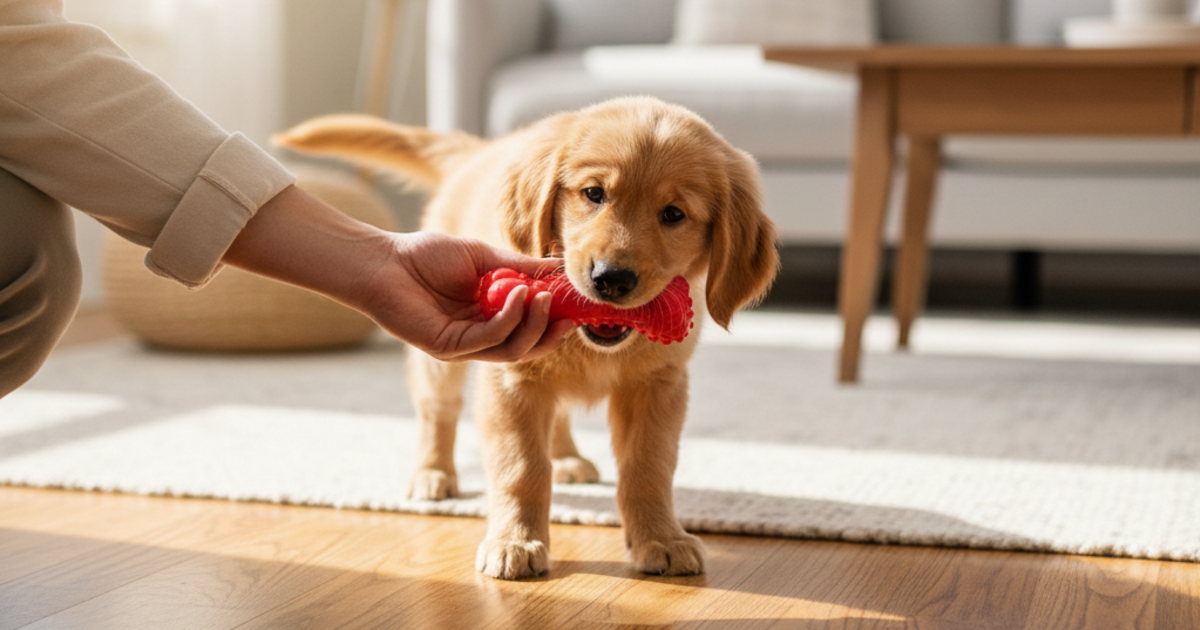
Puppy biting is normal play and teething behavior. Stop it by redirecting to a toy, pausing play the moment teeth touch skin, meeting your puppy's exercise and nap needs, and staying consistent. Most puppies mouth much less once adult teeth are in by about 6-7 months, but the habits you teach now shape how your dog uses their mouth for life.
Puppies explore the world with their mouths, and littermates teach each other bite inhibition (how hard is too hard) through play. When a puppy joins your home, you become the teacher. This guide explains why puppies bite, what works, what doesn't, how teething fits in, a sample daily routine and when to get professional help. Match exercise to your puppy's age with the dog exercise calculator.
Why puppies bite
- Play: mouthing is how puppies wrestle and interact with littermates and people.
- Teething: baby teeth come in around 3 weeks and are replaced by adult teeth from about 3-4 months until roughly 6-7 months. Gums ache, and chewing relieves it.
- Overtiredness: puppies often get "the zoomies" and nippy when they need a nap. A tired puppy is a mouthy puppy.
- Attention seeking: biting works if it gets a reaction, even a negative one.
- Overexcitement or frustration.
- Exploration: puppies learn about textures and tastes with their mouths.
Bite inhibition: the core skill
Puppies learn from littermates that hard bites end play. You can teach the same lesson:
- Stay calm. When teeth touch skin, say a calm "ouch" and stop moving.
- Pause play for 10-20 seconds, or leave the room briefly.
- Resume play if your puppy is gentler.
- Repeat consistently. Over weeks, puppies learn to soften their mouths.
Some puppies get more excited by a yelp, so adjust. The goal is calm consistency, not scaring your puppy.
What works: step by step
- Redirect to a toy. Keep chew toys in your pockets and around the house. When your puppy mouths you, swap your hand for a toy and praise chewing it.
- Use brief timeouts. If biting continues, calmly place your puppy in a safe pen or room for a minute or two. It's a break, not punishment.
- Reward calm. Give treats and attention when your puppy is gentle or settled.
- Prevent overtiredness. Young puppies need 18-20 hours of sleep a day. Schedule naps in a crate or pen.
- Provide outlets. Short walks, play sessions, sniffing games, puzzle feeders and safe chews.
- Manage the environment. Use pens, gates and leashes to prevent rehearsal of biting.
- Be consistent. Everyone in the home should follow the same rules.
- Teach alternatives. "Sit" for greetings, "drop it" and "leave it" give your puppy something to do instead of bite.
What not to do
- Don't hit, flick the nose, hold the mouth shut or use scruff shakes. They can scare your puppy, damage trust and increase defensive biting.
- Don't wave hands in your puppy's face as a game.
- Don't play rough tug or wrestling games that encourage mouthing your hands.
- Don't expect instant results. Bite inhibition takes weeks.
- Don't punish growling over food or toys without professional help.
Teething relief
- Rubber chew toys, chilled (not frozen solid) for sore gums
- Wet, frozen washcloths under supervision
- Frozen carrot sticks for larger puppies, supervised
- Puppy-safe chews sized for your dog
Avoid hard items such as bones, antlers and hooves, which can crack teeth.
Worked example: a daily routine for a 12-week-old
- 7:00 Potty, breakfast from a puzzle feeder
- 7:30 5-10 minute play with a tug toy
- 8:00 Nap in the crate or pen
- 10:30 3-5 minute training session, then nap
- 13:00 Short sniff walk, then nap
- 16:00 Chew time with a safe chew
- 19:00 Calm play, then wind-down
- 21:00 Last potty, bedtime
A common guideline is about five minutes of formal exercise per month of age, twice a day, so a 3-month-old gets about 15 minutes per session. Ask your vet what suits your breed.
When it should fade
Most puppies improve between 4 and 7 months as adult teeth come in and impulse control develops. Some breeds, especially herding and retrieving breeds, mouth longer and need more guidance.
When to call your vet or a trainer
Call your vet if biting comes with pain, sudden aggression, bleeding gums or trouble eating. A certified trainer or behaviorist can help if bites are hard, frequent, directed at children, or paired with growling, stiffening or guarding food and toys.
Frequently asked questions
PawCalculator Editorial
We combine veterinary references, published guidelines, and calculator-grade modeling. This article is for education, not a substitute for an exam.
+ Follow on PawTalk